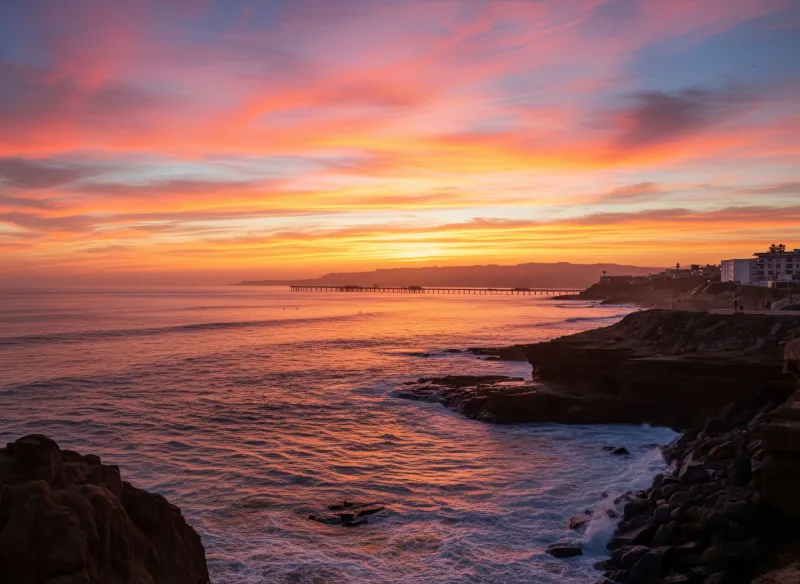
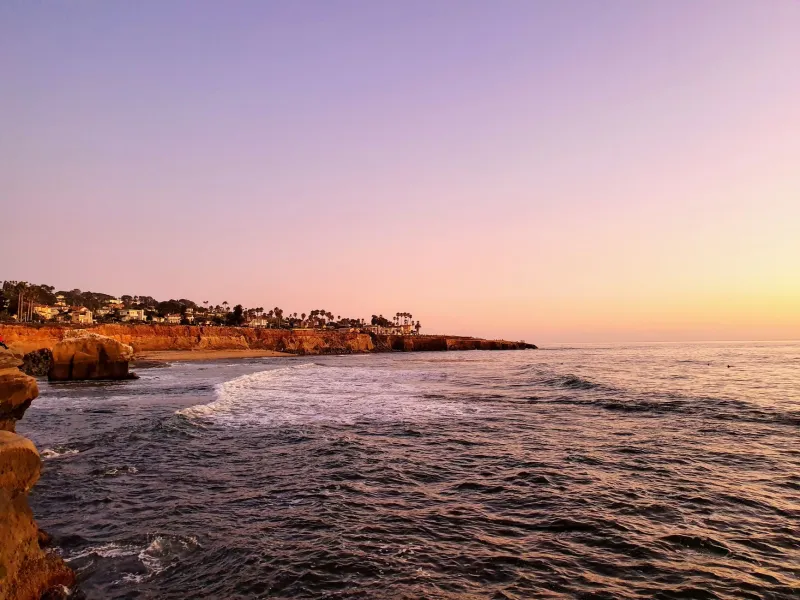
Carved by the Sea: The Geology, History, and Soul of Sunset Cliffs
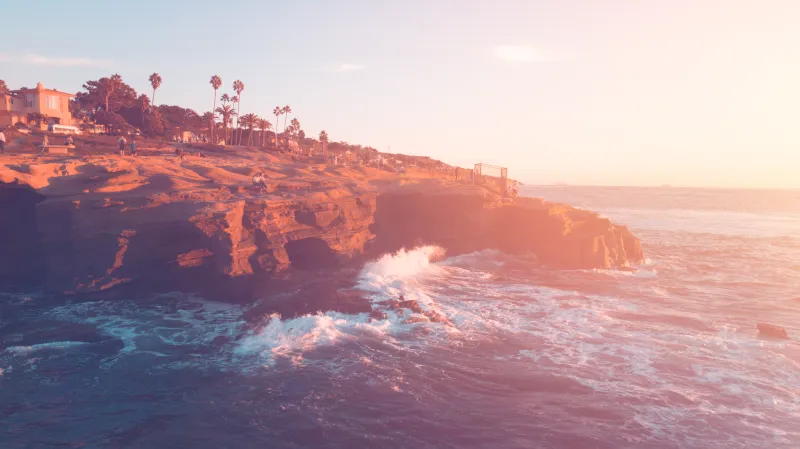
There's a moment that happens to almost every first-time visitor at Sunset Cliffs. You're standing at the edge of the blufftop, looking down at the jagged black rock, the churning white water, and the layered stone walls dropping into the Pacific — and you think: how did this get here?
It's a fair question. The cliffs don't look like anything else in San Diego. They're not the sandy beaches of Mission Bay or the manicured coves of La Jolla. They're raw, angular, and ancient-feeling in a way that stops people in their tracks. The answer to that question — how this particular stretch of coastline became what it is today — turns out to be one of the most interesting stories in all of Southern California.
Millions of Years in the Making
The foundation of Sunset Cliffs is a geological story that starts long before San Diego existed as a city, a settlement, or even a concept. The rocks you're looking at when you peer over the edge are primarily composed of two distinct formations: a volcanic basalt layer that sits at the base of the cliffs, and a younger layer of sedimentary sandstone above it.
The basalt — that dark, almost black rock — is the older of the two. It formed from ancient lava flows, evidence of volcanic activity that shaped much of the Southern California coastline millions of years ago. You can see it clearly at low tide, where it forms the broad, flat ledges and jagged outcroppings that jut into the surf zone. It's extraordinarily hard, which is part of why it still exists at all.
Sitting on top of the basalt is a layer of Point Loma Formation sandstone, a sedimentary rock made up of compressed marine sediments deposited when this part of the coast was underwater — roughly 70 to 75 million years ago, during the late Cretaceous period. Yes, the same era as the dinosaurs. When the sea level dropped and the land rose through tectonic activity, these ancient ocean floors became cliffs.
The combination of hard basalt at the base and softer sandstone above has created a coastline that erodes in a very particular and visually dramatic way. Waves attack the softer sandstone, carving sea caves, tunnels, arches, and the famous blowholes that shoot water into the air during big swells. The basalt resists, creating those flat platforms that surfers and photographers love. The result is a landscape that looks almost sculpted — because, in a very real sense, it was.
The People Who Were Here First
Long before European settlers arrived, the coastline that we now call Sunset Cliffs was part of the traditional territory of the Kumeyaay people, the indigenous nation that has called the San Diego region home for at least 10,000 years. The Kumeyaay were skilled coastal foragers who knew this shoreline intimately — its tides, its seasonal patterns, its marine resources.
The rocky intertidal zones that draw tide pool enthusiasts today were productive food sources for Kumeyaay communities, who harvested shellfish, sea urchins, and other marine life from the same rock platforms visitors walk on now. Shell middens — ancient refuse heaps that serve as archaeological records — have been found throughout the Point Loma peninsula, offering evidence of sustained human presence along this coastline for thousands of years.
The Spanish colonization of Alta California beginning in the late 18th century dramatically disrupted Kumeyaay life and culture, as it did for indigenous communities throughout the region. The establishment of the San Diego Mission in 1769 and subsequent colonization efforts forced the Kumeyaay into a radically altered relationship with their ancestral lands. Today, the Kumeyaay Nation consists of 13 federally recognized bands in San Diego County, and efforts to preserve and revitalize Kumeyaay culture and language remain active and ongoing.
Visiting Sunset Cliffs with this history in mind adds a dimension to the experience that the Instagram photos don't capture.
Early San Diego and the Making of a Neighborhood
When American settlement began reshaping San Diego in the mid-to-late 1800s, the Point Loma peninsula was largely undeveloped — a rugged, windswept finger of land jutting into the Pacific that was considered too remote and difficult to build on. That changed as the city grew and real estate developers began looking for ways to distinguish San Diego as a destination.
The early 20th century brought a wave of residential development to Ocean Beach and the surrounding neighborhoods. The stretch of coastline along what would become Sunset Cliffs Boulevard began attracting attention not just as buildable land, but as a scenic attraction in its own right. The natural drama of the cliffs — visible from passing ships and accessible by the automobile roads that were spreading across Southern California — made it an obvious landmark.
The name "Sunset Cliffs" itself became popularized through real estate promotion and local press coverage in the 1910s and 1920s, as developers recognized that the evening light shows along this west-facing coastline were a genuine selling point. The branding stuck, and the neighborhood that grew up around the cliffs took on the name as well.
Sunset Cliffs Natural Park was formally established to protect the area from further development and to provide public access to the coastline. The park today covers roughly 68 acres of blufftop and coastal terrain, managed by the City of San Diego with the goal of preserving both the natural environment and public recreational access.
Why These Cliffs Look the Way They Do
One of the most common questions visitors ask is why Sunset Cliffs looks so different from the rest of San Diego's coast. The answer comes back to that geological combination — hard volcanic base, softer sedimentary upper layers, and relentless wave energy — but there's another factor: the orientation of the coastline.
Sunset Cliffs faces almost directly west, which means it catches open-ocean swells that have traveled thousands of miles across the Pacific without interruption. Those long-period swells carry enormous energy and have been hammering this particular stretch of coast for millennia. The result is a level of erosional sculpting that you simply don't see on more sheltered parts of the San Diego shoreline.
The sea caves along the southern portion of the park are some of the most dramatic examples of this process. Some extend 30 to 40 feet into the cliff face, carved out by waves exploiting natural fractures and weaker zones in the rock. The blowholes — vertical cracks in the basalt platform through which pressurized seawater erupts during large swells — are another product of this ongoing erosion. They're genuinely thrilling to watch from a safe distance.
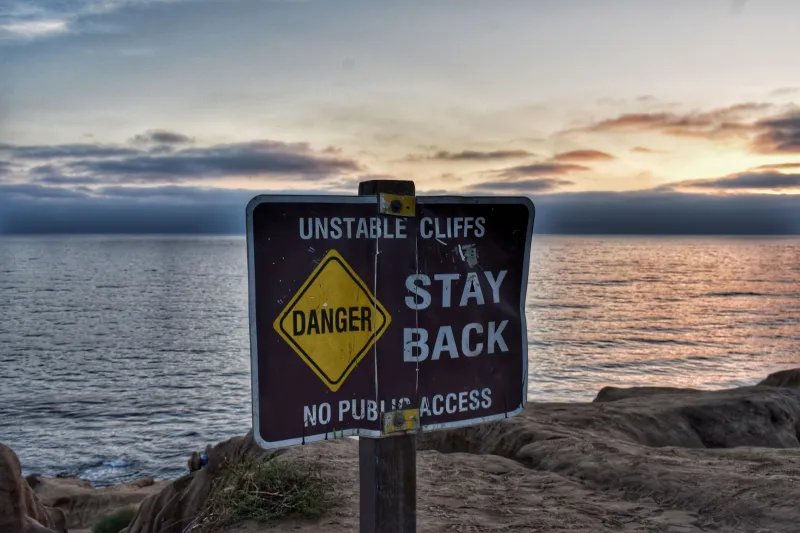
It's worth noting that this erosion is still happening. The cliffs are not static. Sections of the sandstone blufftop collapse periodically, which is why the park has fencing along many of the edge areas and why visitors are strongly discouraged from sitting or standing near the cliff edges. The same forces that created this landscape are still actively reshaping it.
What It All Means When You're Standing There
Knowing the backstory of Sunset Cliffs doesn't make the sunset any more colorful or the waves any louder. But it does change how you relate to the place. When you look down at the dark basalt and realize you're seeing rock that formed from ancient lava flows, or when you run your hand along the sandstone and understand that it was once the floor of a prehistoric ocean, the cliffs stop being just a pretty backdrop and become something more like a record of deep time.
And when you consider that people have been standing on these same rocks, watching these same waves, for thousands of years before the first tourist ever showed up with a camera — well, that's the kind of context that tends to stick with you long after you've driven back to wherever you came from.
Sunset Cliffs is beautiful. But it's also old, and complicated, and genuinely worth understanding. That's a combination that's harder to find than you might think.