The Locals' Sunset Cliffs: Hidden Corners, Quiet Trails, and Places the Tour Buses Skip
If you've done any research on Sunset Cliffs before visiting San Diego, you've probably seen the same handful of photos — the dramatic main overlook, the iconic arched blowhole, maybe a surfer silhouetted against an orange sky. Those images are stunning, and yes, those spots are worth seeing.
But here's the thing: Sunset Cliffs Natural Park stretches for nearly a mile and a half along the Point Loma Peninsula, and the surrounding area is packed with quieter, equally beautiful corners that most visitors completely overlook. If you've got the time and the curiosity to wander a little, you'll find a version of this place that feels genuinely personal — less Instagram backdrop, more real San Diego.
Here's where to start.
The Southern Stretch: Where the Crowds Thin Out Fast
Most people park near the intersection of Sunset Cliffs Boulevard and Ladera Street and don't venture much further south. That's actually great news for anyone willing to walk an extra five or ten minutes.
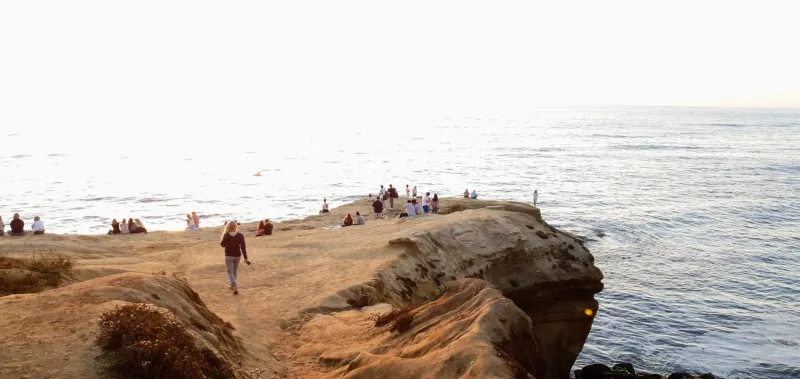
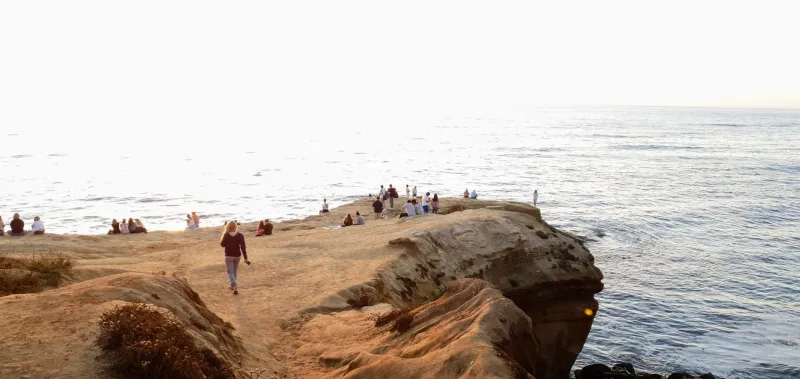
Head south along Sunset Cliffs Boulevard toward Osprey Street and beyond, and you'll notice the foot traffic drops off significantly. The cliffs in this section are just as dramatic — in some spots even more so — but you might share the view with just a handful of other people rather than a crowd. There are several informal pullouts and worn dirt paths that lead to cliff-edge viewpoints that don't appear on any official map.
The rock formations here are particularly interesting, with natural channels and shallow pools that catch the afternoon light in ways that are genuinely different from the northern section of the park. If you're a photographer, this is your spot. If you just want to sit quietly and watch the waves, same answer.
Tide Pools Worth Getting Your Feet Wet For
Sunset Cliffs has some of the most accessible tide pool habitat in San Diego, but most visitors stick to looking at them from above rather than actually exploring them. During low tide — and this part is important, so check tide predictions at tidesandcurrents.noaa.gov before you go — you can carefully make your way down to the lower rock shelves in several spots along the park.
The area near Cornish Drive has a particularly rich intertidal zone. You'll find sea anemones, hermit crabs, urchins, and the occasional octopus tucked into crevices if you look carefully. Wear shoes with grip, move slowly, and remember that these ecosystems are fragile — look but don't touch, and never remove anything from the tide pools.
High surf makes these areas genuinely dangerous, so this is strictly a calm-day, low-tide activity. But when conditions cooperate, it's one of the more memorable things you can do along this stretch of coast.
The Coastal Trail You Didn't Know Existed
There's a mostly informal walking path that runs along the cliff edge for much of the park's length, but fewer visitors realize it connects to a longer coastal walk that takes you into the surrounding neighborhood in a really pleasant way.
Starting from the northern end of the park near Point Loma Boulevard, you can follow the cliff edge south, dip into the residential streets of the Point Loma neighborhood, and loop back along Sunset Cliffs Boulevard for a walk that takes anywhere from 45 minutes to a couple of hours depending on how often you stop. The residential streets here are genuinely charming — craftsman bungalows, mature trees, small gardens — and give you a sense of what it actually feels like to live in one of San Diego's more characterful neighborhoods.
This isn't a marked trail with signage, so use Google Maps in satellite view to orient yourself before you head out. The basic shape of the walk is intuitive once you're on the ground.
Ocean Beach: The Neighborhood That Makes Sunset Cliffs Make Sense
If you're visiting Sunset Cliffs without spending at least a little time in Ocean Beach (OB, as locals call it), you're missing a big part of the picture. This is the community that surrounds and supports the park, and it has a personality that's hard to find anywhere else in San Diego.
Newport Avenue is the main commercial strip — a mix of vintage shops, surf gear, taco stands, and coffee shops that feels refreshingly un-chain-ified. The OB Farmers Market runs on Wednesdays year-round and is one of the more genuine farmers markets in the city, not just a tourist attraction.
Ocean Beach Pier, about a ten-minute walk from the northern end of Sunset Cliffs, is one of the longest recreational piers on the West Coast and offers a completely different view of the coastline — looking back at the cliffs from the water, rather than the other way around. It's free to walk, and the fishing pier atmosphere is a nice contrast to the natural park.
Parking, Access, and Getting There Without Losing Your Mind
Honest talk about parking: it's competitive, especially on weekends and around sunset. Here's what actually works.
Street parking along Sunset Cliffs Boulevard is free but fills up fast from about 4 p.m. onward on weekends. If you arrive before 3 p.m., you'll usually find something.
Park in Ocean Beach and walk: The residential streets around Newport Avenue and Bacon Street typically have more available parking, and it's a pleasant 10-to-15-minute walk to the park. This is genuinely the best strategy on busy days.
Weekday visits: If your schedule allows it, a weekday afternoon visit is a completely different experience than a Saturday evening. You'll have long stretches of the cliffs essentially to yourself.
Accessibility note: The main overlook areas along Sunset Cliffs Boulevard are wheelchair accessible and paved. The informal cliff-edge paths and lower rock shelves are not — they're uneven, sometimes steep, and require careful footing. Plan accordingly.
Safety: The Stuff That's Actually Important
This is a working coastline, not a theme park, and it deserves to be treated that way. A few things worth taking seriously:
The cliffs are actively eroding. Barriers exist for a reason — stay behind them, and don't sit on cliff edges even if other people are doing it. Collapses happen, and they happen without warning.
Rogue waves are real. If you're anywhere near the water's edge, keep your eyes on the ocean. A wave that looks manageable from above can hit the lower rocks with surprising force.
Sunset and after: The paths along the cliff edge are not lit. If you're planning to stay for blue hour (which you should — it's beautiful), bring a flashlight or make sure your phone has battery left. The walk back to your car in the dark is trickier than it looks.
One More Thing
The best way to experience Sunset Cliffs is slowly. This isn't a place you check off a list — it's a place you sit with for a while. Bring something to drink, leave your schedule loose, and let the afternoon unfold. The spots that end up meaning the most to people are rarely the ones marked on the map.