Put the Phone Down: How to Actually Experience Sunset Cliffs Instead of Just Photographing It
Scroll through Instagram for about 45 seconds and you'll find it: the golden silhouette against a blazing Pacific sky, the perfectly framed arch of eroded sandstone, the couple holding hands at the edge of the world. Sunset Cliffs Natural Park is undeniably photogenic, and the internet knows it. But somewhere between the hashtag and the heart button, something quietly got lost.
This isn't a takedown of photography or social media — we love a great shot as much as anyone. It's more of a nudge. A gentle reminder that the cliffs were here long before the smartphone, and they have a lot more to offer than a killer background.
When the Destination Becomes the Set
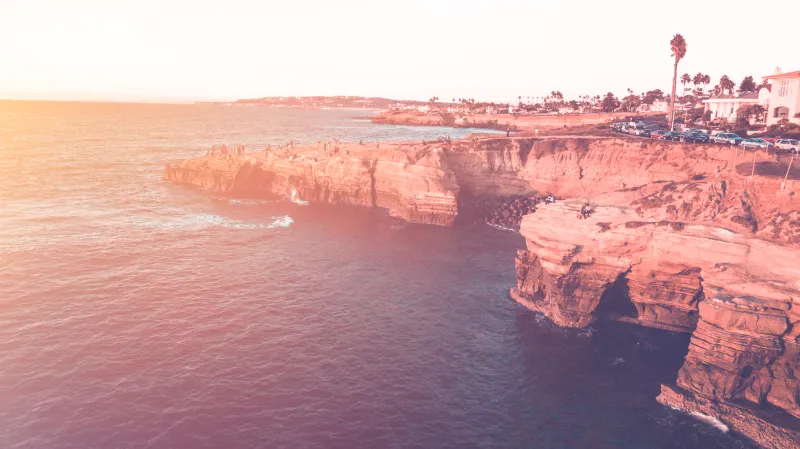
There's a moment that happens at Sunset Cliffs almost every evening, and if you've visited during golden hour you've probably witnessed it. A crowd gathers along the seawall. Phones go up. People shuffle for position. Someone asks a stranger to take their photo. Then another person. Then five more. The sun drops, the sky turns pink and orange and briefly, impossibly purple — and a significant chunk of the audience watches it through a four-inch screen.
It's not anyone's fault, really. We live in a culture that rewards documentation. Sharing a beautiful moment feels like extending it, like passing something good along to people who weren't there. And there's genuine joy in that. But the feedback loop has gotten a little intense. When a destination becomes primarily known as a photo opportunity, visitors start arriving with a specific image in mind before they've even parked the car. The experience becomes about executing a shot rather than being present for a place.
At Sunset Cliffs, this pressure is real. Weekends during summer can feel more like a content production schedule than a nature walk. People position themselves for the same angles, chase the same light, leave when the sky goes dark. The cliffs, with all their weird tidal energy and geological strangeness and wildlife activity, become a backdrop rather than a destination.
What You're Missing When You're Behind the Lens
Here's the thing about Sunset Cliffs that doesn't translate well to a photo: it's loud. Not in a bad way — in a deeply alive way. The sound of waves hitting the base of the cliffs is percussive and unpredictable. Sometimes it's a low rumble. Sometimes it's a sharp crack that makes you jump. The blowholes scattered along the park erupt without warning, shooting mist into the air and filling your lungs with something that smells like the actual ocean, not a candle version of it.
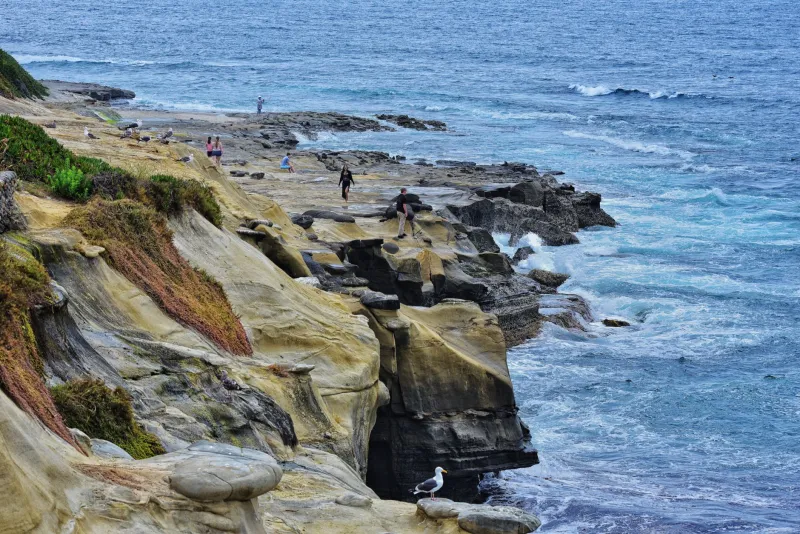
The texture of the sandstone is something you have to touch to understand. It's rough and crumbling in some places, smooth and worn in others. The rock has been shaped by millions of years of wave action, and you can see the layers if you look — compressed history sitting right there at your feet.
Pelicans glide in formation so low over the water that their wingtips nearly brush the surface. Cormorants dry their wings on exposed rocks. Occasionally, if you're patient and quiet, a sea lion hauls itself onto a ledge and just stares at the horizon like it has somewhere to be but decided not to go. None of this requires a filter. None of it fits neatly into a frame.
The Tension Between Sharing and Protecting
There's a real conservation angle here too, and it's worth sitting with for a second. Sunset Cliffs is a city-managed natural park, which means it's publicly funded and publicly used — sometimes very heavily. The same social media exposure that draws visitors also puts pressure on a fragile ecosystem. The sandstone cliffs are actively eroding. Certain areas are roped off for good reason. Trails get worn down when people step off the path to get a better angle.
The irony is that the more beautiful the photos look, the more people come, and the harder it becomes to maintain the beauty that drew everyone in the first place. Geotagging specific hidden spots has, in several well-documented cases, led to overcrowding and damage at locations that were previously left alone. It's a genuine tension, and there's no easy answer — but awareness is a reasonable starting point.
Practical Ways to Show Up Differently
None of this means you should leave your camera at home. But there are ways to build a visit around presence first and documentation second.
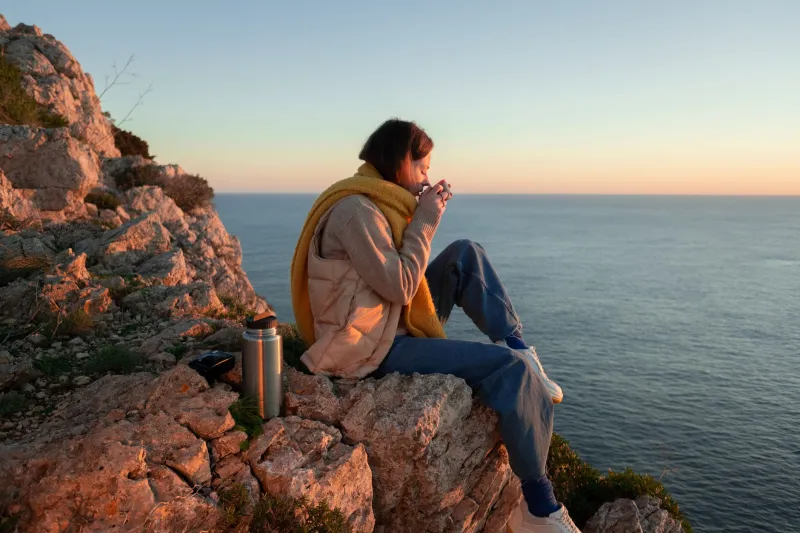
Give yourself a no-phone window. Commit to the first 20 minutes of your visit being screen-free. Walk the path, find a spot to sit, just watch. Let your eyes adjust to the light and your ears tune into the sound of the water. You can always take photos after — and honestly, you'll probably take better ones once you've actually looked around.
Visit at off-peak times. Early morning is genuinely magical at Sunset Cliffs and almost nobody talks about it. The light is soft, the crowds are thin, and the park feels like it belongs to you and the birds. Midweek visits in spring or fall are similarly low-key. You'll have more space to wander, more quiet to actually hear the place.
Try the north end of the park. The stretch near Ladera Street and Osprey Street gets a fraction of the foot traffic that the main overlooks see. It's less dramatic in the postcard sense, but it's where you're more likely to have a genuine, uninterrupted encounter with the landscape.
Leave a spot better than you found it. If you see trash, pick it up. If you notice someone about to step over a barrier to get a shot, say something friendly. Small acts of stewardship matter more here than in a lot of places because the park is genuinely fragile.
Let some moments be just yours. Not every beautiful thing needs to be shared. That sounds almost radical in 2024, but there's something quietly powerful about watching the sun go down over the Pacific and keeping it for yourself — no caption required.
The Cliffs Don't Need a Filter
Sunset Cliffs was drawing people long before social media gave them a reason to tag it. Locals have been coming here for decades to clear their heads, feel small in a useful way, and remember that the ocean is older and stranger and more indifferent than any of our problems. That's still available to you. It's just a little harder to access when you're managing notifications.
The most memorable visits to this place tend to be the ones where something unexpected happened — a wave surprised you, a pelican landed nearby, the sky turned a color you didn't have a name for. Those moments are hard to plan for and nearly impossible to manufacture. They tend to show up when you're not trying to capture them.
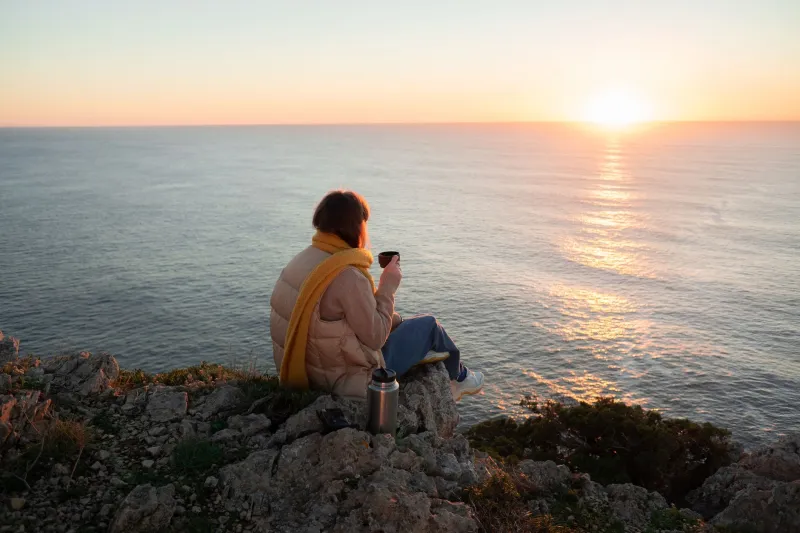
So go. Take your photos if you want them. Share the beauty if that brings you joy. But give the cliffs a few minutes of your undivided attention first. They've earned it.