What Your Sunset Cliffs View Is Actually Worth: The Real Estate Story Nobody Talks About
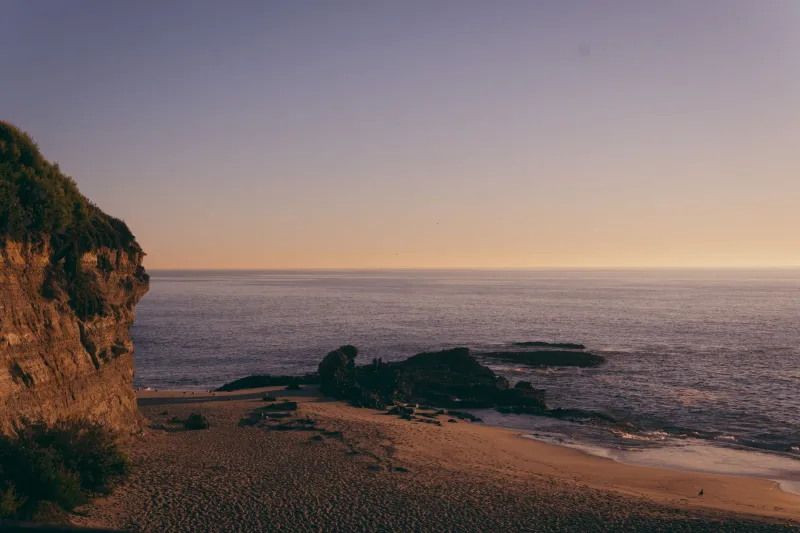
On a clear October afternoon, a real estate agent is standing in the living room of a three-bedroom home on Sunset Cliffs Boulevard, pointing at the window. Through the glass, you can see the Pacific. Not a sliver of it — the full, unobstructed expanse, with the sandstone cliffs dropping away below and the horizon stretching as far as the eye can follow.
"That," she says, gesturing at the view, "is worth somewhere between two hundred and four hundred thousand dollars. Depending on the day."
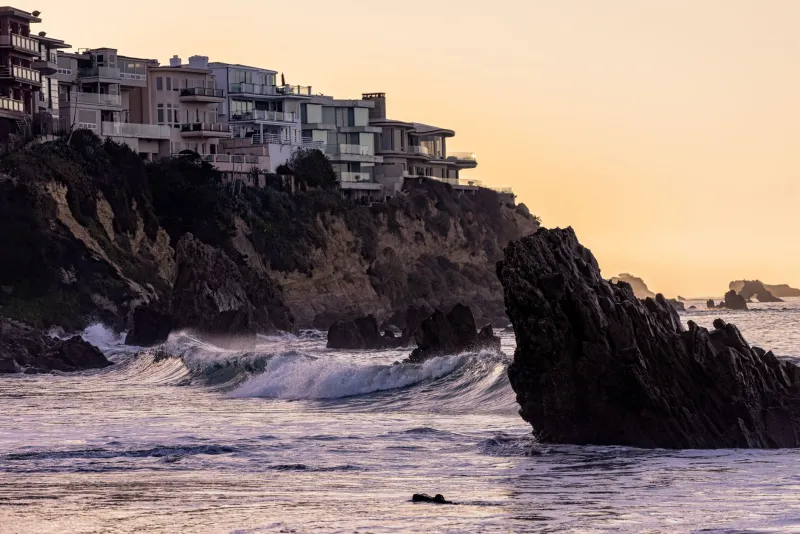
She's not exaggerating. The premium attached to Sunset Cliffs-adjacent property in San Diego's Ocean Beach and Point Loma neighborhoods is one of the more remarkable phenomena in the city's real estate market — a measurable, documented, and fiercely contested consequence of what happens when a world-class natural attraction sits in the middle of a residential neighborhood.
The Numbers Behind the View
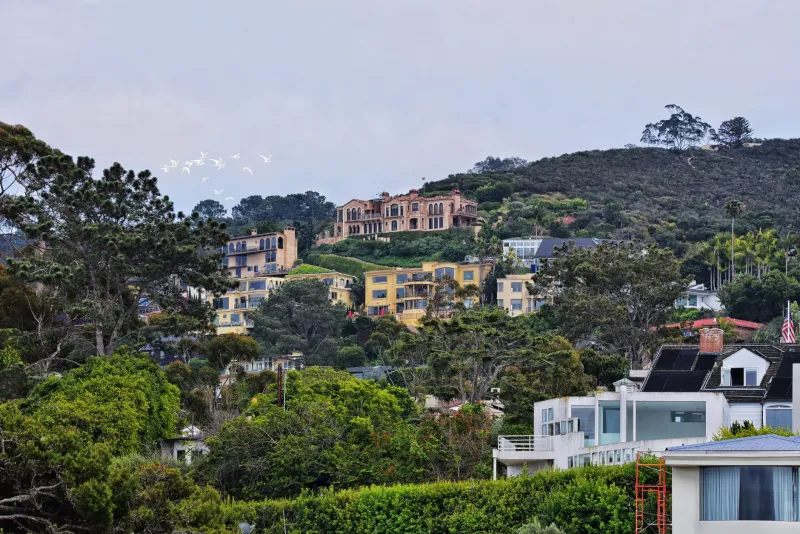
San Diego's real estate market is expensive across the board, but the Sunset Cliffs corridor operates in its own category. Properties with direct ocean views along Sunset Cliffs Boulevard routinely command prices that are 30 to 50 percent higher than comparable homes just a few blocks east, according to local agents who specialize in the Ocean Beach and Point Loma markets.
The premium isn't just about aesthetics. It's about scarcity. The stretch of Sunset Cliffs Boulevard that runs alongside the natural park is finite — there are only so many homes with direct sightlines to the cliffs and ocean, and that number isn't growing. If anything, it's contracting, as erosion gradually reshapes the coastline and some properties find their views partially obscured by vegetation growth or structural changes.
For buyers, the calculation is straightforward: you're not just purchasing a home. You're purchasing access to one of the most photographed, most visited, most emotionally resonant views in Southern California. That access has a price, and the market has priced it accordingly.
The Erosion Problem Nobody Wants to Talk About
Here's the uncomfortable truth that sits beneath every Sunset Cliffs real estate transaction: the cliffs are eroding. Not dramatically, not catastrophically — but measurably, persistently, and in ways that have real consequences for both the park and the properties adjacent to it.
Sunset Cliffs Natural Park sits atop sandstone formations that are actively being undercut by wave action. The sea caves visible from the cliffside path are evidence of this process — beautiful to look at, genuinely concerning from an engineering standpoint. The City of San Diego has invested in seawall repairs and erosion mitigation along sections of the park, but the underlying geology isn't going anywhere.
For homeowners immediately adjacent to the park, erosion is a background anxiety that surfaces during every major storm season. Properties that sit close to the cliff edge face long-term uncertainty that doesn't show up in listing descriptions but absolutely factors into insurance calculations and long-term value assessments.
"You're buying a view that the ocean is slowly taking back," one longtime Ocean Beach resident put it bluntly. "People know that. They buy anyway, because the view is that good."
Zoning, Restrictions, and the Development Tightrope
The tension between preserving Sunset Cliffs as a public natural space and the private interests of adjacent property owners has produced a complicated regulatory environment that shapes what can and can't be built in the neighborhood.
The land comprising Sunset Cliffs Natural Park is owned by the City of San Diego and managed as a public park — meaning development within its boundaries is off the table. But the properties that border the park exist in a zone of competing pressures. Coastal Commission regulations, city zoning ordinances, and height restrictions all constrain what owners can build or modify, particularly where construction might affect public views or coastal access.
Those restrictions frustrate some property owners who feel they're bearing the costs of a public amenity — maintaining properties in a high-maintenance coastal environment, paying premium property taxes, dealing with the traffic and foot traffic that come with living next to one of San Diego's most visited destinations — without proportionate benefits.
On the other side of that argument are preservationists and neighborhood advocates who point out that the restrictions are precisely what protects the character that makes the area valuable in the first place. Remove the height limits, allow denser development along the cliffside corridor, and you'd potentially compromise the very views that drive the premium.
Past Development Proposals and the Neighborhood's Long Memory
The community around Sunset Cliffs has fought off development pressures before, and the memory of those battles shapes how residents engage with any new proposals today.
In past decades, various proposals to commercialize or intensify development near the cliffs — expanded parking structures, private facilities, commercial overlooks — were met with organized community resistance. Ocean Beach has a strong neighborhood identity and a history of activism around coastal preservation that predates the current era of social media organizing. The Sunset Cliffs Natural Park itself exists in part because of community advocacy to protect the land from development.
That history creates a watchful posture among long-term residents. New proposals, even relatively modest ones like expanded amenity installations or modified access points, tend to generate significant community engagement. The neighborhood has learned, through experience, that the line between "improvement" and "commercialization" can be thinner than it looks on a planning document.
What Locals Actually Think About the Tradeoffs
Ask residents who live near Sunset Cliffs about the relationship between their property values and the park's public nature, and you get genuinely complicated answers.
Some are straightforwardly grateful. The park is why they moved here. The view is why they stay. The fact that millions of people visit means their neighborhood is world-famous, which doesn't hurt resale values.
Others are more ambivalent. The same foot traffic that makes the cliffs feel alive also means parking is a nightmare on summer weekends, that the streets fill with strangers, that the rocks occasionally get damaged by visitors who don't treat the place with care. There's a version of success that starts to feel like its own kind of problem.
"I love that people love this place," said one longtime Ocean Beach homeowner who has lived within two blocks of the cliffs for over fifteen years. "I just also love it at six in the morning in January when there's nobody here. Both things are true."
The Intangible Premium
Real estate is supposed to be about measurable factors — square footage, bedroom count, lot size, proximity to schools. Sunset Cliffs scrambles that framework, because a significant portion of what you're paying for when you buy near the cliffs is genuinely intangible.
You're paying for the way the light looks at 5:47 PM in October. You're paying for the sound of the waves on a winter night. You're paying for the knowledge that when you need to clear your head, the edge of the Pacific is a short walk away. These are real things — they affect quality of life in measurable ways — but they resist the spreadsheet logic that usually governs property valuation.
That intangibility is also what makes the Sunset Cliffs real estate market resistant to simple predictions. The view doesn't depreciate. The ocean doesn't go out of style. As long as people feel what they feel when they stand at the edge of those cliffs — that specific combination of smallness and expansion, of beauty and perspective — the premium will hold.
The cliffs are eroding, slowly and steadily, at the pace of geology. The views, for now, remain.