Sacred Ground: Why Sunset Cliffs Has Become San Diego's Most Spiritually Charged Place
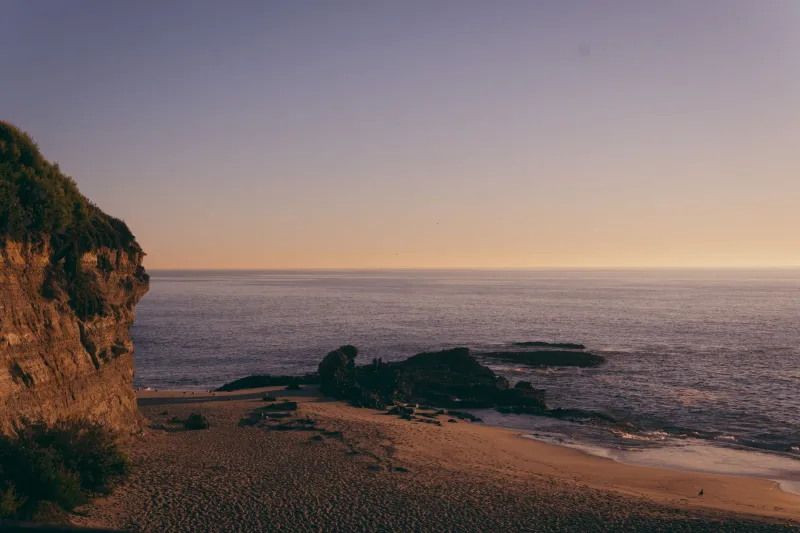
There's a woman who visits Sunset Cliffs every year on the same day in November. She doesn't surf. She doesn't bring a camera. She just sits on the rocks above the tide pools, watches the water move, and stays until the light is completely gone. She's been doing it for eleven years, ever since her mother died.
"I don't know how to explain it," she said, when asked about it. "It's not religious. It's just the only place where I feel like she's still close."
Stories like this one aren't rare at Sunset Cliffs. They're almost the default. Ask enough visitors why they came — really came, not just the surface answer — and you'll start to hear a pattern that sounds less like tourism and more like pilgrimage.
The Anatomy of a Modern Pilgrimage Site
Across human history, pilgrimage sites share a handful of physical characteristics. They tend to sit at thresholds — places where one element meets another. The edge of a mountain. The bank of a river. The meeting point of land and sea. Sunset Cliffs checks every box.
Dr. Pamela Kircher, a psychologist who has studied awe and its effects on the human nervous system, describes what happens when people encounter vast natural scenes at the edge of the ocean: "You get this simultaneous feeling of smallness and expansion. The self-referential part of your brain quiets down. People describe it as peace, as clarity, as feeling connected to something larger than themselves. Those are the exact same words people use to describe religious experiences."
That neurological cocktail — reduced self-focus, heightened sensory awareness, a loosening of ordinary mental chatter — is exactly what pilgrims have sought for centuries in places like Santiago de Compostela, the Ganges River, and the Wailing Wall. At Sunset Cliffs, the Pacific Ocean does the work that cathedrals were built to do.
What People Actually Do Here
The rituals are real, even if no official religion claims them.
Marriage proposals happen here constantly — rangers estimate dozens per month during peak season. Memorial gatherings are common enough that the park has informal protocols for them. People bring flowers, photographs, small objects that belonged to someone they've lost. The rocks below the cliffside path are frequently scattered with flower petals that the tide hasn't yet claimed.
Ash scatterings — technically requiring a permit and conducted offshore, though the rules are loosely observed — happen with enough regularity that locals don't think twice when they see a small group huddled near the water's edge, heads bowed. It's understood. You don't interrupt.
Then there are the solo visitors: the people who come alone, often in the early morning or just after sunset when the crowds thin, and simply stand at the edge looking out. Ask them what they're doing and they'll often struggle to answer. "Thinking," some say. "Just needed to be here," say others.
Rangers at Ocean Beach and Sunset Cliffs Natural Park have noticed the pattern for years. "You can tell the difference between someone who's here to take a photo and someone who's here for something else," one long-time ranger noted. "The second group — they're not in a hurry. They're not looking at their phones. They're just present in a way you don't see that often."
The Geography of Meaning
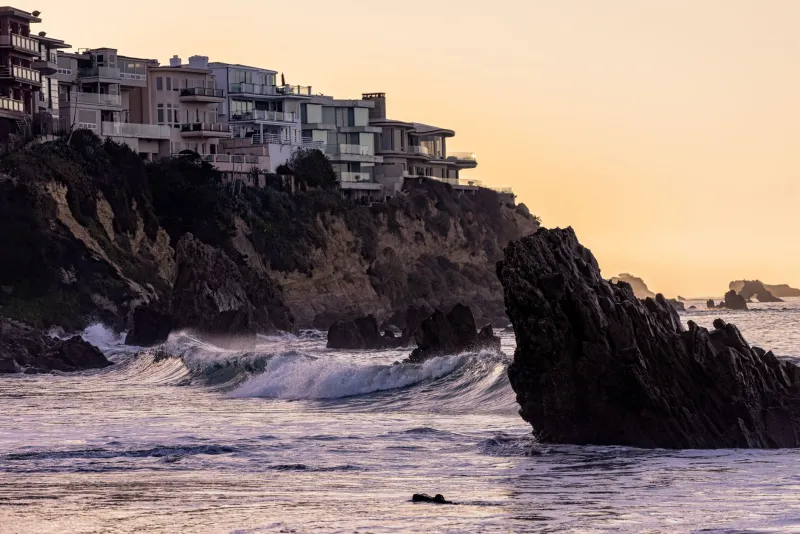
There's something specific about cliffs — as opposed to beaches — that seems to amplify this effect. A beach invites you to play, to move, to interact. A cliff demands that you stop. You can't walk further. You're at the edge of something. That enforced stillness, combined with the sheer scale of the Pacific stretching to the horizon, creates a natural container for reflection.
Sunset Cliffs also has the quality of being genuinely ancient. The sandstone formations here are millions of years old. The sea caves carved into the base of the cliffs took geological time to form. Standing above them, it's hard not to feel the weight of that timescale pressing against your ordinary concerns. The problem you were turning over on the drive here — the career decision, the relationship question, the grief you haven't fully processed — tends to look different from the edge of something that old.
"Perspective is a physical experience here, not just a mental one," says longtime Ocean Beach resident Marco Reyes, who has lived within walking distance of the cliffs for over two decades. "You can feel your problems getting smaller. It's not that they go away. It's that the ocean reminds you that it's been here longer than your problems existed, and it'll be here long after."
The Community That Forms Around Shared Ritual
One of the more surprising things about Sunset Cliffs as a spiritual gathering place is the community it generates between strangers. People who would never speak to each other elsewhere — different ages, backgrounds, reasons for being there — regularly find themselves in conversation.
A retired teacher from Ohio described sitting on the rocks at golden hour and being approached by a young man who asked if she was okay. She'd been crying, she admitted — happy tears, she clarified, not sad ones. She'd just gotten news that her cancer was in remission. "We talked for an hour," she said. "I don't know his name. I'll probably never see him again. But that conversation mattered as much as any I've had in years."
This is one of the hallmarks of genuine pilgrimage sites across cultures: they create conditions for meaningful encounters between people who have no prior connection. The shared experience of the place itself becomes a kind of introduction.
Why It Keeps Drawing People Back
Most pilgrimage sites are visited once in a lifetime. Sunset Cliffs is visited repeatedly, obsessively, by people who live an hour away and people who plan entire trips around returning. The compulsion to come back is one of the things that distinguishes it from a simple tourist attraction.
Psychologists who study place attachment suggest that locations where we've had emotionally significant experiences become encoded in memory differently than ordinary places. They take on a kind of resonance — a pull that's hard to articulate but easy to feel. Every time you return to Sunset Cliffs, you're not just seeing a view. You're reactivating everything the place has meant to you before.
For the woman who visits every November, that's grief and love and continuity. For the couple who got engaged on the rocks three years ago and come back every anniversary, it's the story of their relationship. For the solo traveler who had a breakdown and a breakthrough here on a Tuesday afternoon in 2019, it's the moment things started to shift.
Sunset Cliffs doesn't ask you to believe anything. It doesn't require ritual or doctrine or membership. It just puts you at the edge of the Pacific and lets the ocean do what oceans have always done to human beings — remind us that we're small, that we're here, and that somehow, in this particular place, both of those things feel like enough.