Why Sunset Cliffs Permanently Rewires the Way You Think About Traveling
Talk to enough people who've been to Sunset Cliffs and you start to notice a pattern. It's not just that they loved it—plenty of places are loved and forgotten. It's that they describe the experience as a before and after. Before the cliffs, they traveled a certain way. After, something shifted, and they can't fully explain it.
That's a strange thing to say about a stretch of coastline in San Diego. So what's actually going on?
The Geography Does Something Specific to Your Brain
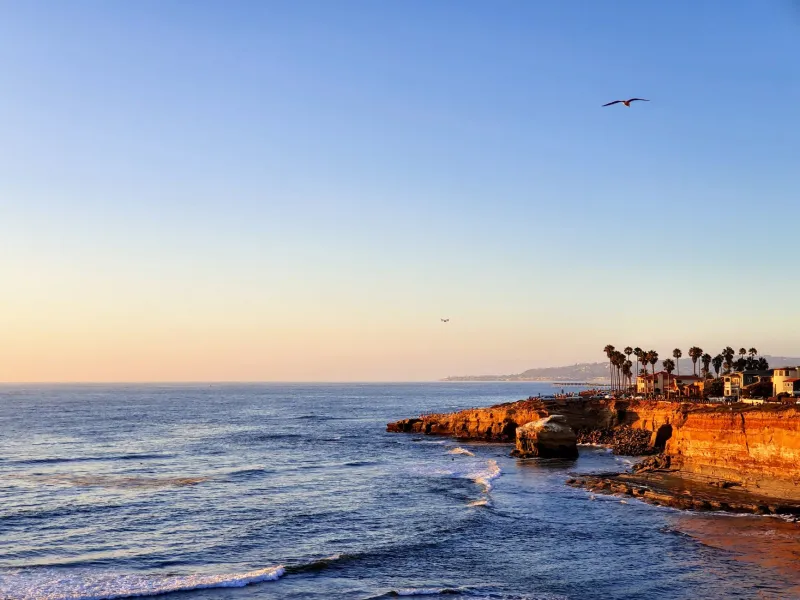
Sunset Cliffs Natural Park sits on the western edge of Point Loma, where the land simply ends and the Pacific takes over. There's no gradual fade here—no shallow beach that eases you into the ocean. The cliffs drop hard, and the water churns against volcanic rock below. You are, in the most literal sense, standing at the edge of the continent.
Neuroscientists who study awe—yes, that's a real field—point to environments like this as reliable triggers for what they call "self-transcendent experiences." Dr. Dacher Keltner at UC Berkeley has spent years studying awe and consistently finds that vast natural landscapes, particularly ones that dwarf the human body and defy easy comprehension, produce measurable changes in how people process their own identity. The ego quiets. The sense of personal urgency fades. Time feels different.
At Sunset Cliffs, you're not just looking at a pretty view. You're confronting scale in a way that most built environments actively protect you from. That confrontation, it turns out, has consequences.
What Repeat Visitors Actually Say
Spend a few evenings at the cliffs and you'll meet them—the regulars. Some come weekly. Some drive down from L.A. just to sit for an hour before driving back. When you ask them why, the answers tend to cluster around the same themes.
"It recalibrates me," said one woman who visits from Pasadena a few times a year. "I don't know how else to describe it. I come here when I've been traveling too fast, too efficiently. The cliffs slow me down in a way that lasts for weeks afterward."
A travel photographer who's shot on six continents described it differently: "I've stood in front of more iconic landscapes than I can count. But this place is the one that made me question whether I was actually experiencing any of them. I was so focused on capturing things that I'd stopped letting them land."
This theme—the cliffs as a corrective, a reset—comes up again and again. People don't just remember Sunset Cliffs fondly. They credit it with changing their travel instincts.
The Light Is Doing Real Work Here
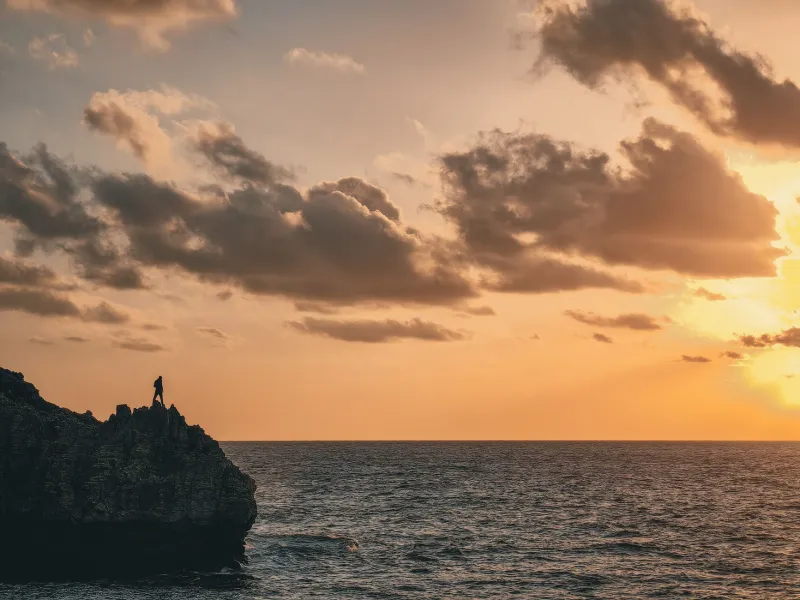
It's worth taking seriously the role that light plays at Sunset Cliffs, because it's not accidental and it's not subtle. The park faces due west, which means the sun doesn't just set near the water—it drops directly into the Pacific on the horizon line. During golden hour, the cliffs themselves glow. The sandstone catches the orange and amber light and throws it back at you warm.
Photographers know this intuitively, which is why Sunset Cliffs has become one of the most-photographed locations in Southern California. But there's something that happens when you're not behind a camera—when you're just standing in that light as it changes. Color temperature shifts. The air feels different. The whole scene has a quality that interior designers and cinematographers spend careers trying to manufacture artificially.
Travel therapists—practitioners who specifically work with clients around meaningful travel experiences—often describe light as an underrated element in why certain places become emotionally significant. "Light signals safety, warmth, transition," one San Diego-based therapist explained. "Sunset light in particular is tied to reflection. It's the end of something. People open up in it."
Why This Place Raises the Bar (For Better and Worse)
Here's the complicated part of the Sunset Cliffs effect: once you've felt it, a lot of travel starts to feel hollow by comparison. Visitors describe returning from other trips and feeling vaguely dissatisfied in ways they struggle to articulate. The resort was beautiful. The food was great. But something was missing.
What was missing, often, was that quality of genuine encounter—the sense that a place had actually done something to them rather than simply entertained them. Sunset Cliffs is not a passive experience. The wind pushes back. The waves are loud. The cliffs are slightly dangerous if you're careless. You are required to be present in a way that a hotel pool does not require.
This is what travelers mean when they say the cliffs changed how they travel. It's not that they become cliffs-obsessed or start chasing extreme landscapes. It's that they develop a new filter. They start asking, of every destination: will this place actually ask something of me? Will it pull me out of my own head? Will it feel real?
How to Let It Work on You
If you're planning your first visit—or your fifth—a few things are worth knowing.
First, timing matters more here than at almost any other San Diego attraction. The hour before sunset is the obvious choice, and it's obvious for good reason. But consider arriving earlier than you think you need to. Spend time walking the coastal trail north toward the tidepools before the crowds thicken. Let the place build.
Second, resist the urge to photograph everything immediately. Give yourself the first twenty minutes with your phone in your pocket. Let the scale register. Let the sound of the water become background rather than foreground. The photos will be better afterward, and so will the memory.
Third, come back. The cliffs look different in morning light, in winter, in fog. Repeat visitors aren't just nostalgic—they're chasing the way the place keeps revealing new angles. That's part of what keeps Sunset Cliffs feeling alive rather than like a checked box.
The Honest Answer
There's probably no single explanation for why Sunset Cliffs does what it does to people. It's likely the geography and the light and the sound and the particular way the place sits at the literal edge of the continent—all of it working together in a combination that's hard to replicate.
But the effect is real. People don't just visit Sunset Cliffs and leave. They carry it with them into the next trip, and the one after that. It raises their expectations in the best possible way—not for luxury or convenience, but for meaning. For the feeling that a place actually showed up for them.
That's a high bar. Sunset Cliffs clears it every time.