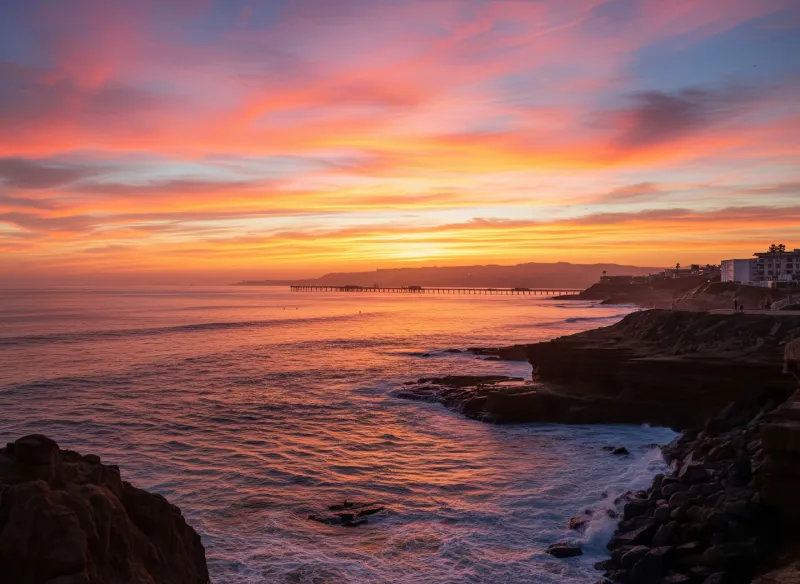
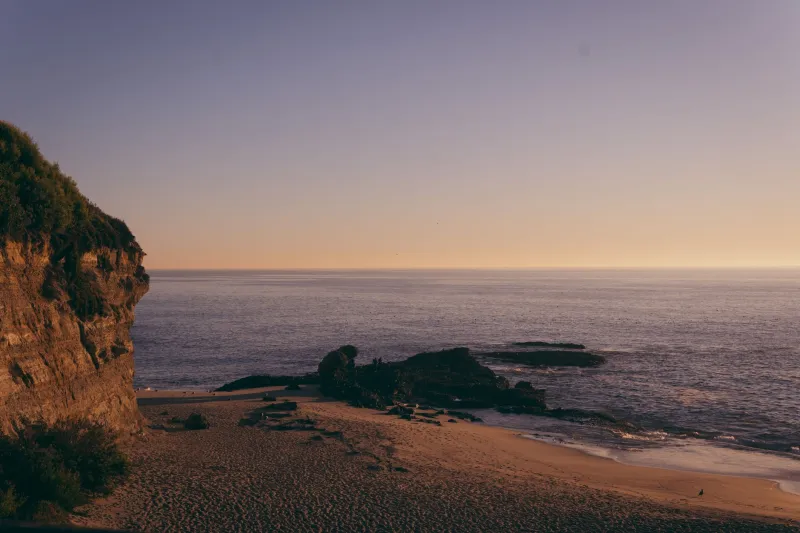
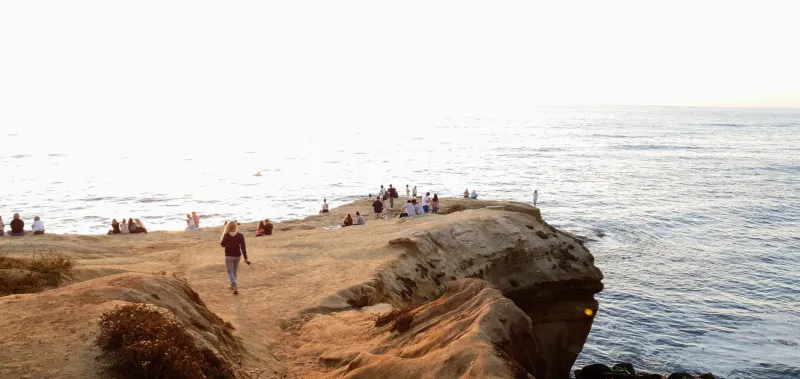
After Sunset Cliffs, Every Other Beach Feels Like It's Missing Something
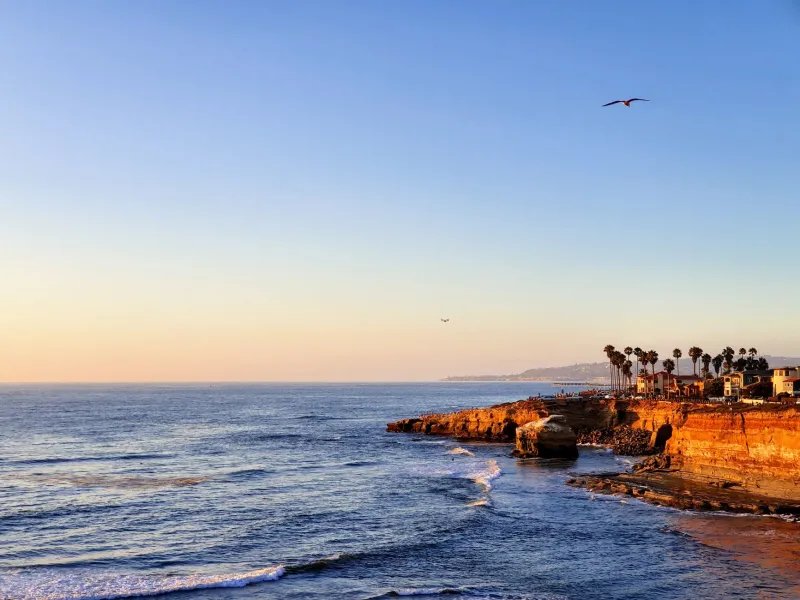
Somewhere between your third visit to a perfectly pleasant beach resort and your second glass of wine at a cliffside bar with a "stunning ocean view," it hits you. The view is fine. The sunset is technically beautiful. The waves are doing exactly what waves do. And yet something is off — like a song played in the wrong key. You've been here before, sort of. Except the place you've actually been is Sunset Cliffs, and now everything else is being measured against it whether you meant that to happen or not.
Travelers talk about this constantly. On travel forums, in comment sections, in quiet conversations over fish tacos on Newport Avenue. There's a name for it among the people who study how destinations shape us: destination imprinting. And Sunset Cliffs, it turns out, is particularly good at doing it.
What Makes a Place Stick
Not every beautiful location rewires your expectations. You can visit Niagara Falls and come away impressed without spending the rest of your life feeling vaguely disappointed by waterfalls. So what makes Sunset Cliffs different?
Part of it is the way the place works on you physically before your brain even gets involved. The walk from the parking area to the cliff edge isn't dramatic — there's no grand reveal, no overlook platform with a railing and a gift shop. You just sort of... arrive. The Pacific opens up in front of you, the rock drops away beneath your feet, and the scale of it registers somewhere deep and pre-verbal. Psychologists who study awe — the specific emotional response triggered by things that exceed our usual frame of reference — describe exactly this kind of moment as cognitively disruptive. Your brain has to work harder to process what you're seeing, and that extra processing is part of what makes the memory so durable.
Repeat visitors often describe their first time at Sunset Cliffs with unusual precision. They remember the light, the smell, the specific sound of the waves working through the sea caves below. The details don't fade the way most travel memories do. That's not an accident.
The Measuring Stick Problem
Here's where things get complicated for the well-traveled Sunset Cliffs devotee. Once a place has imprinted itself on you this completely, it becomes an involuntary reference point. You start doing comparisons you never asked to make.
The cliffs in Portugal are dramatic, sure — but is the light right? The coastline in Big Sur is genuinely jaw-dropping, no question — but where's the sense of just wandering up and being there, no ticket required, no shuttle bus, no timed entry? The beach in Hawaii is paradise by any reasonable definition — but where's the raw, unpolished edge of it?
This isn't snobbery. It's not even really a complaint. It's just what happens when a place sets a very specific emotional standard and your nervous system decides to use that standard as a baseline going forward. Travelers who've experienced this describe it less as disappointment in other places and more as a kind of homesickness for a specific feeling that Sunset Cliffs delivers and most places don't quite replicate.
Locals who've watched this play out over years have a theory about why. Sunset Cliffs doesn't perform for you. It doesn't have an agenda. The rocks were here before San Diego was a city, and they'll be here long after. That indifference — the sense that the place isn't trying to impress you, it just is — creates a kind of authenticity that's genuinely rare in an era when most destinations are actively curated for maximum photogenic impact.
The Spiritual Dimension Nobody Warned You About
Ask enough people about what Sunset Cliffs does to them and the language starts shifting. Words like grounding, perspective, reset come up repeatedly. People describe standing at the edge and feeling the noise in their head go quiet in a way it doesn't at other beautiful places. They talk about decisions they made after visiting, conversations they had with themselves on the walk back to their car, ways of thinking about their own lives that shifted somewhere between the tide pools and the horizon.
This isn't unique to Sunset Cliffs — natural environments have well-documented psychological benefits, and coastal settings in particular have been linked to reduced stress markers and increased feelings of well-being. But something about the specific combination of elements here — the physical exposure of standing on actual cliffs, the sound design of waves hitting rock rather than sand, the unobstructed western horizon — seems to amplify those effects.
People who visit during golden hour especially tend to describe the experience in almost cinematic terms, as if the light itself is doing something intentional. In a way, it is. The sun hitting ocean water at that angle, filtered through marine layer or caught on the surface of a perfectly calm sea, produces colors that don't exist anywhere else in quite the same way. Your eyes know they're seeing something unusual. The rest of you follows.
How to Let It Change You Without Ruining Everything Else
The Sunset Cliffs Effect doesn't have to be a problem. It can actually make you a better, more intentional traveler if you let it work that way.
The lesson isn't that Sunset Cliffs is the best place on earth and everything else falls short. The lesson is about what you're actually looking for when you travel — and that's worth knowing. If what you're chasing is genuine wildness within reach of a city, look for it deliberately. If it's the feeling of being small in a good way, seek out places that offer scale without infrastructure. If it's the absence of performance, skip the curated overlooks and find the spots where the land just does its thing.
Sunset Cliffs taught you to want something real. That's not a curse. That's a compass.
Come back whenever you need to recalibrate. The cliffs aren't going anywhere — or at least not quickly. They'll be here at sunset, doing exactly what they always do, completely indifferent to your schedule and deeply, stubbornly themselves. That's the whole point.