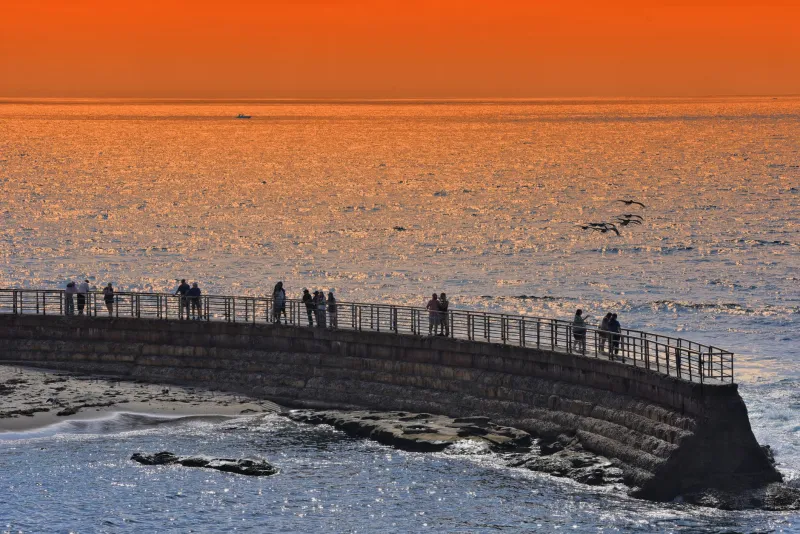
One Visit, One View, One Complete Shift: How Sunset Cliffs Rewrites Your Entire Map of San Diego
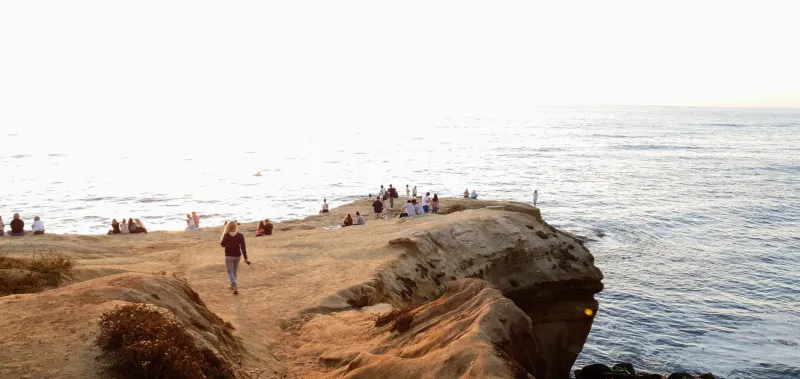
Most people roll into San Diego with a mental checklist already loaded. Balboa Park. The Zoo. The Gaslamp Quarter. Maybe a cruise through La Jolla if there's time. Sunset Cliffs — if it makes the list at all — usually gets slotted in as a quick detour, a scenic overlook to tick off between a fish taco lunch and whatever's next.
And then they actually show up.
Something happens at Sunset Cliffs that doesn't happen at most tourist checkboxes. It doesn't just impress you — it reorients you. Visitors who've spent two days bouncing between downtown hotels and Pacific Beach bars suddenly find themselves standing on a jagged stretch of sandstone, watching the Pacific do something genuinely violent and beautiful to the rock below, and thinking: wait, this is San Diego?
It's a shift that's hard to put into words, but almost everyone who visits describes some version of it.
The Moment the City Stops Being a Postcard
San Diego has a branding problem — not in a bad way, exactly, but in a way that flattens it. The city gets sold on sunshine, beaches, and year-round perfection. Which is all true. But that version of San Diego is smooth and easy and a little bit... generic. It could be any number of warm coastal cities if you squint at it the right way.
Sunset Cliffs doesn't fit that version of the city at all.
The cliffs are raw. The surf here doesn't lap gently at a sandy shore — it hammers into sea caves and sprays through blowholes and leaves the air smelling like something ancient and untamed. The path along the bluff is uneven, occasionally crumbling at the edges, and deliberately unpolished. There are no concession stands. No lifeguard towers. No rental kiosks.
For a lot of visitors, that's the moment the postcard version of San Diego cracks open and something realer gets in.
"I'd been to San Diego three times before I went to Sunset Cliffs," says Renata, a travel blogger from Chicago who now visits the city at least once a year. "I thought I knew what the city was. Then I stood out there and realized I'd basically been visiting the lobby the whole time."
A Geography Lesson You Feel in Your Chest
There's also something almost physically educational about the cliffs — the way they force you to understand San Diego's relationship with the ocean in a completely new way.
Stand anywhere along the Ocean Beach stretch of the cliffs on a clear afternoon and look north. You can trace the coastline all the way up through Mission Beach, past Pacific Beach, and toward La Jolla's headlands. Look south and you'll catch the curve toward Point Loma. The scale of it — the sheer uninterrupted arc of coastline — doesn't register the same way from sea level. From up here, you get the geography of the whole city in a single glance.
Long-time Ocean Beach resident and amateur naturalist Dave Kellerman puts it bluntly: "People come here and suddenly they understand where they are. Like, actually understand it. The ocean isn't just a backdrop anymore. It's the whole story."
That recalibration tends to stick. Visitors who've stood on the cliffs report that even familiar San Diego spots feel different afterward — the beaches at Mission Bay seem softer and more intentional by contrast, the manicured shores of Coronado feel more like a choice someone made rather than a natural state of things. Sunset Cliffs gives you a baseline for what the coastline actually looks like when humans mostly leave it alone.
Why First-Timers Keep Coming Back
Travel research consistently shows that transformative experiences — the ones that shift perspective rather than just deliver pleasure — are the ones that generate return visits. Sunset Cliffs seems to operate exactly that way.
Tourism professionals who work in San Diego's visitor economy have noticed the pattern. "When people have a genuinely surprising experience somewhere, they come back to test it," says one hospitality consultant who's worked with several San Diego properties. "They want to know if it was real. Sunset Cliffs gets a lot of that. People show up the second time with friends, almost like they need a witness."
The cliffs also have a quality that rewards repeat visits in a way that purely visual attractions often don't. The light changes. The surf changes. The tide exposes and conceals different sections of rock. Visitors who've been coming for years describe the place as somehow never quite the same twice, which keeps it from ever fully settling into memory as a static image.
The Ripple Effect on How You See the Rest of the City
Here's the part that's genuinely strange to explain but almost universally reported: after Sunset Cliffs, people start looking at San Diego differently in places that have nothing to do with the cliffs.
They notice the way the canyon systems cut through the city's neighborhoods. They pay more attention to the way Point Loma rises behind the downtown skyline. They start asking questions about the tide pools they'd walked past without registering on previous visits. The cliffs seem to activate a kind of spatial curiosity that wasn't running before.
"It made me want to understand the whole coastline," says Marcus, a repeat visitor from Austin who's made Sunset Cliffs a fixed stop on every San Diego trip since his first visit four years ago. "Before that, I was just going to the beach. After that, I was actually paying attention."
That's the Sunset Cliffs effect in a nutshell. It doesn't just give you a beautiful memory. It gives you a new lens.
How to Let It Actually Work on You
If you want to get the full impact — not just the Instagram moment but the genuine shift in perspective — a few things help.
Give yourself time. This isn't a five-minute stop. Walk the full length of the bluff path from Ladera Street down toward the southern end near Luscomb's Point. Let the scale of it register. Sit down somewhere and watch the water for a while without narrating it to your phone.
Go at low tide if you can manage it. The exposed rock formations and sea caves that emerge below the cliffs are a significant part of what makes the place feel so geologically alive. High tide is dramatic. Low tide is revelatory.
And if it's your first visit to San Diego, consider making this your first stop rather than your last. Let the cliffs set the frame. Everything else in the city will look a little different — and a little richer — once you've seen what the coastline looks like when it's completely on its own terms.
San Diego will still be sunny. The fish tacos will still be great. But you'll carry a different version of the place with you — one with some real weight and texture to it.
That's the thing about Sunset Cliffs. It doesn't compete with the rest of the city. It just quietly explains it.