Standing at the Edge: The Unexpected Ways Sunset Cliffs Rewires Your Thinking
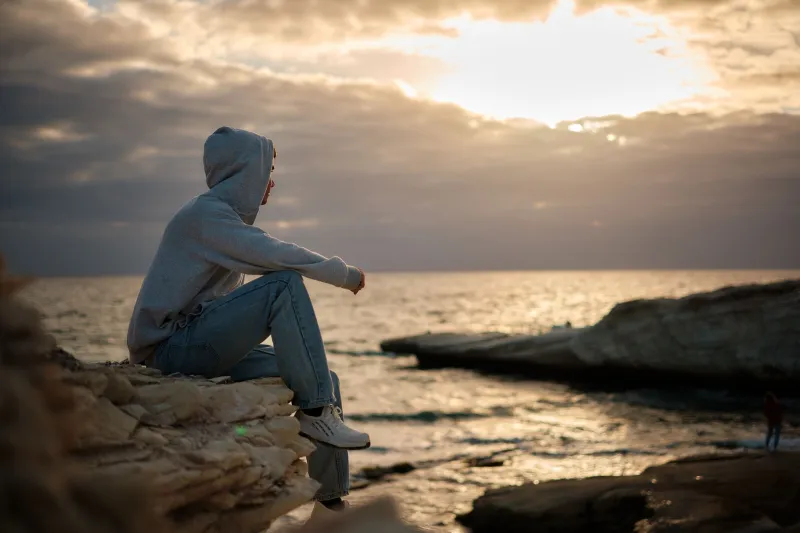
Marcus didn't plan on quitting his job that Tuesday. He'd driven out to Sunset Cliffs after a brutal meeting, figured he'd sit on the rocks for twenty minutes, decompress, and drive back. Three hours later, he was still there. He called his wife from the parking lot on Sunset Cliffs Boulevard and told her he was done with finance. Six months after that, he was enrolled in a landscape architecture program in Tempe.
"I don't know how to explain it," he said, laughing a little at himself. "It wasn't like the ocean told me anything. But something about sitting there made the thing I already knew feel undeniable."
This kind of story isn't unusual. Spend any real time talking to people who visit Sunset Cliffs regularly—or who remember a first visit vividly years later—and you start to hear a pattern. The place has a way of surfacing things. Decisions that felt impossible indoors suddenly seem obvious with the Pacific crashing forty feet below you.
More Than Just a Pretty View
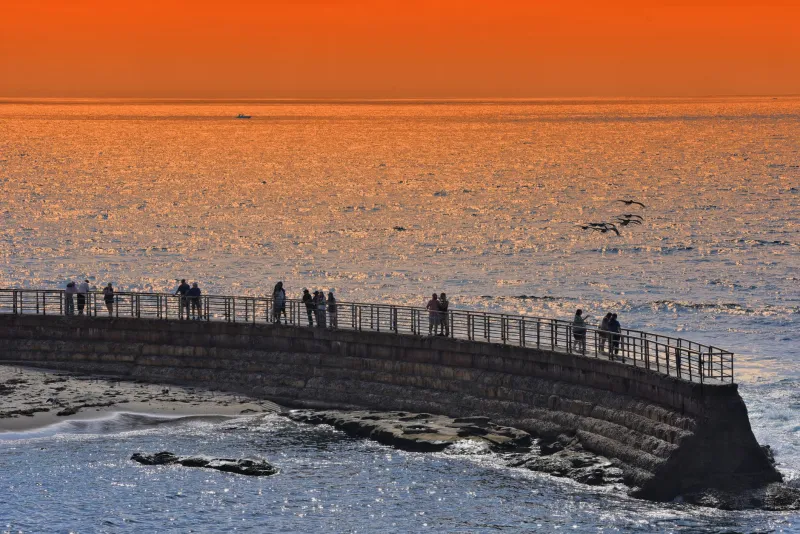
Sunset Cliffs Natural Park stretches along about two miles of the Point Loma peninsula's western edge, and the geology alone is worth pausing over. The cliffs are made of sedimentary rock sculpted by centuries of wave action into arches, sea caves, and tiered shelves. There's nothing manicured about it. No boardwalk, no gift shop, no roped-off viewing platform telling you exactly where to stand.
That rawness matters. Visitors aren't passive observers here—you're picking your way across uneven rock, feeling the spray, making small judgment calls about how close to the edge is too close. The environment asks something of you the moment you arrive.
Psychologists who study restorative environments talk about "soft fascination"—the kind of low-demand attention that natural settings engage, as opposed to the sharp, effortful focus that screens and deadlines require. The ocean is endlessly interesting without being urgent. Your mind, freed from the tyranny of the next task, starts doing the slower, deeper work it doesn't get space for otherwise.
Sunset Cliffs seems almost engineered for this, though of course it wasn't engineered at all.
The Stories People Carry Home
Jessica, a graphic designer from the East Village neighborhood in San Diego, has been coming to the cliffs since college. She's watched a lot of sunsets there. But she points to one specific evening, about four years ago, when she was sitting near the tidepools south of the main overlook with her then-boyfriend.
"We'd been going back and forth about whether to move in together for months. Just talking in circles. And we sat there and neither of us said anything for a long time, and then he looked at me and said, 'We should just do it.' And I knew he was right. The cliffs didn't decide for us—but whatever noise was in my head just... quieted down enough that I could actually hear what I wanted."
They've been married three years now. She still goes to the cliffs, usually solo, when she has something to think through.
Not every transformation is a romantic one. David, a photographer who grew up in the Midwest and moved to San Diego for work, describes his first visit to Sunset Cliffs as the moment he understood what he wanted his work to be about. He'd been shooting commercial product photography—good money, zero passion. He sat on the rocks at golden hour and watched the light do things to the water and the stone that he'd never seen before, and something in him recognized it.
"I couldn't stop thinking about it for weeks. Not the specific images—just the feeling of seeing something that felt true. I started shooting documentary work on weekends. Eventually that became my whole career."
Why Here, Specifically?
It's fair to ask whether Sunset Cliffs is genuinely special in this way, or whether any sufficiently dramatic natural setting would do the same thing. Ocean Beach is a few minutes north. La Jolla's coastline is stunning. Torrey Pines has trails with sweeping views.
But repeat visitors tend to insist there's something particular about the cliffs. A few factors keep coming up.
First, the elevation and exposure. You're not looking at the ocean from a beach—you're above it, which creates a different psychological relationship to the scale of what you're seeing. The drop is real enough to register in your nervous system without being genuinely dangerous if you're sensible about where you stand. That mild physical alertness, some people suggest, sharpens the mind in a useful way.
Second, the lack of infrastructure keeps crowds manageable and keeps the experience unmediated. There's no soundtrack, no interpretive signage, no organized activity. You bring yourself and you figure out what to do with the time.
Third—and this is harder to quantify—the light. Sunset Cliffs faces almost due west, which means on clear evenings you get a full, unobstructed view of the sun dropping into the Pacific. The color shifts over the course of an hour are remarkable, and they create a natural sense of time passing, of something completing itself. People who struggle to feel present in ordinary life often describe the sunset here as the one thing that reliably pulls them into the moment.
The Ritual Might Be Half the Point
There's a case to be made that it's not just the place—it's what the act of going there means. For many San Diegans, a trip to Sunset Cliffs is a deliberate choice to step away from the pace of daily life. You drive out, you find a spot, you sit. The intention embedded in that ritual may be doing as much work as the scenery itself.
But that's not really a counterargument. The cliffs provide a stage for the ritual. The combination of intention and environment is what creates the conditions for something to shift.
Marcus, the former finance guy, put it this way: "I'd driven past Sunset Cliffs a hundred times. But that one afternoon when I actually stopped and sat there—it's like the place gave me permission to be honest with myself. I don't think I could've gotten there in a coffee shop."
How to Let the Cliffs Work on You
If you're heading out there with something on your mind—or just a vague sense that something needs to change—a few things seem to help, based on what regular visitors describe.
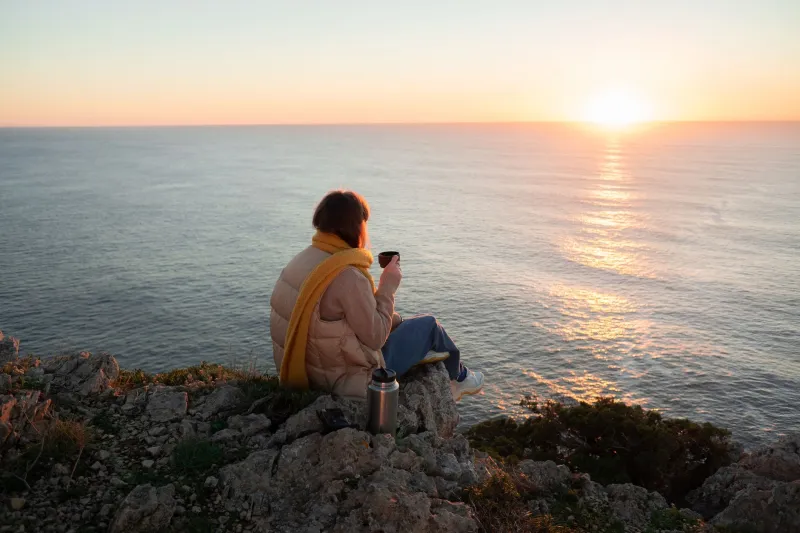
Go alone, or with one person you trust completely. Groups diffuse the reflective quality of the experience. Arrive with enough time to stay past the sunset, when the sky turns deep blue and the crowd thins. Leave your earbuds out. Pick a spot away from the main overlook area on Sunset Cliffs Boulevard—the sections south toward the tidepools, or north near the smaller pocket beaches, tend to be quieter.
And then just sit with it. The cliffs have been here a lot longer than whatever you're working through. They're not in a hurry.
Neither, for once, do you have to be.