What the Ocean Does to Your Brain: The Science Behind Why Sunset Cliffs Feels So Good

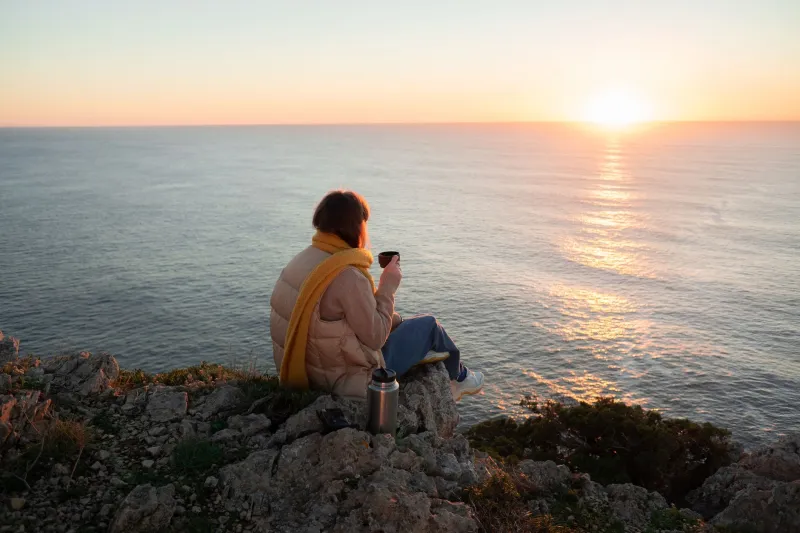
You've probably had this experience: you drive out to Sunset Cliffs feeling tense, maybe a little scattered, definitely carrying more stress than you'd like. You find a spot on the bluffs, sit down, and somewhere between watching the waves crash against the sandstone and feeling the salt air hit your face, something just... loosens. An hour later, you're not the same person who parked the car.
That's not imagination. That's neuroscience.
Researchers who study the intersection of environment and mental health have been building a compelling body of evidence around what they call "blue space" — any natural environment centered on water. And coastal cliffs like the ones in Ocean Beach? They're basically the gold standard of blue space. Here's what's actually going on inside your brain when you visit.
Your Nervous System Hits the Brakes
The moment you step out of your car on Sunset Cliffs Boulevard and hear the ocean, your autonomic nervous system starts shifting gears. Specifically, it begins dialing back your sympathetic nervous system — the one responsible for that constant low-grade "fight or flight" hum most of us carry around — and hands the wheel over to your parasympathetic system, which is essentially your body's rest-and-digest mode.
This isn't a small thing. Cortisol levels (that's your primary stress hormone) measurably drop in people who spend time near moving water. A study published in the journal Health & Place found that people living near the coast reported significantly better mental health outcomes than their inland counterparts, even after controlling for income, age, and lifestyle factors. The effect is real, it's consistent, and it doesn't take long to kick in.
What makes Sunset Cliffs particularly effective here is the combination of factors: you're elevated above the water, which means you're getting a wide, unobstructed visual field. Research out of the University of Exeter suggests that the brain responds differently to expansive natural views versus cluttered urban ones. Wide horizons, it turns out, are genuinely calming on a neurological level.
The Ion Theory (And Why It Actually Holds Up)
Okay, "negative ions" sounds like something you'd see on a wellness influencer's Instagram caption, right next to a crystal recommendation. But the science here is more solid than the marketing language suggests.
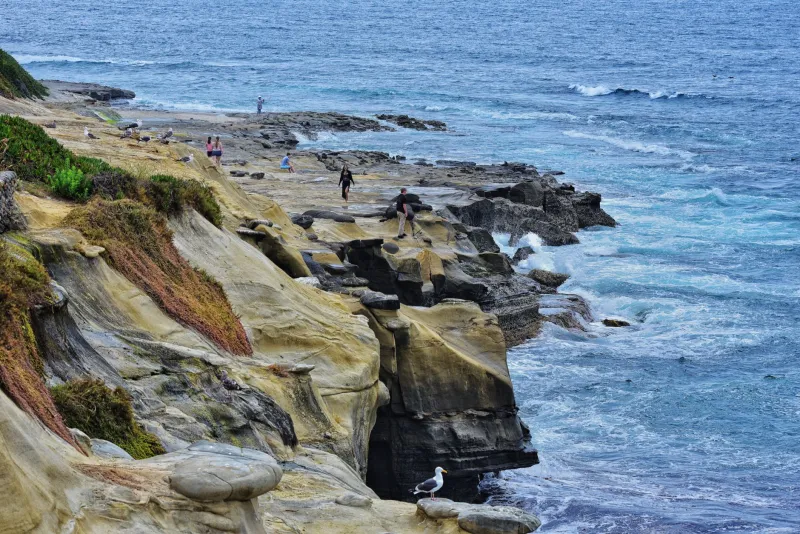
Negative ions are molecules that carry an extra electron, and they're produced in abundance wherever moving water meets air — ocean waves being a particularly rich source. When you're standing on the cliffs above the surge channels at Sunset Cliffs, you're essentially bathing in them.
What do they do? The research is still evolving, but the most consistent finding is that negative ion exposure appears to increase serotonin levels in the brain. Serotonin is one of your key mood-regulating neurotransmitters — the same one that antidepressants typically target. A review published in the Journal of Alternative and Complementary Medicine found that high-density negative ion treatment showed significant effects on depression symptoms.
You're not going to cure clinical depression by sitting on a cliff. But you might genuinely feel better, and now you know a little more about why.
Sound as Medicine
There's a reason "ocean waves" is one of the most popular sleep and relaxation soundscapes on every meditation app in existence. The rhythmic, non-repetitive sound of waves is what researchers call "pink noise" — a frequency pattern that the brain processes as inherently non-threatening, which allows your prefrontal cortex (the part handling stress, anxiety, and executive function) to genuinely relax its grip.
At Sunset Cliffs, the sound design is exceptional, if you'll forgive the weird phrase. The natural rock formations and sea caves along the bluffs amplify and shape the wave sounds in ways that feel almost architectural. The blowholes near the southern end of the park send compressed bursts of sound and spray upward in unpredictable intervals — which, interestingly, keeps your brain lightly engaged without triggering any stress response. It's the neurological sweet spot between boredom and overstimulation.
Natural Light and Your Internal Clock
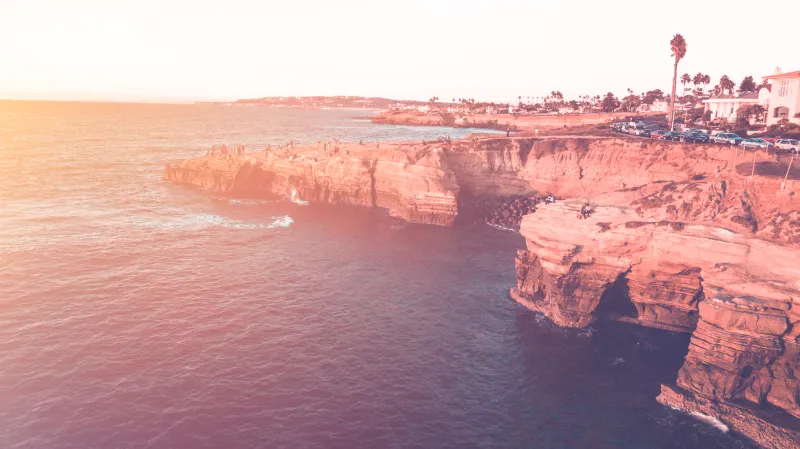
Sunset Cliffs faces almost due west, which means it catches the full arc of afternoon and evening light in a way that few spots in San Diego can match. That's obviously great for photography. But it's also genuinely great for your circadian rhythm.
Exposure to natural light — especially the warm, lower-angle light of late afternoon — helps regulate melatonin production and reinforces your body's internal clock. If you've been spending most of your day under fluorescent office lighting or staring at screens, an hour or two at Sunset Cliffs in the late afternoon is essentially a reset button for your sleep-wake cycle.
And then there's the sunset itself. Research on awe — that specific emotional state triggered by experiences of vastness or beauty that exceed our normal frame of reference — shows that it measurably reduces self-focused thinking, increases feelings of connectedness, and even appears to reduce inflammatory markers in the body. Watching the sun drop into the Pacific from a perch on those dark lava rocks? That qualifies.
How to Actually Maximize the Benefits
Knowing the science is one thing. Getting the most out of your visit is another. A few practical suggestions:
Arrive before golden hour, not at it. The crowds at peak sunset time are real, and crowd stress will partially counteract your cortisol-lowering ocean time. Getting there 90 minutes before sunset lets you ease in, find a good spot, and let your nervous system settle before the main event.
Leave the earbuds out. This one's hard, but it matters. The wave sounds are doing real neurological work. Covering them with a podcast or playlist is a bit like going to a great restaurant and eating while scrolling your phone. You're technically there, but you're missing the point.
Sit lower when you can. The elevated cliff views are stunning, but if you can safely get closer to the water — there are accessible areas near the tidepools toward the northern end of the park — the negative ion concentration and sound immersion are significantly stronger.
Go on a weekday. The mental health benefits of natural environments are substantially reduced when those environments are crowded and noisy. Tuesday morning Sunset Cliffs is a completely different neurological experience than Saturday at 5 p.m.
Stay for the stars. The transition from sunset to full dark is its own kind of awe experience, and the Milky Way is occasionally visible from the cliffs on clear nights away from the brightest light pollution. Darkness itself has measurable effects on melatonin and recovery — giving yourself permission to sit there past the last pink light in the sky is genuinely good for you.
The Cliffs Will Be There When You Need Them
San Diego has no shortage of beautiful places. But Sunset Cliffs has something a little harder to quantify — a specific combination of geography, sound, light, and scale that seems to work on people in a way that's difficult to explain until you've felt it yourself.
Now you have a few more words for it. Your cortisol dropped. Your serotonin nudged upward. Your prefrontal cortex took a breather. Your circadian rhythm got a tune-up. And somewhere in there, you remembered that the world is large and mostly beautiful, which is maybe the most useful thing any place can remind you of.
The cliffs will be there. Go let them do their thing.