Why Sunset Cliffs Becomes the Destination Every Other Place Has to Beat
You're standing on a bluff somewhere in Oregon, or maybe strolling a boardwalk in Florida, and the view is objectively beautiful. The water is blue, the horizon is clean, the light is doing something nice. And yet there's this nagging feeling — a quiet voice in the back of your head that keeps saying, yeah, but it's not Sunset Cliffs.
If you've been to San Diego's most iconic stretch of coastline, you probably know exactly what that voice sounds like. And you're far from alone.
The Baseline Shift Nobody Warns You About
Travel psychologists have a term for what happens when a single destination recalibrates your entire sense of what a place can be. It's sometimes called an "anchor experience" — a moment so emotionally and sensorially complete that your brain stores it as the default reference point for all future comparisons.
Dr. Lena Faris, a cognitive psychologist who studies place attachment and travel behavior, explains it this way: "When a destination hits multiple sensory and emotional registers simultaneously — the sound of waves, dramatic visual contrast, physical elevation, the social atmosphere — it creates a memory that is disproportionately vivid. The brain doesn't just file it as 'a nice beach.' It files it as the definition of what a coastal experience should feel like."
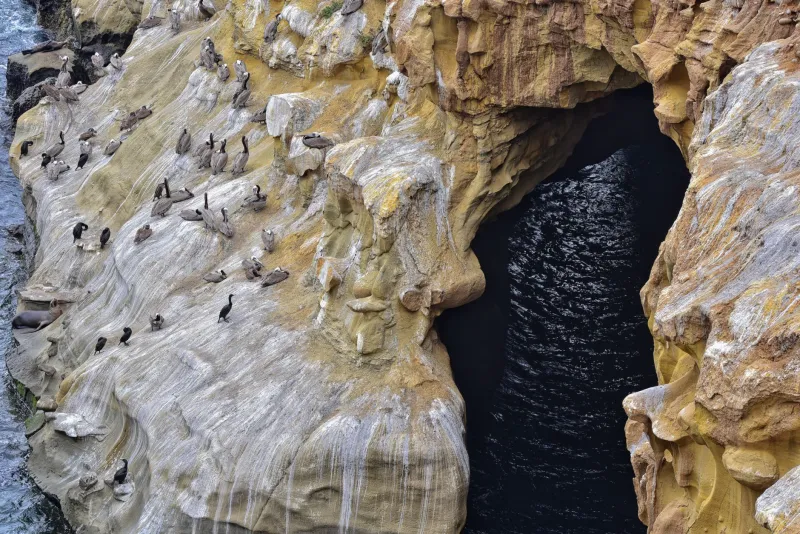
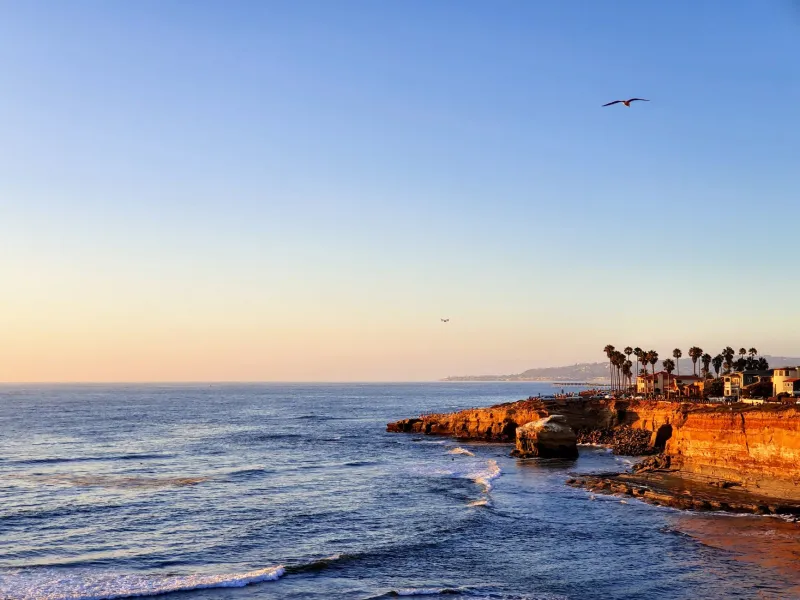
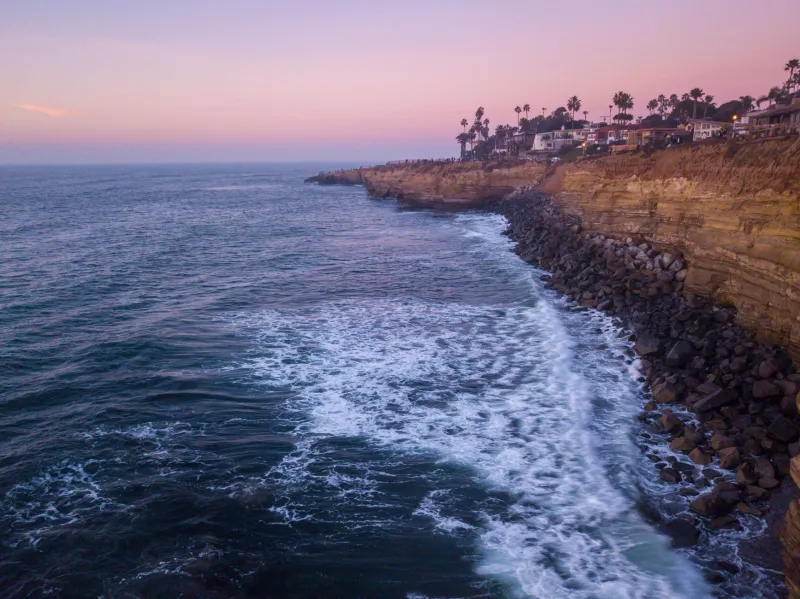
Sunset Cliffs, it turns out, is practically engineered to trigger exactly that kind of encoding. The jagged volcanic rock. The way the Pacific crashes into sea caves and sends spray fifteen feet into the air. The warm sandstone light at golden hour. The sense that you're standing at the actual edge of the continent. It's a lot to process — and your brain processes all of it.
What Returning Visitors Actually Say
Talk to people who've visited Sunset Cliffs more than once, and a pattern emerges quickly. Many of them didn't come back because they planned to. They came back because nothing else quite filled the space the cliffs had carved out.
Marcus T., a travel blogger from Chicago who has visited over 40 countries, put it bluntly: "I've stood on cliffs in Ireland, in New Zealand, in Portugal. They're all incredible in their own way. But Sunset Cliffs is the one I keep using as my mental yardstick. I'll be somewhere new and think, 'This is beautiful — but does it have that thing?' It usually doesn't. Whatever that thing is."
That "thing" is hard to quantify, which is part of why it sticks. It's not just the view — it's the combination of accessibility and wildness, the fact that you can park a few blocks away and suddenly feel like you're on the edge of the world. It's the way the cliffs feel both ancient and alive, constantly being reshaped by the ocean below.
Jessica R., a San Diego transplant originally from Nashville, describes her first visit as a recalibration she didn't ask for: "I went for a quick sunset. I ended up sitting there for two hours. Then for the next year, every beach trip I took, I kept thinking, 'I wish this was Sunset Cliffs.' It's a little inconvenient, honestly."
The Psychology of Place Attachment
What Sunset Cliffs triggers isn't just aesthetic preference — it's place attachment, a well-documented psychological bond between people and specific locations. Researchers at the University of California have studied how certain environments produce what they call "restorative experiences" — moments where the brain shifts out of directed attention and into a more diffuse, open state of awareness.
Natural environments with dramatic features — crashing waves, elevated vantage points, dynamic light — are particularly effective at producing this state. And when a place produces it reliably, the brain begins to associate that location with a kind of psychological relief. You don't just remember it fondly. You crave it.
This is why the Sunset Cliffs effect isn't really about the cliffs being objectively better than other places. It's about what they do to you while you're there — and the fact that your nervous system remembers.
When the Standard Becomes a Gift
It might sound like a curse — to be forever chasing a feeling you found on a stretch of San Diego coastline. But many travelers reframe it differently. Having a gold-standard destination means you know what you're looking for. It means you've tasted something real, and you won't settle for a postcard version of nature.
Dr. Faris sees it as a form of travel literacy. "Having a reference point that moves you deeply actually makes you a better traveler," she says. "You stop chasing novelty for its own sake and start looking for the quality of experience — the depth of connection to a place. That's a skill."
And sometimes, that search leads people back to the source. Back to the cliffs. Back to that specific stretch of Ocean Boulevard where the sidewalk ends and the wild Pacific begins.
So What Do You Do With It?
If you haven't been to Sunset Cliffs yet, consider this your fair warning: you may leave with a new internal compass that points stubbornly west toward San Diego. If you have been, you already know.
The best approach, according to both psychologists and seasoned visitors, is to lean into it. Use the cliffs as your benchmark not to diminish other places, but to understand what kind of traveler you are — what landscapes make you feel most alive, most present, most like yourself.
And then, when the measuring stick starts feeling less like a yardstick and more like a homing signal, maybe it's just time to come back.