How Standing at the Edge of the Pacific Helped People Figure Out Their Next Chapter
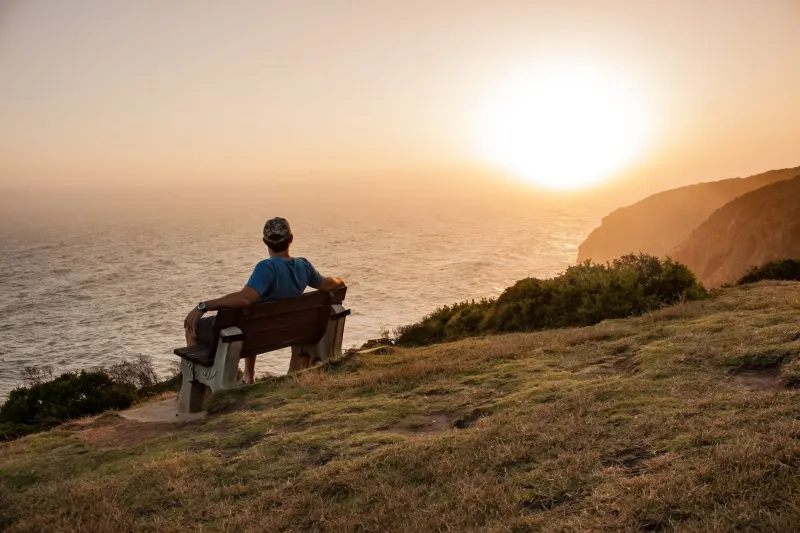
Marcus had been going back and forth on quitting his corporate job for almost two years. He'd made spreadsheets. He'd talked it over with his wife, his brother, his therapist. Then, on a Tuesday afternoon in October, he drove down to Sunset Cliffs on a whim, sat on the rocks above the surf, and within twenty minutes knew exactly what he was going to do.
"I can't fully explain it," he says. "I just got quiet in a way I hadn't been in a long time. And in that quiet, the answer was obvious."
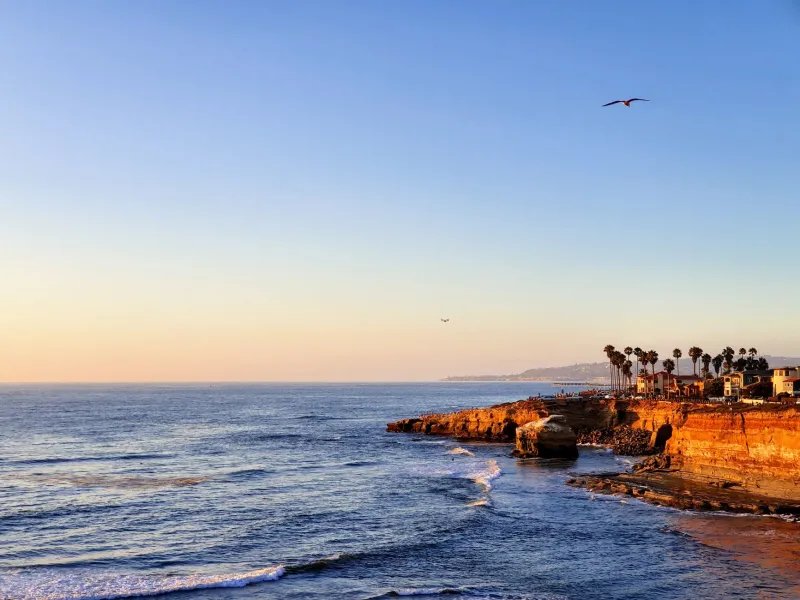
Marcus is not unusual. Talk to enough people who've spent real time at Sunset Cliffs Natural Park, and you start hearing versions of this story over and over. Proposals made. Moves decided. Relationships ended—or saved. Career pivots that seemed terrifying until someone sat above the ocean long enough for the fear to lose its grip. There's even a loose local shorthand for it: the Sunset Cliffs effect.
So what's actually going on here?
The Psychology of Awe—and Why It Matters
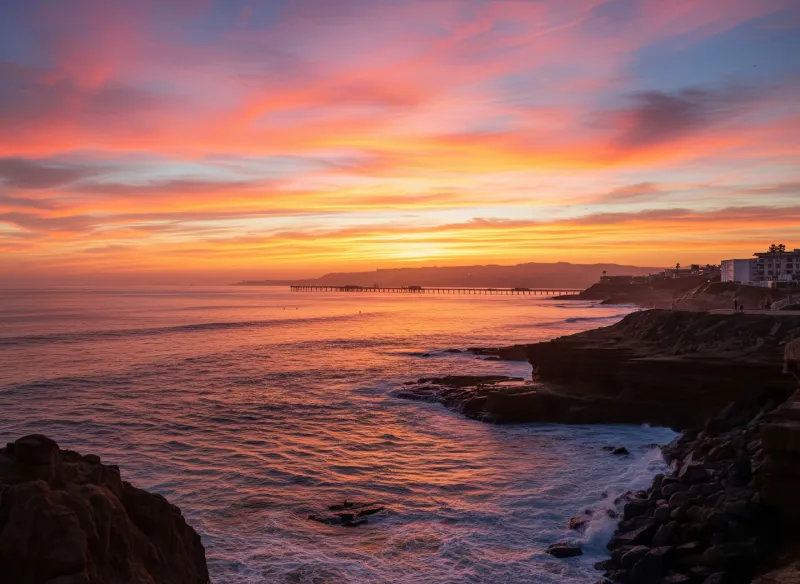
Researchers who study emotion have spent the last decade getting serious about awe—that specific feeling of encountering something vast, something that dwarfs your ordinary frame of reference. Sunset Cliffs, with its dramatic drop into churning Pacific water, its horizon that seems to go on forever, and the raw geological violence of the cliffs themselves, is essentially a delivery system for it.
Dacher Keltner, a psychologist at UC Berkeley who has studied awe extensively, has found that experiences of awe tend to shrink what he calls the "default self"—the internal narrator that's constantly cataloging worries, running social comparisons, and keeping score. When that voice gets quieter, people often report a sudden clarity about what actually matters to them.
In practical terms, that means the clutter falls away. The noise of other people's expectations, the fear of judgment, the mental static of daily obligations—it all gets temporarily muted. What's left tends to be the stuff you actually care about.
"Awe-inducing environments create a kind of cognitive reset," says Dr. Elena Vargas, a travel researcher who studies how physical environments influence decision-making. "When people feel small in relation to something genuinely grand, their perspective on their own problems shifts. Things that felt urgent start to feel more manageable. Things they'd been avoiding start to feel more approachable."
Sunset Cliffs, by almost any measure, qualifies as genuinely grand.
Real People, Real Turning Points
Jordan proposed to her girlfriend at the southern end of the park, near the tidepools, just before golden hour. She'd been planning to do it at a restaurant, but something made her drive to the cliffs instead. "I wanted it to happen somewhere that felt real," she says. "Somewhere the world was bigger than just the two of us."
For Derek, it was a resignation letter he'd been drafting in his head for months. He came to Sunset Cliffs after a brutal week at work, mostly just to decompress. He ended up sitting there for two hours, watching the waves break against the rock formations below, and by the time he walked back to his car, he'd mentally written the email. He sent it the next morning.
Sometimes the decisions are quieter. Priya had been avoiding a difficult conversation with her mother for years. She came to the cliffs with a friend, and they barely spoke the whole time—just sat and watched the light change over the water. On the drive home, she called her mom.
"I think I just needed to feel like things could be okay," she says. "The ocean does that. It's been doing this for millions of years and it's going to keep doing it. Whatever I was scared of suddenly seemed a lot smaller."
What Makes This Spot Different
San Diego has no shortage of beautiful coastline. So why does Sunset Cliffs specifically keep showing up in these stories?
Part of it is the physical design of the place. Unlike a beach where you're at water level, surrounded by activity and noise, the cliffs put you above the action. You're looking down at the surf, not standing in it. That elevation creates a subtle psychological distance—you're an observer of something larger than yourself, not a participant in the chaos. Psychologists note that elevated vantage points tend to promote more abstract, long-range thinking, the kind that helps people see past immediate obstacles.
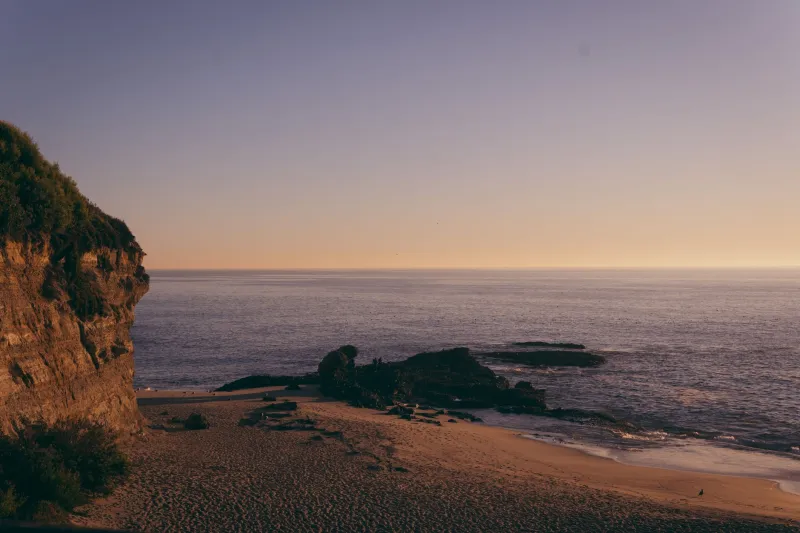
The park's relative quiet is another factor. Sunset Cliffs draws visitors, but it's not a boardwalk scene. There are no vendors, no rides, no constant soundtrack of competing noise. The loudest thing is usually the ocean itself. That sensory simplicity makes it easier for the mind to settle.
And then there's the light. Sunset Cliffs faces almost directly west, which means the evening light hits it in a way that's genuinely hard to describe without sounding like a greeting card. But the quality of that light—warm, soft, painting the cliffs in amber and rose—has a measurable effect on mood. Research on color and emotion consistently shows that warm, low-angle light reduces feelings of stress and anxiety. The cliffs essentially bathe you in it every evening.
How to Use It Intentionally
If you're carrying something heavy—a decision you've been circling, a conversation you've been avoiding, a question about what you actually want—Sunset Cliffs might be worth more than a casual visit.
Come with a little time to spare. Don't rush it. Find a spot where you can sit comfortably and let the view do its work. Resist the impulse to fill the silence with a podcast or a scroll through your phone. The whole mechanism depends on actually getting quiet.
Some visitors journal while they're there. Others just sit. A few bring the specific question they're wrestling with and let it surface naturally, without forcing it. There's no protocol—but intentionality seems to matter. People who come looking for clarity tend to find more of it than people who come purely for the Instagram shot.
Bring a jacket if you're going at sunset. The marine layer rolls in fast, and the last thing you want when you're on the verge of a personal breakthrough is to be too cold to think straight.
The View That Stays With You
Marcus, the guy who quit his job after that Tuesday afternoon on the rocks? He started his own business. It's been three years. Things are harder than they were, and better than they were, and he says he doesn't regret the decision for a single minute.
He's been back to Sunset Cliffs a few times since. Not because he needs another answer, but because he likes the reminder—that the ocean is still out there, still doing what it does, and that clarity is always available if you're willing to sit still long enough to find it.
Some places are just backdrops. Sunset Cliffs is something else. It's a location that seems to meet people exactly where they are and, more often than not, helps them figure out where they're going.