Fins, Wings, and Whiskers: The Wildlife Watcher's Guide to Sunset Cliffs
Most people come to Sunset Cliffs for the sunsets. Fair enough — they're legendary. But if you shift your gaze from the horizon and pay a little more attention to what's happening in the water below and the sky above, you'll find that this stretch of coastline is absolutely teeming with wildlife. Sea lions hauled out on the rocks. Brown pelicans dive-bombing the surf. Gray whales cruising past on their annual migration. And that's before you even get down to the tide pools.
You don't need to be a hardcore naturalist to enjoy any of this. You just need to know where to look and when to show up.
Sea Lions: The Regulars
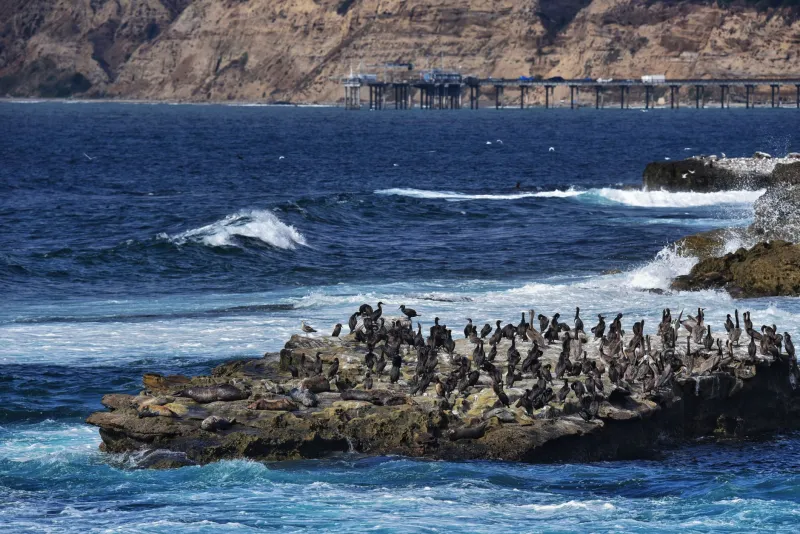
California sea lions are the most reliably entertaining residents at Sunset Cliffs. Small groups — sometimes just a handful, occasionally a couple dozen — haul themselves onto the lower rock shelves and spend hours doing what sea lions do best: lounging, barking at each other, and occasionally flopping dramatically into the water.
The best viewing spot is around the southern end of the park, near the rocky outcroppings at the base of the cliffs. You don't need to climb down to see them — a good pair of binoculars from the cliff top works great, and it's a much safer option. Look for flat, sun-warmed rocks just above the waterline.
Sea lions are most reliably present in the late morning through early afternoon, after they've warmed up from the night. Breeding season runs roughly May through July, when you might notice more vocalizing and territorial behavior. Pups occasionally appear in summer, which is as adorable as it sounds.
Photography tip: Shoot from above using a telephoto lens in the 200–400mm range. Early morning light hits the rocks at a flattering angle, and the animals tend to be calmer before the crowds arrive. Avoid using flash — it startles them and disrupts natural behavior.
Brown Pelicans: Aerial Acrobats
If you've spent any time on the Southern California coast, you've probably seen brown pelicans gliding in formation just above the wave crests. At Sunset Cliffs, they're a near-constant presence, and watching one execute a full-speed plunge dive into the water below the bluffs is genuinely thrilling.
Pelicans were once endangered due to DDT contamination, which thinned their eggshells and devastated breeding populations. They've made a remarkable comeback and were removed from the endangered species list in 2009. Seeing them work the surf at Sunset Cliffs is a conservation success story you can watch in real time.
They're most active in the early morning and late afternoon when baitfish schools move closer to the surface. Post-breeding season (late summer into fall) tends to bring larger numbers through the area as birds disperse from nesting colonies on the Channel Islands.
Photography tip: Capturing a pelican mid-dive requires burst mode and a bit of patience. Set your camera to continuous autofocus, pre-focus on the water where you've seen them targeting, and be ready to fire when you see one begin its tuck. The light in the hour before sunset turns their brown plumage a rich, warm tone that looks stunning in photos.
Gray Whale Migration: The Seasonal Spectacle
Twice a year, gray whales pass within sight of Sunset Cliffs on one of the longest migrations of any mammal on Earth. Southbound whales head toward their breeding lagoons in Baja California from roughly December through February. The northbound return trip, often with calves in tow, runs March through May.
The northbound migration is generally considered the better viewing opportunity — mothers with calves tend to travel closer to shore, and the calves' playful behavior (breaching, spy-hopping, tail-lobbing) makes for incredible watching. Calm mornings with flat seas give you the best chance of spotting a spout.
From the cliff tops, scan the water methodically rather than staring at one spot. Look for the distinctive heart-shaped blow, which can reach 10–15 feet high. Whales in this area often travel in small groups of two to four.
For a more structured experience, whale watching boat tours depart from nearby Point Loma and give you a completely different perspective — but honestly, watching a gray whale breach from the cliffs with the Pacific stretching out behind it is hard to beat.
Photography tip: Use a telephoto lens (at least 300mm) and keep your shutter speed high — 1/1000s or faster — to freeze motion. Blows are easier to photograph than breaches, which happen fast. If you see a whale start to surface repeatedly in the same area, it may be resting or feeding, giving you time to set up.
Tide Pool Creatures: The World at Your Feet
The rocky intertidal zones at Sunset Cliffs support a dense community of creatures that most visitors walk right past. Purple sea urchins, hermit crabs, ochre sea stars, anemones, and limpets all make their homes in the pools and crevices exposed at low tide.
The best tide pool exploration happens during a minus tide — when the ocean retreats further than usual, exposing more of the rocky shelf. Check a tide chart app (NOAA Tides and Currents is free and accurate) and plan to arrive 30–45 minutes before the lowest point. The pools along the mid-section of the park tend to be more accessible and less picked over than those at the most popular overlooks.
Look, don't touch where possible, and never remove anything from the pools. Replacing rocks exactly as you found them matters — the creatures living underneath depend on that specific microenvironment.
Photography tip: Tide pool macro photography is its own rewarding challenge. A macro lens or macro mode on your phone gets you close to anemones and urchins in a way that reveals incredible detail. Shoot on overcast days when you won't get harsh glare off the water surface, and bring a small waterproof case for your phone in case a wave surprises you.
A Few Etiquette Notes for Wildlife Watchers
Keeping a respectful distance isn't just good manners — it's often the law. Marine mammals in the U.S. are protected under the Marine Mammal Protection Act, which prohibits harassment, including approaching too closely or making loud noises to provoke a reaction. As a general guideline, stay at least 50 yards from sea lions and 100 yards from whales.
Leave your drone at home or check local regulations before flying one near wildlife — the noise and proximity of drones is genuinely stressful for birds and marine mammals.
The Best Time to Visit for Wildlife Overall
Honestly, there's no bad season at Sunset Cliffs for nature watching — the calendar just rotates which species take center stage. Winter brings whale migration and larger surf that concentrates fish (and the birds that eat them). Spring means northbound whales with calves and shorebird activity. Summer is peak sea lion season. Fall brings pelican numbers up and the tide pools are often at their most accessible.
Arrive early. Bring binoculars. Slow down. The wildlife is there — you just have to give it a chance to show itself.