Why Cloudy Days at Sunset Cliffs Are Actually the Best Days
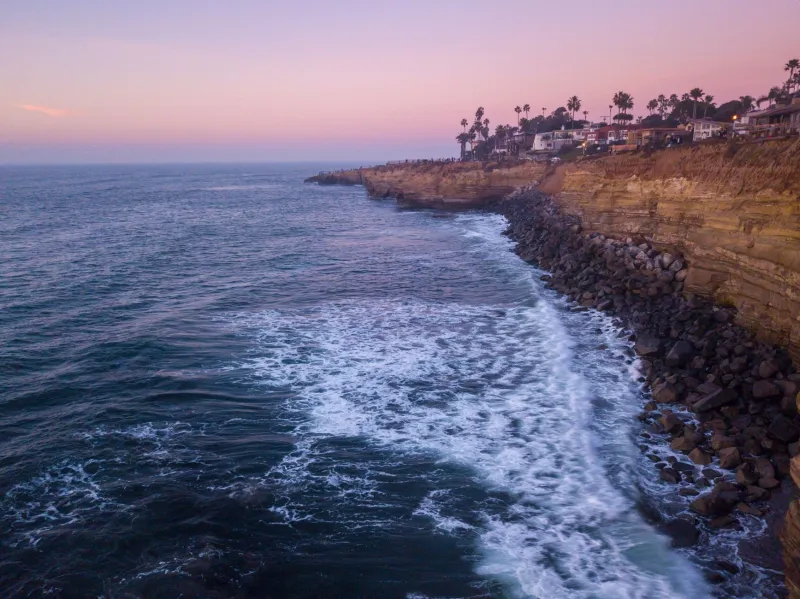
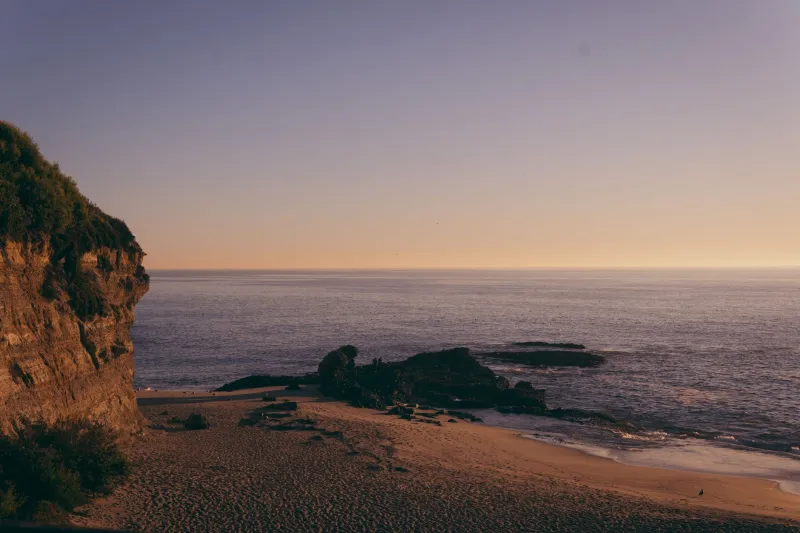
Here's a little secret that San Diego locals have been quietly keeping to themselves: the days when most visitors stay home are often the best days to be standing at the edge of the Pacific.
You've probably done it yourself. You pull up the weather app, see a gray sky icon, and reschedule your Sunset Cliffs trip for a sunnier afternoon. Totally understandable. But if you've only ever visited on a bluebird day with a textbook golden hour, you're genuinely missing another version of this place—one that's arguably more dramatic, more personal, and a whole lot less crowded.
What the Marine Layer Actually Does to the Light
San Diego's marine layer is a coastal weather phenomenon that rolls in off the Pacific, especially between May and July—locals call it "June Gloom," though it shows up well beyond those months. Most tourists treat it like an obstacle. Photographers who know better treat it like a gift.
When a thin layer of clouds diffuses the sun, it acts like a massive natural softbox. Harsh shadows disappear. The cliffs take on a softer, almost cinematic texture. Colors in the rock—ochre, rust, deep gray—become more saturated rather than washed out by direct sun. And if the marine layer starts breaking up around golden hour? That's when things get genuinely wild.
"The best light I've ever captured at Sunset Cliffs happened on a day my phone said was a zero out of ten," says Marco Delgado, a San Diego-based landscape photographer who has been shooting the coastline for over a decade. "The clouds were rolling in patches, and the sun kept punching through in these intense, narrow beams. I got maybe four minutes of it. Those four minutes are the shots I still print and sell."
That phenomenon—crepuscular rays breaking through cloud gaps over the ocean—is something you almost never see on a perfectly clear evening. Clear skies are beautiful, but they're also... predictable. Clouds introduce variables. Variables create moments.
Fewer Crowds, More Cliff
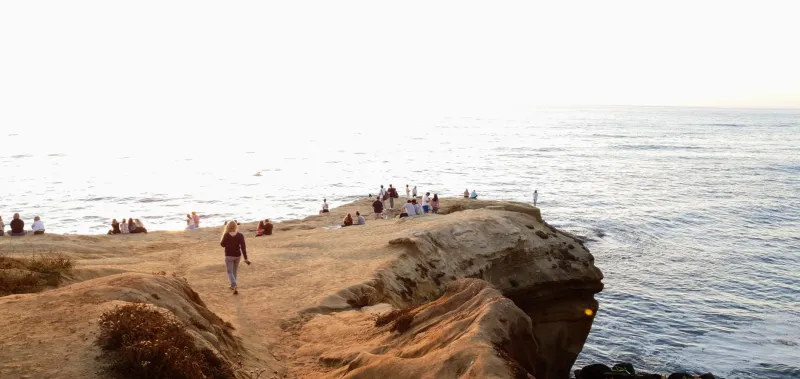
Let's be practical for a second. Sunset Cliffs on a clear Saturday evening in summer is genuinely packed. People line the main overlooks shoulder to shoulder. Parking becomes a puzzle. Finding a quiet spot to sit and actually absorb the view takes real effort.
Show up on a gray Tuesday in February? You might have entire stretches of the cliffside to yourself.
Sarah Kimura, a San Diego resident who visits the cliffs several times a month, stumbled onto this reality by accident. "My friend was visiting from Chicago and I felt terrible because the weather was awful—foggy and cold by San Diego standards. We went anyway and ended up sitting on the rocks for almost two hours. No one else was around. We could actually hear the waves. It ended up being the most peaceful afternoon I've had there in years."
That kind of uninterrupted connection with the place is hard to manufacture on a busy clear-sky evening. The weather essentially does the crowd-thinning for you.
Storm Light and Dramatic Skies
If marine layer is the entry-level version of moody Sunset Cliffs weather, then an approaching storm system is the advanced course.
When a weather front moves through Southern California—which happens more often in winter and early spring—the sky over the Pacific becomes something else entirely. Deep purples and bruised grays stack up on the horizon. The ocean surface changes color, turning from blue to a kind of dark pewter. Waves get bigger and louder. The spray off the rocks hits differently.
"Storm light is unlike anything else," says Delgado. "The contrast between dark clouds and the bright edge where the sun tries to break through creates this almost apocalyptic quality. I've taken shots during storm conditions that people genuinely don't believe were taken in San Diego."
Obviously, safety matters here. When swells are high and waves are unpredictable, staying well back from the cliff edges is non-negotiable. But watching a Pacific storm build from a safe vantage point—especially from one of the higher overlooks along Sunset Cliffs Boulevard—is an experience that sticks with you.
Fog as a Feature, Not a Bug
Thick coastal fog is its own category. When visibility drops and the cliffs disappear into white mist, the place becomes almost surreal. You hear the ocean before you see it. The sound of waves crashing against the sandstone gets amplified when visual distractions are stripped away. Seabirds appear and vanish in the gray. It's eerie in the best possible way.
"I took my kids there on a really foggy morning and they were completely transfixed," says longtime Ocean Beach resident Tomas Vega. "They didn't care about the view because there wasn't one in the traditional sense. They were just listening. That was actually a better nature experience for them than any sunny day we've been."
Fog also creates interesting compositional opportunities for photographers. Shooting into the mist with a long lens can isolate rock formations in a way that feels almost painterly. The usual background clutter—horizon lines, distant boats, other visitors—just disappears.
Practical Tips for Visiting on Gray Days
If you're ready to give overcast Sunset Cliffs a shot, a few things will make the experience better:
Dress for it. Even in summer, marine layer mornings can feel genuinely cold. San Diego's 70-degree reputation doesn't apply when you're standing on a windswept cliff in coastal fog. Bring a layer.
Go later than you think. Marine layer often starts burning off in the afternoon. If you arrive around 4 p.m. on a gray day, you might catch the exact moment the clouds start breaking—which is photographic gold.
Bring a wider lens if you're shooting. Dramatic skies deserve to be in the frame. Don't crop them out.
Check the swell report, not just the weather. High surf makes the cliffs more spectacular to watch but also more dangerous to get close to. Surfline and NOAA both have reliable forecasts for the area.
Lower your expectations for the sunset itself—and raise them for everything else. You might not get a fiery orange sky. You might get something stranger and better.
The Takeaway
Sunset Cliffs is worth visiting in any weather, but there's a specific kind of magic that only shows up when the conditions are less than perfect. The dramatic lighting, the smaller crowds, the way sound takes over when visibility drops—these aren't consolation prizes for a ruined trip. They're a completely different experience of the same place.
Next time the forecast looks questionable, maybe don't reschedule. Maybe that's exactly when you should go.