Why Your Sunset Cliffs Photos Keep Going Viral (Even When You're Not Trying)
You've probably noticed it. You post a photo from your trip to Sunset Cliffs — nothing fancy, maybe shot through a slightly smudged phone lens while standing on the wrong side of a guardrail — and within a few hours it's doing numbers you've never seen from your travel content before. Meanwhile, that carefully composed beach shot you took in Malibu last summer is still sitting at 47 likes.
This isn't a coincidence. And it's not just because Sunset Cliffs is aesthetically striking, though it absolutely is. There's a layered explanation for why this specific location in San Diego's Ocean Beach neighborhood consistently produces photos that outperform expectations across Instagram, TikTok, and Pinterest — and it starts with the rocks.
The Geology Is Doing Half the Work for You
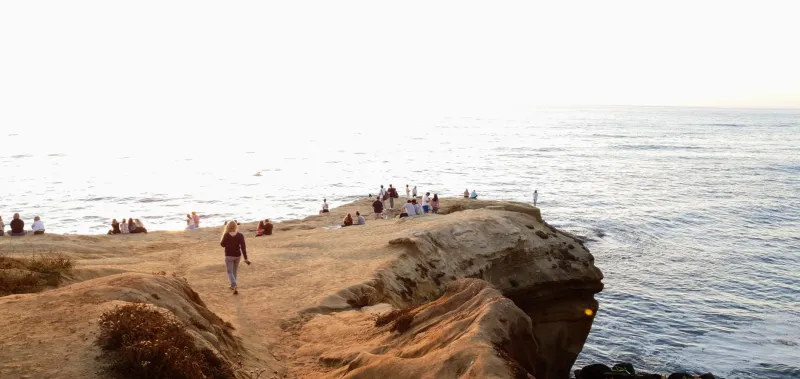
Sunset Cliffs sits on a foundation of Cretaceous-era sedimentary rock that has been eroded over millions of years into a series of jagged shelves, sea caves, blowholes, and arched formations. From a photography standpoint, this is extraordinary luck. The irregular textures and layered striations in the rock face create natural leading lines that draw the eye through an image without any compositional effort from the photographer.
Leading lines are one of the most reliable tools in visual storytelling. They guide a viewer's gaze from the foreground into the background, creating a sense of depth that flat, sandy beaches simply can't replicate. At Sunset Cliffs, those lines are literally built into the landscape. The horizontal bands of sandstone and mudstone run parallel to the horizon, reinforcing the frame in a way that makes even a snapshot feel intentional.
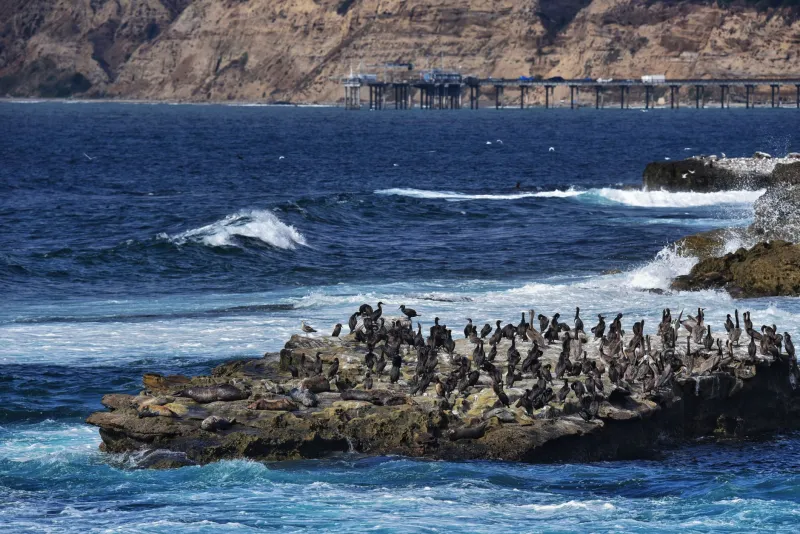
The dark, almost charcoal-toned rock also provides contrast that photography algorithms love. Platforms like Instagram use engagement prediction models that respond to high-contrast images — the visual tension between the pale sky, the deep blue Pacific, and the shadowed lava rock creates a dynamic range that stops the scroll before a human brain has even consciously registered the image.
Golden Hour Hits Different Here
Sunset Cliffs faces due west, directly into the Pacific. That's not an accident of branding — it's a geographic reality that makes this location one of the most reliably photogenic places on the entire West Coast during the final hour of daylight.
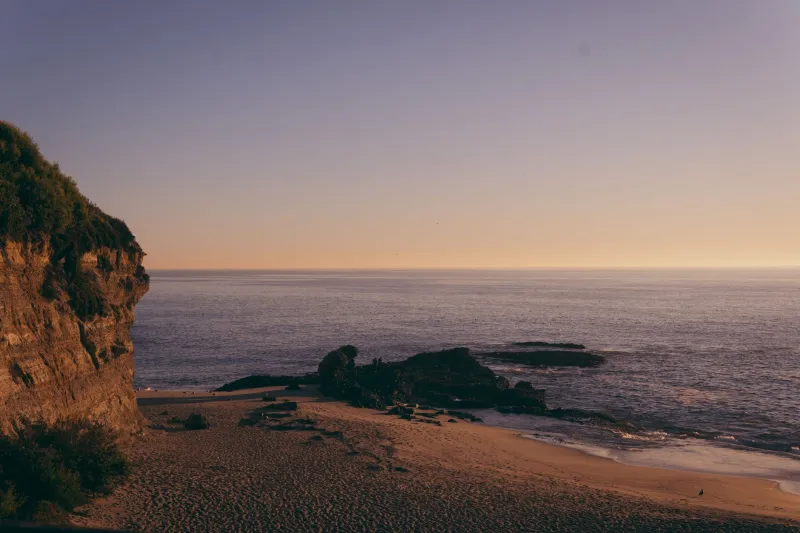
When the sun drops low on the horizon, it hits the cliffs at a raking angle that throws every crack, crevice, and tide pool into sharp relief. The warm orange and amber tones of late afternoon light are the exact color temperatures that perform best on visual social platforms. Research into Instagram engagement patterns has consistently shown that images with warm-to-cool color contrast — think golden rock against a cool blue ocean — outperform neutral-toned images by a significant margin.
At Sunset Cliffs, that warm-cool contrast happens automatically, every single evening, for free. You don't need a filter. You barely need to edit. The light does the heavy lifting, and your camera — whether it's a mirrorless system or a three-year-old iPhone — just has to be pointed in the right direction.
The Emotional Trigger That Platforms Can't Resist
Algorithms aren't just measuring color and contrast. They're measuring emotional response, and they do that by tracking how long people linger on an image, whether they save it, and how quickly they engage with a comment or caption.
Sunset Cliffs images trigger something that travel photographers call "awe response" — that involuntary pause people experience when confronted with something that feels simultaneously vast and intimate. The cliffs drop sharply into churning ocean below, creating a visceral sense of exposure and scale. When that sensation is captured in a still image, viewers tend to sit with it longer than they would with a prettier but less emotionally charged beach photo.
Longer dwell time is one of the clearest signals an algorithm can receive that content is worth amplifying. The platform interprets it as quality. It starts showing your photo to more people. Those people linger too. The cycle compounds.
Crowds Actually Help Your Reach
Here's a counterintuitive piece of the puzzle: the very popularity of Sunset Cliffs works in your favor from a discoverability standpoint. Because so many people are already searching for and engaging with content tagged at this location, the geotag itself carries algorithmic authority. When you tag Sunset Cliffs Natural Park or Ocean Beach, San Diego, you're dropping your content into a high-traffic discovery stream that platforms already know generates engagement.
This is sometimes called "location authority" in social media circles, and it's one of the reasons that posting from well-known but genuinely compelling destinations tends to outperform posting from obscure locations — even if the obscure location is technically more beautiful. The algorithm has learned, based on millions of data points, that Sunset Cliffs content holds attention. Your new post benefits from that reputation.
What This Means for How You Shoot
Knowing all of this, you can approach your visit with a little more intention — not in a way that makes it feel like work, but in a way that lets the location do what it does best.
Shoot during the last 45 minutes of daylight. This is when the light-to-rock contrast is at its peak, and when the sky starts cycling through the warm tones that perform best online.
Include the rock texture in your foreground. Don't shoot from a distance with the cliffs as a backdrop. Get low, get close to the rock face, and let those natural leading lines pull the viewer into the frame.
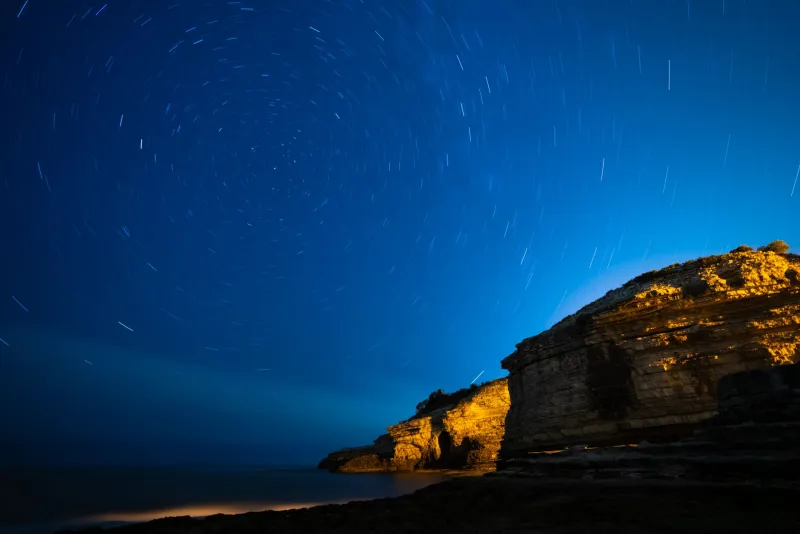
Use the ocean movement. If your phone or camera has a slow shutter or long exposure mode, use it to blur the water against the static rock. The contrast between frozen stone and flowing water is one of the most reliably engaging visual effects in coastal photography.
Tag specifically. Use "Sunset Cliffs Natural Park" rather than just "San Diego" to tap into the location's existing algorithmic momentum.
The Place Doesn't Need You to Be Good at This
Maybe the most remarkable thing about Sunset Cliffs as a photography subject is that it has a way of making people look more skilled than they are. The geology, the light, the color palette, the emotional scale — all of it conspires to produce images that feel considered and cinematic even when they were taken in a rush before the parking meter expired.
That's not a criticism of anyone who visits. It's just an honest acknowledgment that some places are more photogenic than others, and Sunset Cliffs sits near the top of that list for a set of very specific, very explainable reasons. The algorithm didn't invent this place's appeal — it just learned to recognize what the rest of us already knew.