How a Half-Mile of Coastline Became Southern California's Most Talked-About Destination
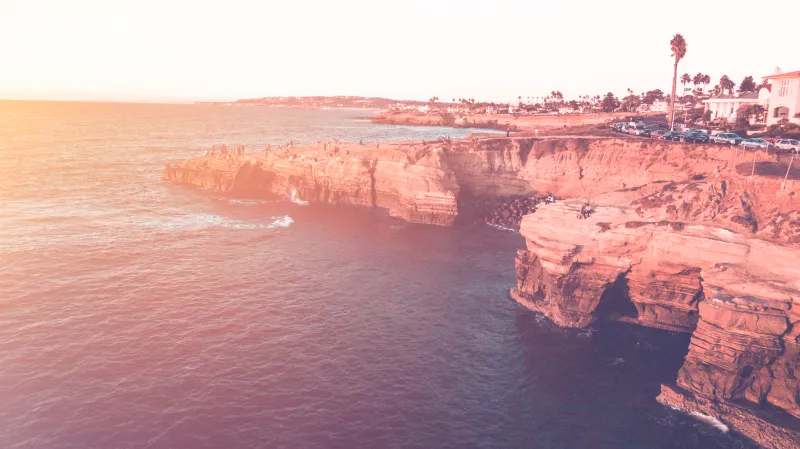
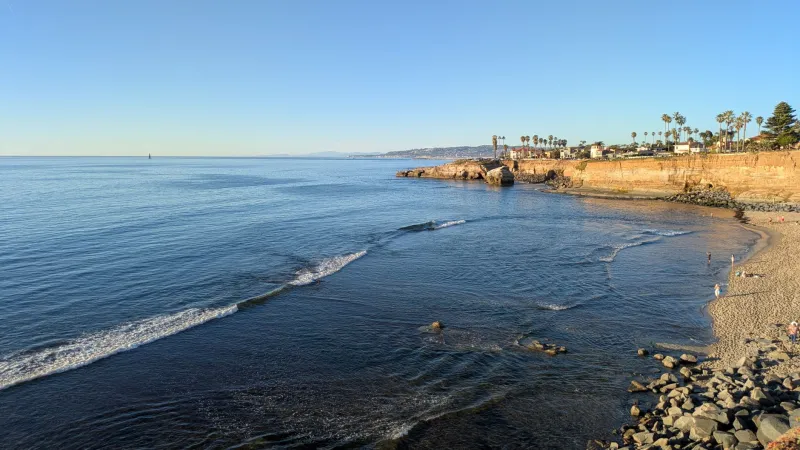
There's no roller coaster. No concession stand. No lifeguard tower painted in cheerful stripes. Sunset Cliffs Natural Park is, by most measurable standards, a pretty simple place — a narrow ribbon of eroded sandstone cliffs hugging the western edge of Ocean Beach, stretching roughly a mile and a half along the Pacific. And yet, year after year, it consistently outperforms flashier coastal attractions across Southern California when it comes to one thing: the pull it has on people.
So what's actually going on here? We started asking questions — and the answers turned out to be more interesting than we expected.
The Numbers Behind the Phenomenon
Precise headcount data for Sunset Cliffs is notoriously hard to pin down, largely because there are no ticketed entry points and visitors arrive from multiple access spots along Sunset Cliffs Boulevard. But the City of San Diego's Park and Recreation Department has tracked usage trends through parking utilization studies and periodic pedestrian counts, and the trajectory is unmistakably upward.
According to figures cited in San Diego's tourism planning documents, the greater Ocean Beach and Sunset Cliffs corridor sees well over one million visitors annually — a number that's grown significantly since the mid-2010s when Instagram and travel blogs began amplifying the location to a global audience. For context, that's comparable in raw visitor volume to some of San Diego's ticketed attractions, yet Sunset Cliffs charges absolutely nothing to enter.
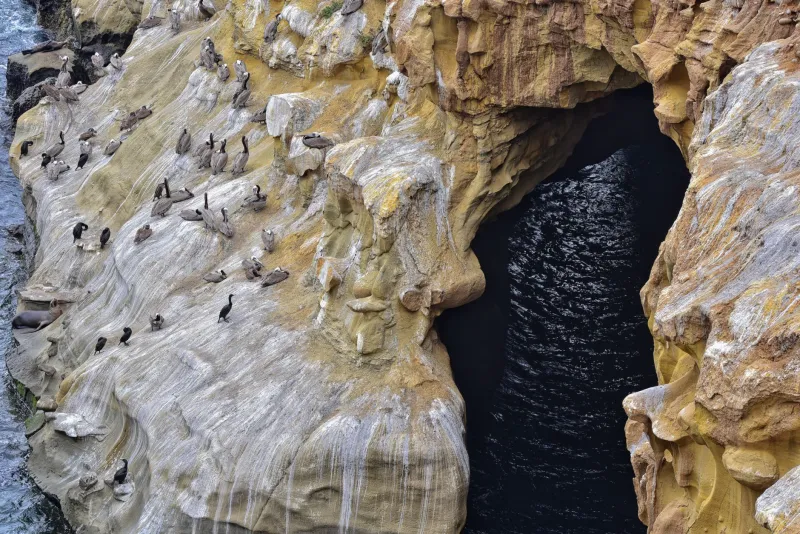
The San Diego Tourism Authority has noted in its annual reports that coastal natural areas — particularly those with distinctive visual character — consistently rank among the top reasons leisure travelers cite for choosing San Diego over competing California destinations like Los Angeles or Santa Barbara. Sunset Cliffs, with its dramatic sea caves, blowholes, and that unmistakable golden-hour glow, hits every visual checkbox.
Why This Spot and Not the Others?
Southern California is not short on beautiful coastline. From Malibu to La Jolla, there are dozens of stunning stretches of shoreline competing for attention. So the natural question becomes: why did Sunset Cliffs achieve a kind of cultural gravity that spots like Cabrillo National Monument or Point Loma Tidepools — both genuinely spectacular in their own right — never quite managed?
Part of the answer is accessibility. Unlike tidepools that require timing your visit around low tide, or cliffside trails that demand hiking fitness, Sunset Cliffs is genuinely easy to visit. You park (more on that challenge in a moment), walk maybe fifty feet from your car, and you're standing on the edge of the Pacific watching waves detonate against ancient rock. The barrier to entry is almost nonexistent.
But accessibility alone doesn't explain it. Local photographer and longtime Ocean Beach resident Marco Delgado, who has been shooting the cliffs for over a decade, puts it this way: "Most coastal spots give you a view of the water. Sunset Cliffs puts you in the scene. You're not looking at the ocean from a beach — you're suspended above it. That changes everything about how it photographs and how it feels."
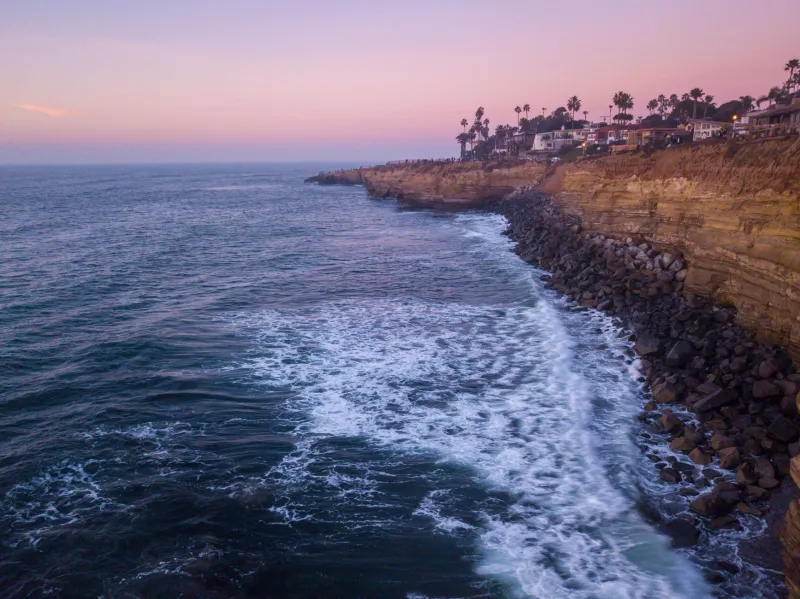
That distinction matters enormously in the social media era. Flat beaches, however beautiful, produce horizontal compositions. Sunset Cliffs produces drama — foreground rocks, crashing surf, warm light fracturing across tide pools. It's practically engineered for a compelling photograph, which means every visitor becomes an unpaid marketing agent the moment they post.
The Ripple Effect on Local Business
The economic footprint of Sunset Cliffs extends well beyond the park boundary itself. Newport Avenue, the main commercial corridor of Ocean Beach just a few blocks from the cliffs, has seen a measurable uptick in foot traffic tied directly to cliffs visitors who wander over before or after their sunset viewing.
Jenny Castillo, who co-owns a coffee shop two blocks from the main cliffs overlook, says the pattern is predictable: "We get a morning rush from people who came early to catch the light, and then a second wave right after sunset when everyone is cold and looking for something warm. We absolutely plan our staffing around it."
The effect isn't limited to food and beverage. Short-term rental platforms show that properties within walking distance of Sunset Cliffs command a consistent premium over comparable units in other parts of San Diego, with listing descriptions that explicitly mention cliffs access often outperforming those that don't. Nearby surf shops, yoga studios, and even parking lots have all adapted their operations to accommodate the cliffs crowd.
At a broader level, San Diego's tourism economy — which generates roughly $12 billion annually according to the San Diego Tourism Authority — benefits from having a marquee free attraction that functions as a gateway experience. Visitors who come primarily for Sunset Cliffs tend to extend their stays to explore the rest of the city, and the cliffs serve as a kind of emotional anchor that makes San Diego memorable long after the trip ends.
The Disproportionate Fame Problem
Not everyone views Sunset Cliffs' rise to prominence as purely positive. City planners and park managers have wrestled with what might be called the "disproportionate fame problem" — the challenge that arises when a small natural area attracts visitor volumes it was never designed to handle.
The cliffs span roughly 68 acres of natural park land. On a peak summer weekend, estimates suggest upward of several thousand people may visit in a single day. The infrastructure — a handful of unofficial pull-off parking spots, minimal signage, and no formal trail system — was built for a quieter era.
Erosion is an active concern. The sandstone that makes Sunset Cliffs so visually compelling is also geologically young and genuinely fragile. Every footstep near the cliff edge contributes, incrementally, to accelerated wear. The city has installed fencing in the most vulnerable areas, but enforcement is limited, and the social media incentive to get as close to the edge as possible creates a persistent tension between safety, conservation, and visitor experience.
What Makes It Stick
Perhaps the most honest answer to why Sunset Cliffs achieved this level of fame is the simplest one: it delivers. In an era when overhyped destinations routinely disappoint, Sunset Cliffs almost universally meets expectations — and frequently exceeds them. Visitors who arrive expecting a nice view often leave having had something closer to an experience.
That emotional payoff generates word of mouth that no marketing budget can replicate. And word of mouth, it turns out, is still the most powerful tourism engine on earth — even when it now travels at the speed of a social media post.
For a half-mile of ancient rock on the edge of the Pacific, that's a pretty remarkable track record.