The Honest Visitor's Guide to Sunset Cliffs When Everyone Else Shows Up Too
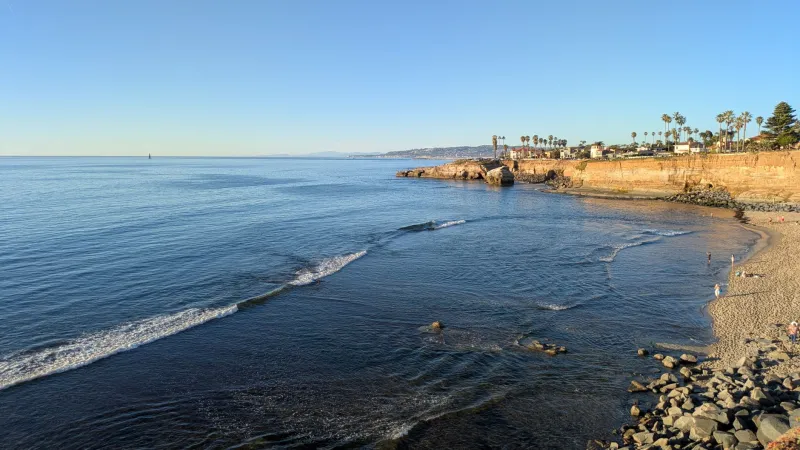
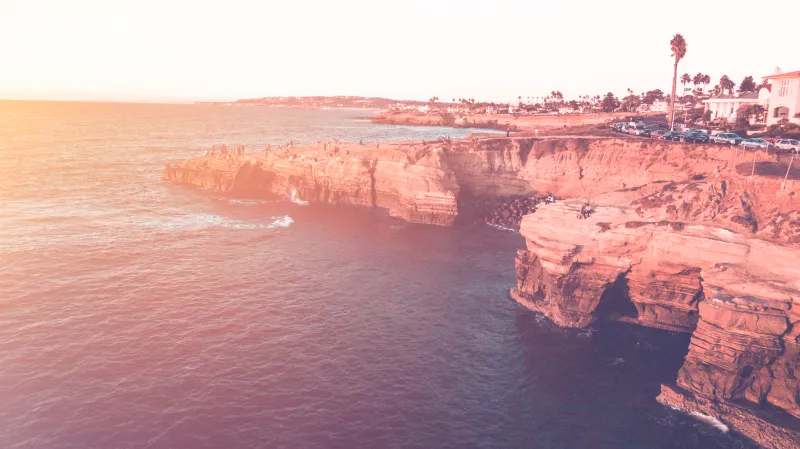
Let's be upfront about something: Sunset Cliffs is one of the most beautiful places in San Diego. On the right evening, with the light doing its thing over the Pacific, it can genuinely stop your breath. But if you're planning a visit between Memorial Day and Labor Day — or on any weekend when the weather breaks in the right direction — you need to walk in with clear eyes about what you might actually encounter.
This isn't a piece designed to scare you off. It's the guide we wish existed when we first started visiting regularly: honest about the friction, practical about the solutions, and still deeply enthusiastic about why the cliffs are worth it.
The Parking Situation Is Real
There is no parking lot at Sunset Cliffs Natural Park. That's not an oversight — it's just the reality of a park that predates the era of million-visitor destinations. Parking is entirely street-based, spread along Sunset Cliffs Boulevard and the surrounding residential grid of Ocean Beach.
On a summer Saturday afternoon, those streets fill up fast. Visitors circling for spots are a fixture of the experience, and it's not unusual to spend 20 to 30 minutes hunting before finding anything within reasonable walking distance. Some people give up and leave. Others park far enough away that the walk itself becomes part of the visit, which honestly isn't the worst outcome.
What actually works:
- Arrive before 9 a.m. on weekends. The light is better for photography anyway, and parking is genuinely available.
- Consider parking near Newport Avenue in Ocean Beach and walking the few blocks to the cliffs. You'll pass good coffee shops on the way.
- On weekday evenings, especially in fall and spring, the parking situation eases considerably. A Tuesday sunset in October is a completely different experience than a Saturday in July.
- Ride-share drop-off is underutilized and surprisingly effective. The cliffs aren't far from several Ocean Beach pickup zones.
Crowds at the Overlooks
The most dramatic and most photographed sections of Sunset Cliffs — the main overlook near the parking pullouts around the 1700 block of Sunset Cliffs Boulevard, and the rocky platforms near Ladera Street — can feel genuinely packed during peak hours. We're talking shoulder-to-shoulder packed, with people jostling for the same angles and conversations competing with the sound of the surf.
This doesn't mean the experience is ruined. It means you need to adjust your expectations and your timing.
The golden-hour window — roughly 45 minutes before sunset — is the most congested period of any day. If solitude is what you're after, this is not your window. But if you're okay with a communal atmosphere, there's actually something kind of wonderful about watching dozens of strangers collectively fall silent as the sun drops toward the horizon. It happens every time.
Finding quieter vantage points: The southern stretches of the park, accessible via Ladera Street or Point Loma Avenue, tend to draw smaller crowds simply because they require a bit more intention to reach. The geology is just as compelling down there, and on a busy evening you might find yourself with a full cliff section essentially to yourself.
The northern end near the tide pools also rewards early risers. Low tide mornings — especially in winter — bring out a completely different crowd: quieter, more patient, more interested in the ecosystems than the Instagram shot.
Safety Concerns Nobody Talks About Enough
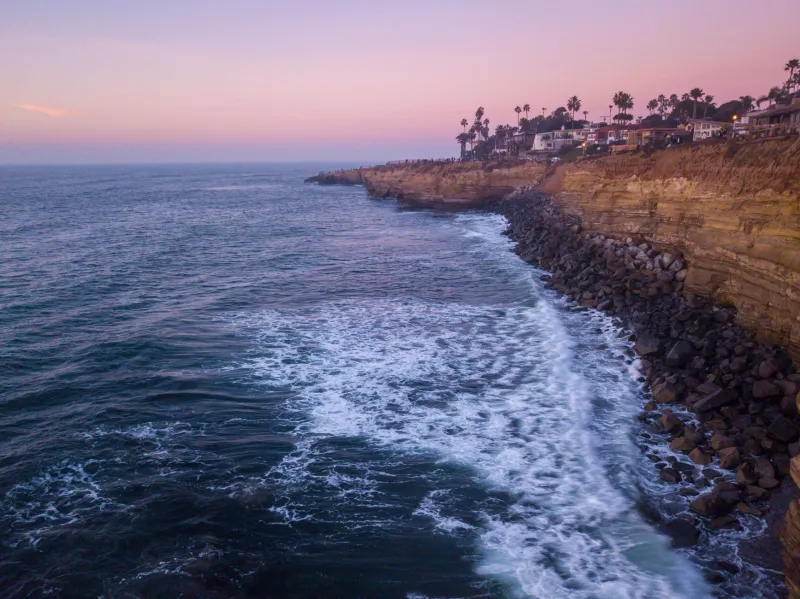
Sunset Cliffs is genuinely dangerous in specific, predictable ways that don't get communicated clearly enough. The sandstone cliffs are actively eroding — this isn't a metaphor, it's a geological process that happens continuously. Sections of cliff edge that looked solid last month may be compromised today.
The city has installed fencing along the most unstable sections, and those fences exist for good reason. Every year, people are injured at Sunset Cliffs — some from slipping on wet rocks near the waterline, others from getting too close to unstable cliff edges. The waves here are deceptive; what looks like calm water can surge dramatically and unpredictably.
A few rules that aren't optional:
- Stay behind fenced areas. Full stop.
- If you're climbing down to tide pool level, check conditions carefully and never turn your back on the ocean.
- Sunset visits mean you'll be navigating back to your car in low light. Bring a flashlight or use your phone's flashlight. The cliff paths are uneven.
- Keep children and dogs within arm's reach near the edge. The drop-offs are abrupt and the rocks below are not forgiving.
The Social Media Pressure Problem
This one's harder to quantify but worth naming. Sunset Cliffs has become a place where some visitors feel pressure — from the environment around them, from their own expectations — to produce a certain kind of content. You see people contorting themselves into dangerous positions for a shot, or waiting impatiently for strangers to clear their frame, or feeling oddly deflated when their photos don't match the version they saw online.
That version online has been color-graded, shot with professional equipment, and often taken during conditions that happen maybe a dozen times a year. The cliffs are beautiful on an ordinary evening. They don't need to look like a magazine cover to be worth your time.
If you find yourself more focused on your phone than on the actual sunset, consider pocketing it for ten minutes. The light will still be there. The memory tends to stick better when you're actually present for it.
Managing Expectations Without Lowering Them
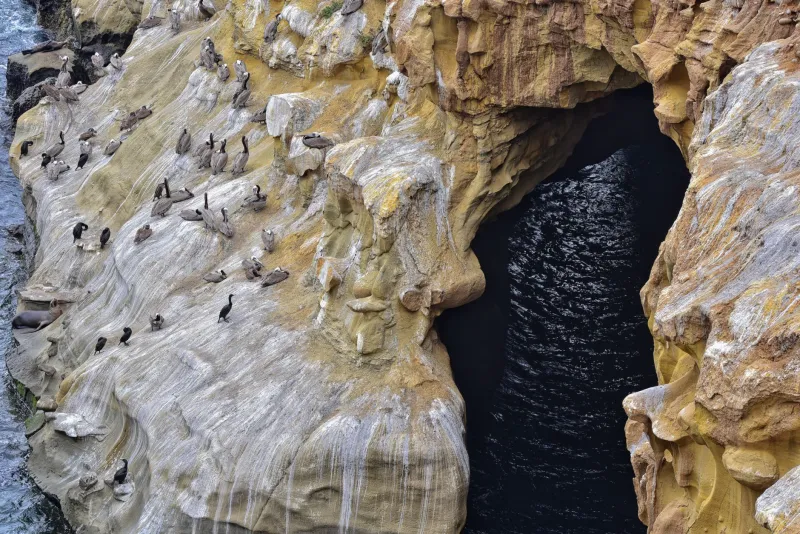
Here's the thing: even on a crowded summer Saturday, Sunset Cliffs delivers. The Pacific is still the Pacific. The light still does extraordinary things. The sound of waves against the caves below is still one of the more primal, satisfying sounds available to a person in an urban setting.
But the version of Sunset Cliffs that rewards patience and flexibility — the early morning visit, the off-season weeknight, the willingness to walk a little further down the path — is consistently better than the peak-hour version. Not because the view is different, but because you can actually settle into it.
Visit with realistic expectations, build in some flexibility, and you'll find that even the challenging parts of a Sunset Cliffs trip have a way of fading once you're standing at the edge of the continent watching the sun go down.