Midnight Swells and Storm Light: The Case for Visiting Sunset Cliffs When Everyone Else Has Gone Home
The Tyranny of the Perfect Sunset
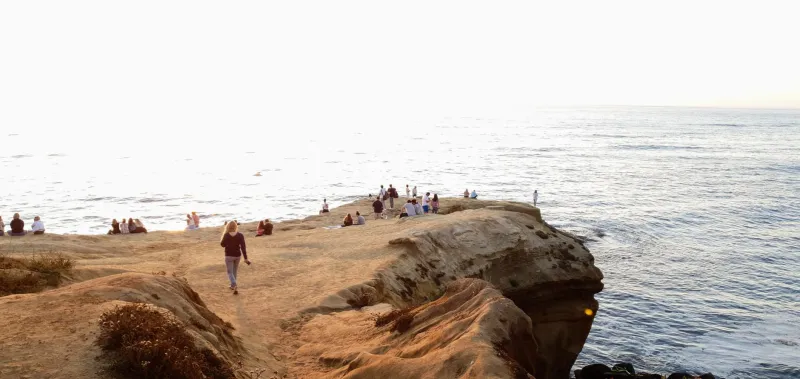
If you've scrolled through Instagram long enough, you could be forgiven for thinking that Sunset Cliffs exists in exactly one form: warm orange light, still water, maybe a silhouetted figure standing at the edge. It's a genuinely beautiful image. It's also responsible for the fact that the park's main viewing areas get genuinely, uncomfortably crowded between about 6 and 8 p.m. on any clear evening from May through October.
There's a whole other version of this place that most visitors never encounter. It's noisier, sometimes darker, occasionally wetter, and in almost every meaningful way more interesting. You just have to be willing to show up at the wrong time.
What Happens After Dark
Sunset Cliffs after nightfall is a completely different sensory environment. The visual drama of the sunset is gone, but what replaces it is its own kind of remarkable.
On a clear night — and San Diego has a lot of those — the bioluminescent plankton that occasionally light up the breaking waves can produce an electric blue glow that no golden-hour photo has ever captured. It's seasonal and unpredictable, but late spring through early fall gives you the best odds. If you've never seen a wave break in blue light at the base of a sandstone cliff, it belongs on the list.
Stargazing from Sunset Cliffs is legitimately good by urban standards. The ocean horizon to the west is unobstructed, and the park's position on the edge of the city means light pollution is lower than you'd expect. A clear winter night can reveal a surprising amount of sky. Bring a blanket, find a flat rock away from the path lights, and give your eyes twenty minutes to adjust.
The soundscape changes too. Without the crowd noise, the waves become the dominant audio. The specific acoustics of the sea caves — the deep resonant boom of a swell compressing into a narrow opening — is something you can feel in your chest on a big swell night. It's not subtle. It's impressive in a way that bypasses the visual cortex entirely.
Safety note for night visits: Stick to paved or clearly marked paths. The cliff edge is not well-lit, and the same erosion issues that make daytime edge-sitting inadvisable become significantly more dangerous in the dark. Don't approach unfenced cliff edges at night. Bring a flashlight or keep your phone handy for footing, and tell someone where you're going.
Storm Light: The Photographer's Secret
Here's something working photographers have known for years: the light during and immediately after a storm is categorically different from any other light, and it's almost always more dramatic.
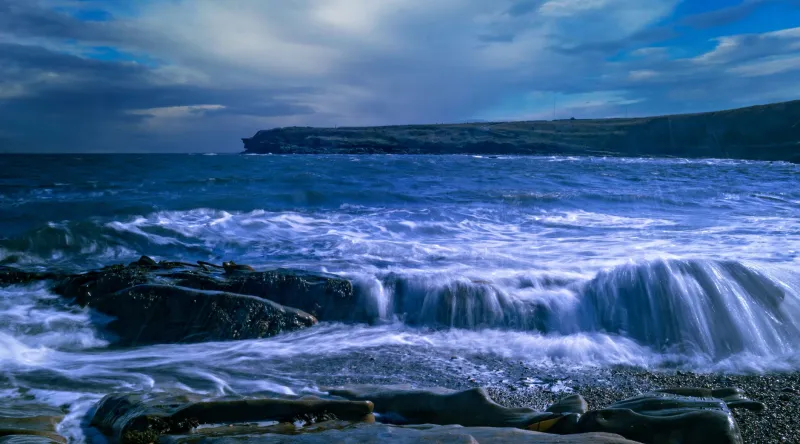
The specific conditions that produce the best storm-light shooting at Sunset Cliffs involve a clearing system moving through from the northwest — common in San Diego winters — that leaves a band of open sky near the horizon while cloud cover remains above. The sun hits that gap at a low angle and turns everything gold and silver simultaneously. The wet rock surfaces become mirrors. The whitewater from elevated swell stands out against dark water. If you've ever seen a Sunset Cliffs photo that made you genuinely stop scrolling, there's a reasonable chance it was taken in exactly these conditions.
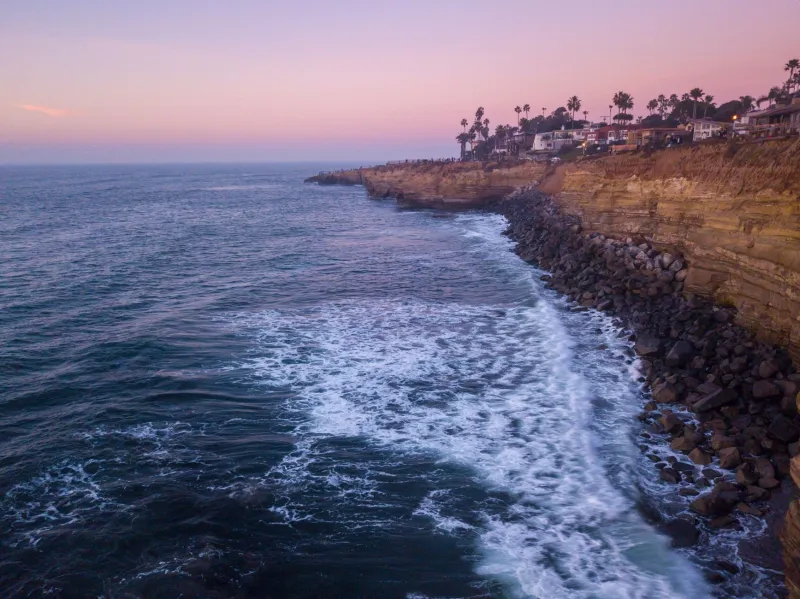
Winter swells, which arrive from storms far out in the Pacific, also make the cliffs physically more dramatic. The wave energy is higher, the spray reaches further, and the rhythm of the ocean feels more insistent. From a photography standpoint, long exposures during winter swell conditions produce silky water effects that look completely different from calm-day shots.
Practical gear notes: A polarizing filter makes a meaningful difference in wet conditions, cutting glare off rock surfaces and water. Bring lens cloths — spray will reach you. A wide-angle lens in the 16-24mm range suits the cliff geometry well. And if you're shooting on a mirrorless or DSLR, keep the camera in a bag between shots; salt spray and electronics are not friends.
Safety note for storm visits: Never position yourself at wave level during elevated swell. Sneaker waves — unexpectedly large waves that arrive without warning — are responsible for serious injuries and fatalities on the California coast every year. The rule is simple: if you can hear individual waves crashing loudly and see spray reaching the upper rock faces, stay well back from the edge. The lower tide pools and sea cave areas are absolutely off-limits during high swell.
The Off-Season and the Off-Hour
December through February is Sunset Cliffs in its quietest, most contemplative state. The tourist volume drops significantly, the light sits lower in the sky all day (which is actually excellent for photography, since you get golden-hour quality light for a longer window), and the park feels more like a local secret than a destination.
Weekday mornings in any season deserve particular attention. Sunrise at Sunset Cliffs is almost entirely uncrowded — counterintuitive given that the park's name emphasizes the opposite — and the eastern light reflecting off the water creates a completely different color palette than the evening. Soft blues and silvers rather than oranges and pinks. Quieter, but in some ways more beautiful.
The hour after sunrise on a winter weekday might be the single best time to have the park essentially to yourself. Bring coffee. Sit on the rocks. Watch the pelicans work the swell. There's no rush.
The Argument for Inconvenient Visits
The golden-hour crowd isn't wrong. The sunset at Sunset Cliffs is, objectively, spectacular, and it's spectacular reliably enough that showing up at 7 p.m. on a clear evening is a pretty solid bet. But the experience of a place that's been fully optimized for Instagram — the right time, the right light, the right crowd of other people having the right experience — is, by definition, the most mediated version of that place.
The version of Sunset Cliffs that exists at midnight, or in the middle of a clearing storm, or on a foggy Tuesday morning when you're the only person on the path, is less photogenic and considerably more real. The ocean doesn't perform for you. The rock doesn't arrange itself for a good composition. You just have to be there and pay attention.
That, it turns out, is often more than enough.