Your Month-by-Month Playbook for Visiting Sunset Cliffs All Year Long
Here's something most first-time visitors don't realize: Sunset Cliffs is a completely different place depending on when you show up. The sandstone looks different in winter light than summer light. The crowd dynamic in March bears almost no resemblance to what you'll find in August. And the photographic opportunities shift so dramatically across seasons that regulars keep coming back specifically to catch conditions they haven't seen yet.
This is your complete calendar — practical, honest, and built for people who want to get the most out of every visit.
January — Drama Season
January is when Sunset Cliffs earns its reputation as a raw, elemental place. Winter swells from the North Pacific push powerful surf into the sea caves and against the cliffside, sending spray high enough to mist visitors standing at the overlooks. The light is lower on the horizon — the sun sets almost due southwest this time of year, which means the cliffs themselves catch warm side-lighting that makes the sandstone glow orange and rust.
For photographers: Shoot during the hour before sunset for the richest tones on the rock faces. Long-exposure shots of wave action are particularly rewarding in January — the surge is strong enough to create dramatic white-water effects even in moderate swell conditions.
Crowd level: Low. January is one of the quietest months, which means you'll often have overlook spots to yourself.
Watch out for: Wet rocks. Seriously. Winter spray coats the sandstone with a deceptive sheen. Stay well back from the edges and heed any closure signs.
February — The Quiet Month
February at Sunset Cliffs is peaceful in a way that feels almost secretive. Crowds are minimal, the air is clean, and on clear days the visibility stretches far enough that you can sometimes spot the Coronado Islands on the horizon. Gray whale migration peaks in February — these are southbound animals heading for Baja California's breeding lagoons, and the cliffside vantage point at Sunset Cliffs is genuinely one of the better shore-based whale-watching spots in San Diego.
For photographers: Bring binoculars and a longer lens. Whale spouts catch the low winter light beautifully, and the contrast between dark water and white spray is striking. Overcast February days create soft, diffused light that's flattering for close-up detail shots of tide pools and rock texture.
Crowd level: Very low. This is the month to visit if solitude is the priority.
March — Spring Energy Arrives
March brings a noticeable shift. Days get longer, temperatures creep up, and the first wave of spring visitors starts appearing on weekends. The surf is still active — spring swells can be excellent — and wildflowers begin showing up along the coastal scrub. The cliff path gets noticeably more foot traffic by mid-month.
For photographers: The combination of lingering winter light angles and occasional stormy skies makes March ideal for dramatic cloudscape photography. Shoot wide to capture the full scope of the coastline.
April — Sweet Spot Season
April might be the best-kept secret month at Sunset Cliffs. The weather is reliably pleasant, the summer crowds haven't materialized yet, and the coastal scrub vegetation is at its greenest after winter rains. Sunrise visits in April are especially rewarding — the cliffs face west, so sunrise light hits the water and reflects back onto the rocks in a way that's easy to miss if you only ever visit at sunset.
For photographers: Try shooting from the northern end of the park near the larger sea caves. Morning light creates long shadows across the rock formations that add depth to wide-angle compositions.
Crowd level: Moderate on weekends, low on weekdays.
May — June Gloom Starts Early
May introduces what San Diegans call "June Gloom" — a coastal marine layer that rolls in overnight and often doesn't burn off until early afternoon. For visitors expecting California sunshine, this can be a surprise. For photographers, it's actually a gift.
For photographers: Overcast mornings create even, shadow-free light that's perfect for detailed shots of the tide pools. The muted palette — gray sky, dark water, pale sandstone — produces images with a moody, minimalist quality that's hard to replicate in full sun. Shoot before the fog lifts for the most atmospheric results.
Wildlife note: Shorebirds are active along the tide pool areas. Look for black oystercatchers on the rocks below the cliffs.
June — Crowds Arrive, Fog Lingers
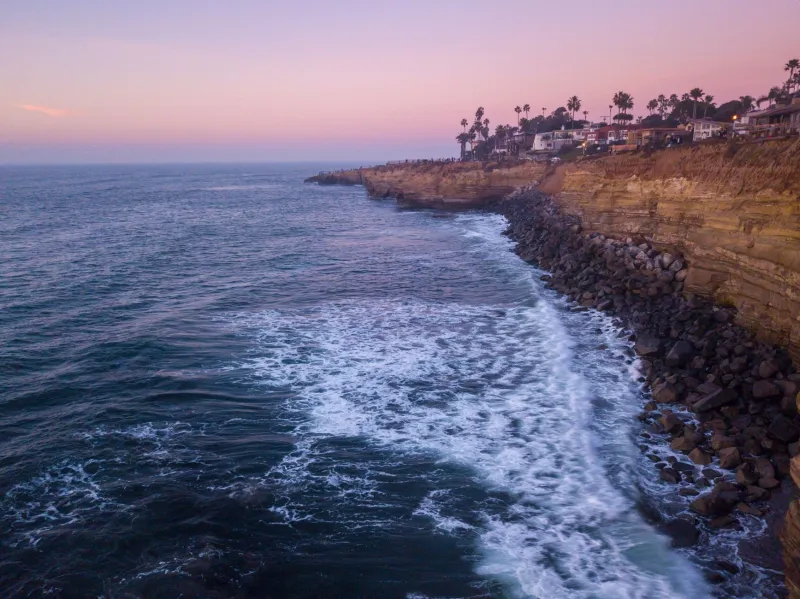
June is a study in contrasts. Summer visitors start arriving in force, but the marine layer means mornings are often cool and gray. The cliff path gets busy by mid-afternoon as the fog clears and temperatures rise. Sunset hour in June can be spectacular when the marine layer creates a low ceiling that catches the last light in shades of pink and violet.
For photographers: The marine layer sunset effect — where the sun drops into a band of fog just above the horizon — is one of the most visually dramatic things Sunset Cliffs produces. It's unpredictable but worth waiting for.
Crowd level: High on weekends, especially at sunset. Arrive early to claim a good spot.
July — Peak Summer
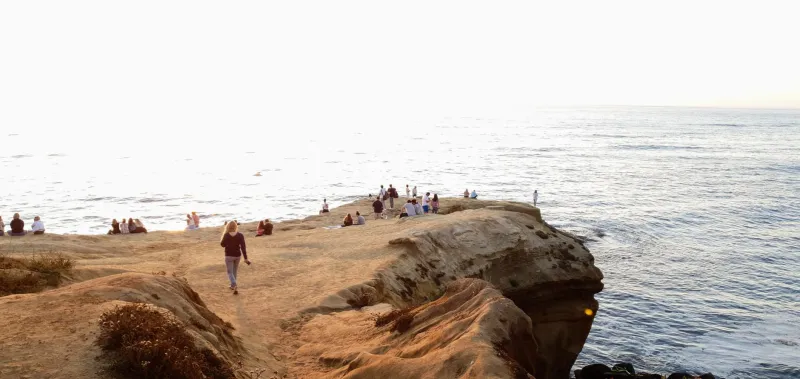
July is Sunset Cliffs at full volume. The parking situation along Sunset Cliffs Boulevard gets genuinely challenging by late afternoon. The rocks are packed at golden hour. It's loud, social, and electric — a very different experience from the solitude of February. If you want the crowd energy and the full summer California vibe, July delivers it completely.
For photographers: The challenge in July is working around people. Use a wide aperture to blur background crowds, or arrive at sunrise when the cliffs are nearly empty and the light is soft and golden.
Tip: Weekday visits in July are dramatically less crowded than weekends. Thursday sunset is a sweet spot.
August — Hot, Hazy, Gorgeous
August brings warmer water temperatures — occasionally warm enough for comfortable swimming in the coves — and longer, hazy golden hours. The haze softens the light in a way that gives August sunsets a dreamy, almost watercolor quality.
For photographers: The hazy atmosphere diffuses direct sunlight and creates warm, glowing tones across the water. Silhouette shots are particularly effective in August.
September — The Transition
September is when Sunset Cliffs starts to breathe again. Crowds thin noticeably after Labor Day, the marine layer becomes less persistent, and the light starts shifting back toward its lower, more dramatic winter angle. September evenings are often the warmest of the year — great for lingering at the cliffs after sunset.
October — The Photographer's Month
Ask any serious Sunset Cliffs photographer about October and watch their eyes light up. The marine layer is largely gone, the air is exceptionally clear, and the sun's angle produces some of the richest, most saturated light of the year. Visibility is at its annual peak — distant islands, the curvature of the coastline, the full depth of the ocean color.
For photographers: This is the month to shoot. Golden hour in October lasts longer and burns warmer than any other time of year. Every shot looks better. Come prepared to stay until dark.
Crowd level: Moderate and manageable. Not as empty as winter, not as packed as summer.
November — The Return of Drama
November brings the first winter swells and a palpable shift in atmosphere. The cliffs feel more serious, more elemental. Crowds drop sharply after Thanksgiving. The light is beautiful in that low, golden winter way, and the surf starts building toward its winter peak.
December — Year's End, Full Circle
December at Sunset Cliffs has a particular stillness to it. The days are short, the light is extraordinary, and the people who show up tend to be the ones who really mean it. There's something fitting about ending the year at the edge of the Pacific, watching the sun go down over water that stretches all the way to the horizon.
For photographers: December's low sun angle creates the longest shadows and warmest tones of the year. The cliffs themselves look their most sculptural in December light.
Crowd level: Low to very low, except around the holidays.
No matter which month you visit, Sunset Cliffs will give you something worth showing up for. The key is knowing what to look for — and now you do.