Why Watching the Sun Set Here Feels Like Pressing Pause on Your Entire Life
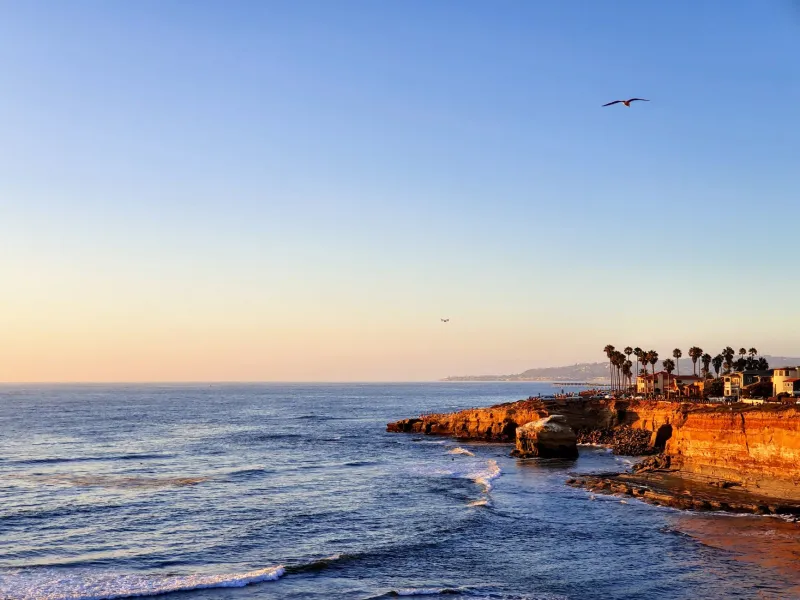
You show up at Sunset Cliffs with a to-do list rattling around in your head. Emails you haven't answered. A meeting you're dreading. Maybe a low-grade anxiety that's been following you around for weeks like a stray dog. And then the sun starts dropping toward the Pacific, and somewhere around the fifteen-minute mark, all of that just... loosens its grip.
It's not magic. Or at least, it's not only magic. There's actually something real happening to you up there on those cliffs — something that researchers, therapists, and the locals who come back every single evening have started to put into words.
The Phenomenon Regulars Keep Describing
Ask anyone who visits Sunset Cliffs more than once and you'll hear a version of the same story. "I came here during a really stressful stretch at work," says one San Diego resident who asked to remain anonymous. "I started coming every Tuesday after my shift, just to watch the sunset. After about a month, I realized I'd stopped dreading Mondays. I don't fully understand why, but I think it had something to do with being reminded that the day was going to end no matter what."
That observation — the day ends no matter what — sounds simple. But therapists who work with clients in the San Diego area say it touches on something genuinely significant about how humans process time and urgency.
The clinical term is time perspective, a concept developed by psychologist Philip Zimbardo that describes how our internal relationship with time shapes our behavior, stress levels, and overall wellbeing. Most people in modern American life are stuck in what researchers call a "future-oriented" time perspective — constantly planning, worrying, optimizing. It's useful in a lot of contexts. But it's also exhausting, and it tends to make the present moment feel like nothing more than a waiting room for the next thing.
A sunset — specifically one as visually consuming as the ones at Sunset Cliffs — has a way of yanking you out of that future-orientation and dropping you square into the present.
What's Actually Happening in Your Brain
Neuroscientists have studied what they call "awe experiences," and the findings are pretty striking. When humans encounter something that's both vast and beautiful — a mountain range, a starfield, an ocean horizon lit up in orange and violet — the brain's default mode network (the part responsible for self-referential thinking, rumination, and that loop of mental chatter) tends to quiet down.
In plain terms: you stop thinking about yourself so much. And when you stop thinking about yourself, you stop being anxious about your timeline.
Researchers at UC Berkeley published findings suggesting that awe experiences also alter our perception of time itself — specifically, that people who'd just experienced awe felt like they had more time available to them, were more patient, and were less likely to make impulsive decisions. They weren't actually given more time, of course. Their brains just processed what they had differently.
Sunset Cliffs, it turns out, is basically a free awe delivery system.
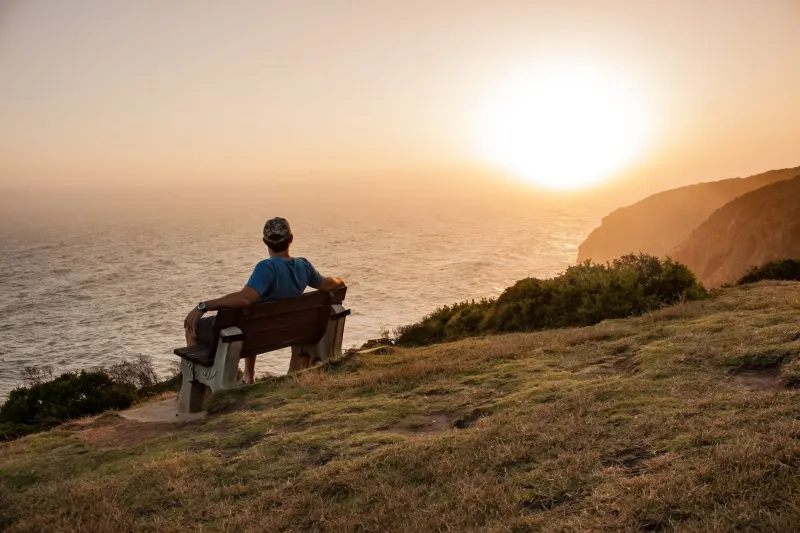
The geography helps. You're elevated above the water, which gives you a full, unobstructed view of the horizon. The waves crashing below provide a rhythmic audio backdrop that naturally syncs with slower breathing patterns. The shifting light — the way it moves from gold to amber to deep red over the course of about forty minutes — gives your visual system something to track in real time, which keeps you anchored in the present rather than drifting into mental projections about tomorrow.
The Ritual Effect
There's also something to be said for repetition. Many of the people who describe the most profound relationship with Sunset Cliffs aren't tourists on a one-time visit — they're regulars. People who've built the sunset into their weekly rhythm.
Psychologists note that rituals — even informal, personal ones — create a sense of structure and meaning that helps counteract the feeling that time is slipping away unnoticed. When you have a place you return to, a view that marks the end of the day in a way that feels significant, your brain starts to use it as an anchor. The week feels less like a blur and more like something you actually lived.
This is part of why Sunset Cliffs has such a devoted local following. It's not just a pretty spot. For a lot of San Diegans, it's a weekly appointment with perspective.
What Visitors Take Home
For out-of-towners, the effect tends to be more concentrated but still surprisingly durable. Travel researchers have documented what's sometimes called the "post-awe carry" — the way a genuinely awe-inducing experience can shift a person's priorities and mood for days or even weeks after the fact.
Visitors to Sunset Cliffs frequently describe returning home with a slightly different relationship to urgency. Things that felt pressing before the trip feel a little less so. Deadlines still matter, but they don't carry the same existential weight they did before.
"I went to San Diego for a conference," one visitor from Chicago recalled. "My flight was the morning after I visited the cliffs. I remember sitting in the terminal thinking that I felt genuinely calm in a way I hadn't in years. Like I'd been reminded that I'm a small person on a big planet and that's actually fine."
How to Let It Work on You
If you want the full effect, a few things help:
Arrive early. Get there at least thirty minutes before sunset. The anticipation is part of the experience, and it gives your nervous system time to downshift before the main event.
Leave the earbuds out. The sound of the waves is doing real work on your stress response. Let it.
Resist the urge to photograph the whole thing. Take a few shots if you want, but spend the bulk of the time just watching. Your memory of a sunset you actually saw will outlast any photo.
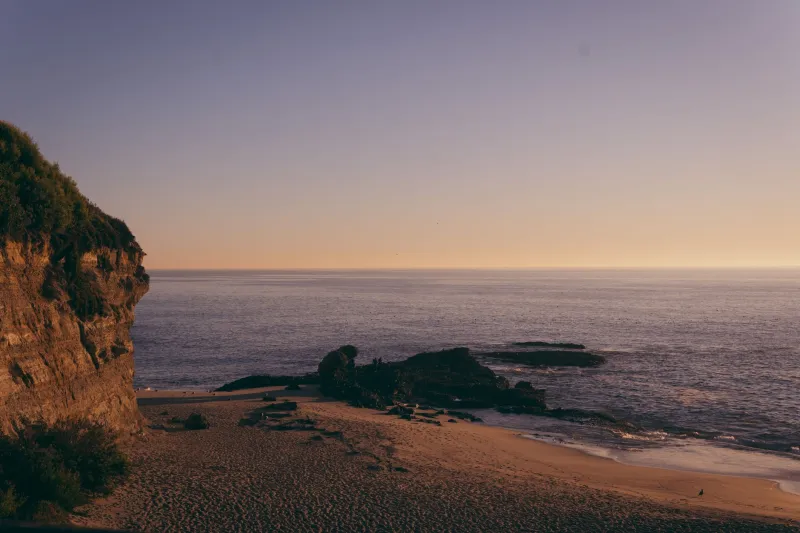
Stay after. The ten or fifteen minutes after the sun disappears — when the sky goes through its final color changes and the light softens to near-dark — are often the most quietly powerful part.
Sunset Cliffs doesn't ask much of you. You don't need gear, a reservation, or a plan. You just have to show up and let the Pacific do what it's been doing for longer than anyone's been around to worry about their inbox.
Somewhere in that exchange, most people find that time stops feeling like something chasing them — and starts feeling like something they actually have.