No Ticket Required: The Hidden Economic Engine Behind Sunset Cliffs' Free Admission
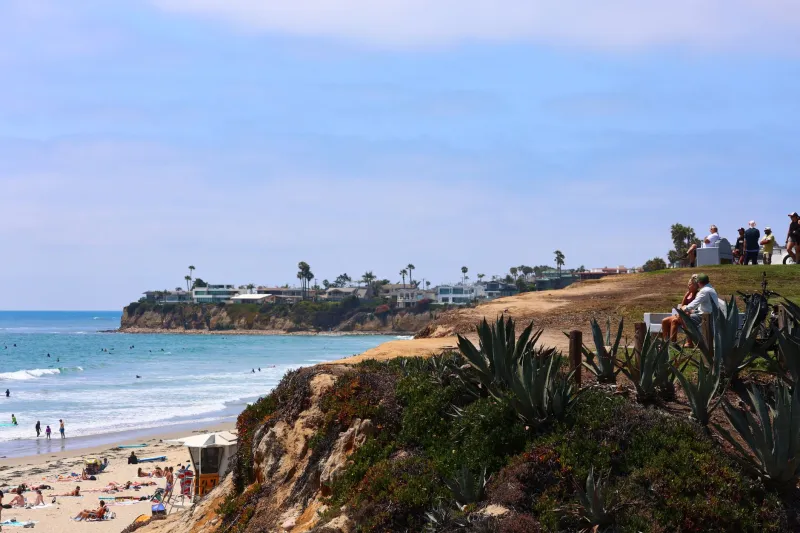
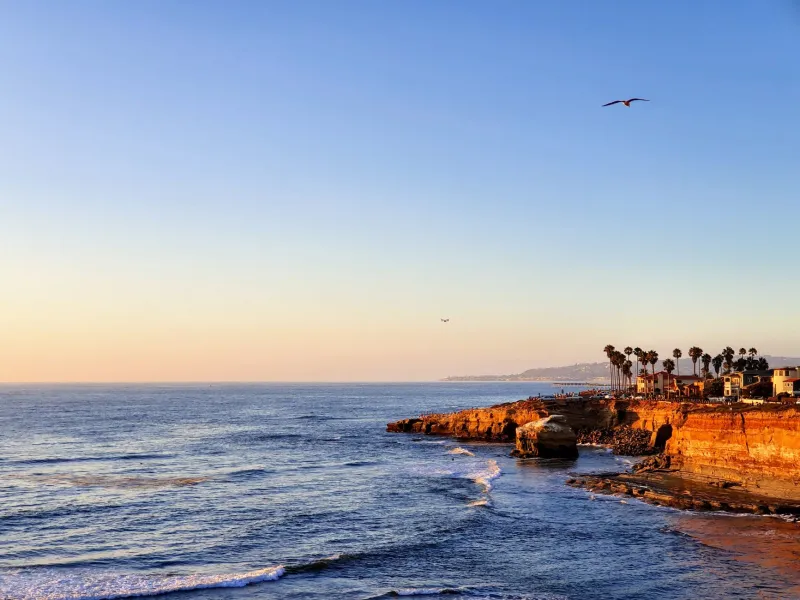
Walk into Sunset Cliffs Natural Park on any given afternoon and you won't find a ticket booth, a parking meter, or a visitor fee of any kind. The cliffs are simply there, open to anyone who shows up, at no cost. In an era when national parks are raising entry fees and popular natural attractions increasingly price out budget travelers, that's genuinely unusual — and worth examining more closely.
Because while the park itself is free, the economic activity it generates for the surrounding community is substantial and largely invisible in the way that free attractions' economic contributions tend to be. Nobody's counting the revenue at the register. But the numbers, pieced together from tourism data, local business reports, and city budget documents, tell a story about how a no-cost public amenity can function as a serious economic driver without anyone paying to get in.
Where the Money Actually Goes
Visitors to Sunset Cliffs don't spend money at the cliffs. They spend money before and after. The businesses that benefit most directly from Sunset Cliffs traffic are clustered in the immediately surrounding Ocean Beach neighborhood — a walkable commercial district that has evolved, at least in part, in relationship to the park's consistent visitor flow.
The restaurants along Newport Avenue, the coffee shops near the park's northern entrance, the surf shops and boutiques that line the commercial corridor — all of them see meaningful business from people who came to the neighborhood specifically for the cliffs. Hotel and vacation rental bookings in Ocean Beach and the broader Point Loma area similarly reflect the pull of the cliffs as a primary destination driver.
San Diego's tourism economy as a whole is substantial — the city regularly ranks among the top domestic tourism destinations, with visitor spending in the billions annually. Sunset Cliffs doesn't account for all of that, obviously. But it functions as what tourism economists call an anchor attraction: a destination compelling enough to bring people to a specific part of the city, where they then spend money across multiple categories.
The key distinction is that Sunset Cliffs draws visitors who then spend locally rather than at a centralized attraction. That spending pattern — distributed across small businesses in a walkable neighborhood — tends to have a higher local economic multiplier than spending at large resort complexes or chain-operated attractions, where more of the revenue leaves the immediate community.
The Cost Side of the Equation
Free access doesn't mean no cost. Sunset Cliffs Natural Park requires ongoing maintenance, safety infrastructure, ranger staffing, and periodic geological assessment — all of which comes out of the city's parks budget.
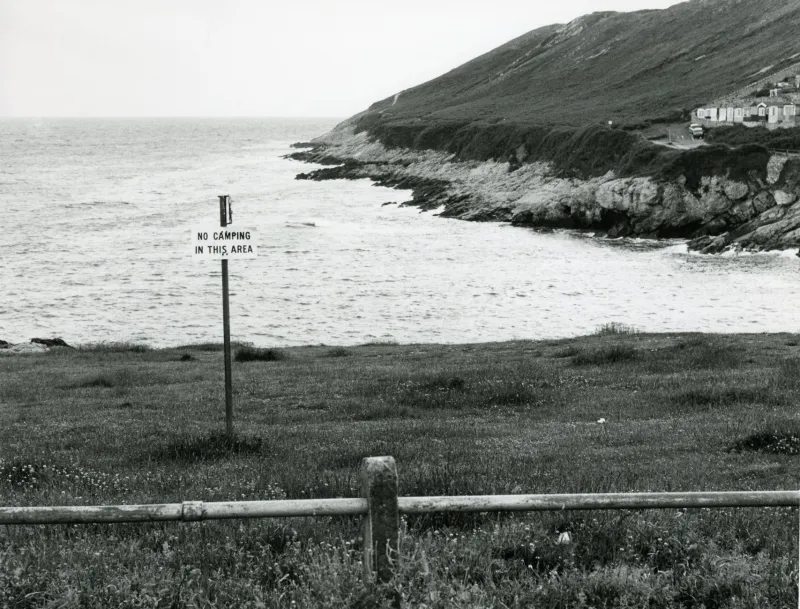
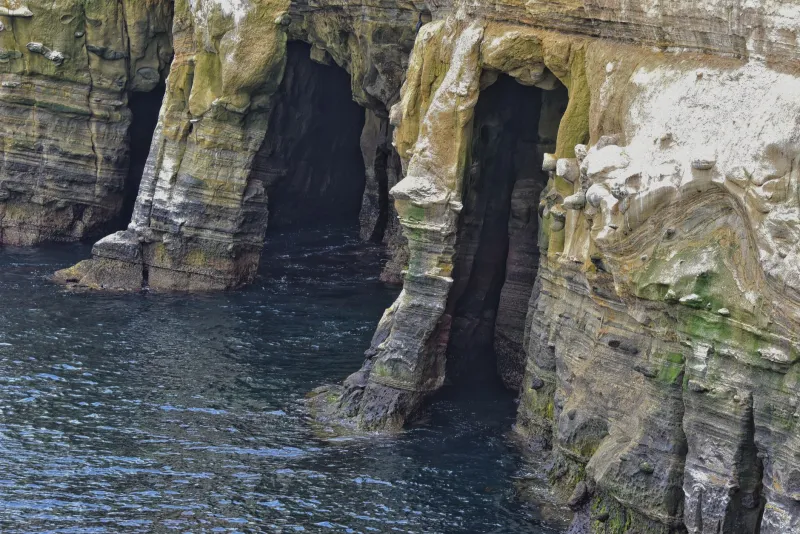
The maintenance picture at Sunset Cliffs is complicated by the park's geology. The erosion that makes the cliffs visually dramatic also creates ongoing infrastructure challenges. Pathways need regular attention. Fencing in hazardous sections requires periodic replacement as the cliff edge retreats. Signage gets weathered and damaged. After significant storm events, the park often requires inspection and sometimes partial closure while safety assessments are completed.
The city has also invested in more substantial capital improvements over the years — drainage infrastructure designed to slow erosion from above, reinforced viewing areas, and improved parking facilities. These projects carry significant price tags and are funded through a combination of city capital budgets and, in some cases, state coastal conservancy grants.
What the city doesn't recoup through any direct revenue mechanism is the cost of emergency response. Rescue operations at the cliffs — which occur with some regularity — involve San Diego Fire-Rescue resources that are expensive to deploy. Those costs are absorbed by the general public safety budget, not offset by any park-specific revenue.
The Sustainability Question
As visitation to Sunset Cliffs has climbed — driven in significant part by social media visibility — the question of whether the current model is financially sustainable has become harder to avoid.
The math is straightforward in outline if not in detail: more visitors means more wear on infrastructure, more demand for maintenance, and more frequent safety incidents requiring response. If the city's parks budget doesn't scale proportionally with visitation growth, the gap between what the park costs to maintain properly and what's actually spent on maintenance will widen over time.
Some parks advocates argue that the solution is a voluntary contribution system — a "pay what you can" model or a formal friends-of-the-park donation program — rather than any mandatory admission fee. The argument is that a meaningful portion of visitors would contribute voluntarily if given a clear, convenient mechanism, generating supplemental revenue without creating the access barrier that a mandatory fee would impose.
Others point to parking as a potential revenue lever. Sunset Cliffs currently offers free street parking along Sunset Cliffs Boulevard and in adjacent lots. Metered parking or a paid lot near the park's main access points would generate revenue from visitors who are already choosing to drive to the site, without affecting the experience of the park itself.
The mandatory admission fee option — the approach taken by many national parks and some state parks — is politically complicated in this context. Sunset Cliffs has a strong identity as a free, accessible public resource. Any move toward paid admission would face significant community opposition, and it would fundamentally change the character of the place: its openness, its inclusivity, its role as a park that belongs to everyone regardless of what they can afford.
What "Free" Actually Provides
There's an economic argument for free admission that goes beyond sentiment. Attractions that are free lower the barrier to spontaneous visits — which means they draw a broader cross-section of the population, generate more total visits, and create more distributed economic activity than comparable attractions that charge admission.
A visitor who might hesitate before paying $20 to enter a paid coastal park will stop at Sunset Cliffs on a Tuesday afternoon without much deliberation. That spontaneous visit generates coffee shop revenue, maybe a meal in Ocean Beach, potentially a return visit on the same trip. The friction of a fee, even a modest one, changes the calculus in ways that reduce overall visitation and the economic activity that comes with it.
There's also the equity dimension. San Diego is an expensive city, and its coastal resources are disproportionately accessible to people with money — through proximity, through vehicle access, through the cost of housing near the water. A free, transit-accessible public park that genuinely delivers world-class coastal scenery without any financial barrier is a meaningful counterweight to that dynamic.
The cliffs don't belong to any particular demographic or income bracket. They belong to San Diego, and the free admission policy is a structural expression of that.
The Balance Sheet Nobody Publishes
There's no single document that captures the full economic picture of Sunset Cliffs — what it costs the city, what it generates for local businesses, what it contributes to San Diego's overall tourism identity. The numbers exist in pieces across multiple budgets, tax records, and tourism reports, but nobody has assembled them into a comprehensive accounting.
What's clear enough without that accounting is the basic shape of the story. Sunset Cliffs is a significant economic asset that operates through indirect channels. It doesn't generate gate revenue. It generates foot traffic, neighborhood spending, hotel bookings, and the kind of destination reputation that brings visitors to San Diego in the first place and keeps them coming back.
Whether that model is sustainable as visitation grows is a real question without an obvious answer. But the case for preserving free access — economic, social, and civic — is stronger than the case for monetizing the entrance. The cliffs have been doing their economic work quietly for decades. The job now is to fund their upkeep in ways that don't compromise the openness that makes them valuable in the first place.