Why a Small Urban Bluff Beats Yellowstone in Visitor Loyalty — And What the Numbers Actually Say
The Unlikely Contender
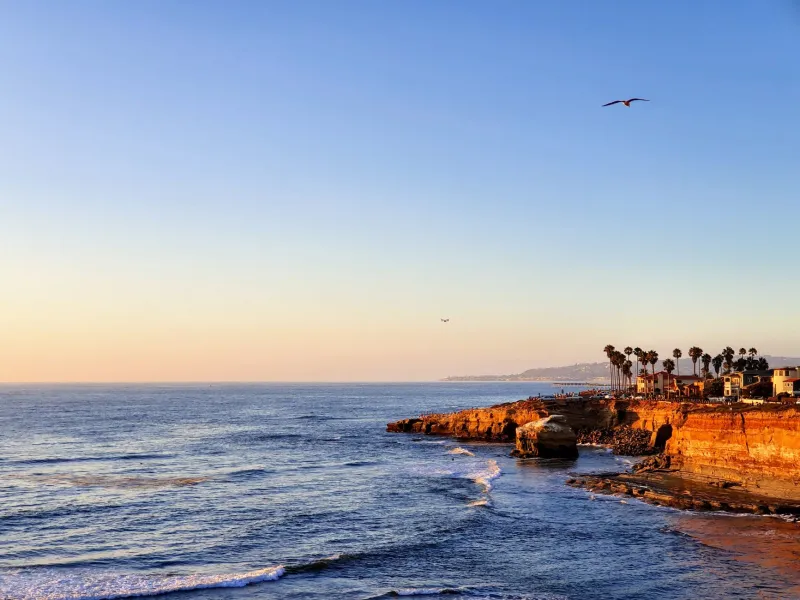
You wouldn't expect a city park to go toe-to-toe with America's most iconic natural landmarks. Yellowstone draws roughly four million visitors a year. The Grand Canyon pulls in close to six million. Sunset Cliffs Natural Park, tucked into the Ocean Beach neighborhood of San Diego, sees somewhere between one and two million visitors annually — and yet, when researchers and travel platforms start measuring what actually sticks with people after a visit, this modest stretch of coastline keeps showing up near the top.
So what's going on? Is it San Diego's near-perfect weather? The photogenic lighting? Or is there something more fundamental happening at the edge of these cliffs that the big parks, for all their grandeur, can't quite replicate?
What Visitor Satisfaction Data Actually Measures
Before diving in, it helps to understand what "visitor satisfaction" actually tracks. Survey tools used by the National Park Service and independent travel platforms like TripAdvisor or Yelp typically measure things like overall experience rating, likelihood to recommend, likelihood to return, and — increasingly — something researchers call emotional resonance, basically a measure of how strongly a place affected you on a personal level.
National parks consistently score well on the first two metrics. People are happy they went. They'd tell a friend. But repeat visitation rates tell a more complicated story. Studies from the NPS itself have found that many flagship parks are largely one-and-done destinations — people cross them off the bucket list and move on. The Grand Canyon's repeat visitor rate hovers around 30 to 40 percent depending on the survey. Yellowstone skews similarly.
Sunset Cliffs, by contrast, operates on a completely different return rhythm. Locals visit weekly. Out-of-town guests frequently return on subsequent San Diego trips. TripAdvisor reviews are littered with phrases like "came back every evening" and "couldn't leave without one more sunset." Informal polling conducted by local tourism organizations has placed the repeat intention rate well above 70 percent for first-time visitors.
That gap is significant — and it's not just about convenience.
The Psychology of Scale
Here's a counterintuitive idea: sometimes, smaller is more powerful.
The Grand Canyon is overwhelming by design. Its scale is literally incomprehensible to the human brain — cognitive scientists have noted that people often feel emotionally flattened by it rather than moved. You stare into a mile-deep abyss and your nervous system doesn't quite know what to do with the information. Awe, yes. Personal connection, harder to achieve.
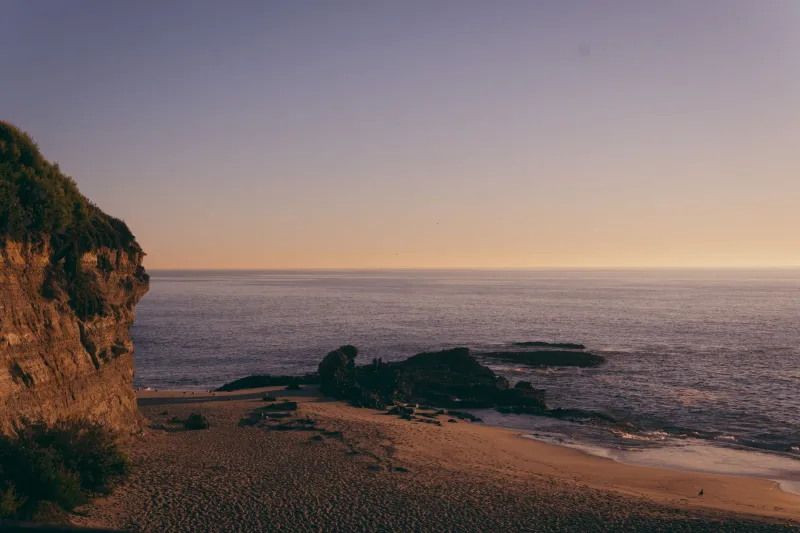
Sunset Cliffs operates at a human scale. You're not dwarfed by it. You're level with it. The Pacific stretches out in front of you, the waves crash below, and the whole thing feels like it was built for exactly the number of people standing on it at any given moment. Psychologists who study what they call "restorative environments" — places that genuinely recharge the brain — have found that coastal settings with defined horizons and rhythmic sound (read: waves) rank among the most effective environments for reducing cortisol and producing a sense of mental clarity.
In other words, the cliffs don't just look good. They make you feel better, measurably, in a way that a distant canyon view or a geyser eruption doesn't always manage.
Accessibility as a Feature, Not a Footnote
One of the biggest structural advantages Sunset Cliffs has over its national park competitors is that you can get there in fifteen minutes from downtown San Diego. There's no entrance fee, no campsite lottery, no four-hour drive from the nearest airport. You can visit on a Tuesday evening after work. You can show up at sunrise and be back for breakfast.
For most Americans, visiting a major national park requires logistical planning that functions more like a vacation-within-a-vacation. Hotel bookings, long drives, permit systems, crowds at the famous viewpoints — all of it creates friction between you and the experience. Sunset Cliffs removes nearly all of that friction.
Travel researchers have a term for this: low-barrier high-reward destinations. They tend to generate disproportionate emotional attachment precisely because the cost of returning is low enough that people actually do it. Each repeat visit deepens the relationship with the place. That's harder to build when the destination requires an annual leave request to access.
What Locals Know That Tourists Eventually Figure Out
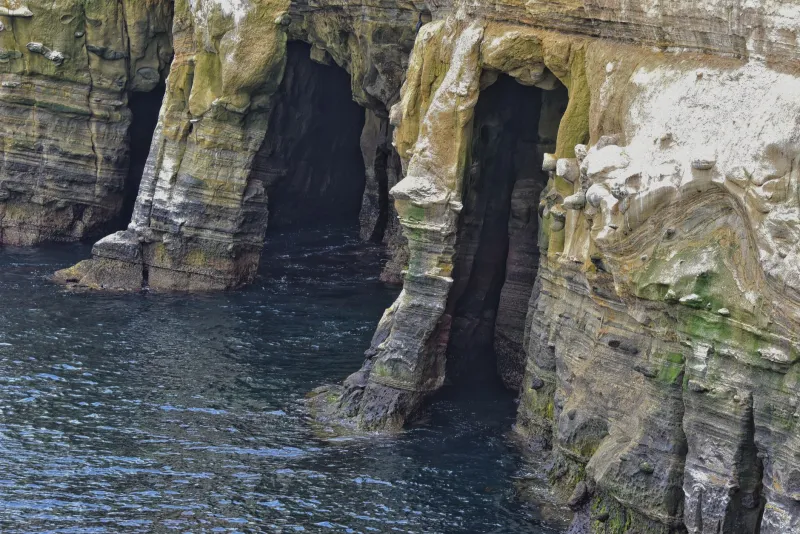
Ask anyone who lives in Ocean Beach or Point Loma about Sunset Cliffs and you'll hear a consistent theme: the place is different every single time. The light shifts. The swell changes. The tide exposes or hides the sea caves. Occasionally a pod of dolphins moves through. Sometimes it's foggy in a way that makes the whole coastline feel like a dream sequence.
This variability is part of what drives repeat visitation. Unlike a fixed landmark — Old Faithful erupts on a schedule, the Grand Canyon looks more or less the same — Sunset Cliffs is a living, dynamic environment that rewards attention. First-timers see a beautiful sunset. Regulars learn to read the ocean, to recognize specific rock formations, to know which coves hold the best light at which time of year.
That learning curve creates investment, and investment creates loyalty.
The Transformative Experience Question
National parks have long marketed themselves around transformation — the idea that standing in front of something vast and ancient changes you. And it does, sometimes. But the transformation that Sunset Cliffs visitors describe in reviews, in social media posts, and in conversations tends to be more intimate and more repeatable.
People don't just say they were impressed. They say they felt calm for the first time in months. They say they made a decision they'd been putting off. They say they finally felt present. Those are qualitatively different outcomes than "it was breathtaking" — and they're the kind of outcomes that make people come back.
Maybe that's the real answer to the comparison. The national parks offer spectacle. Sunset Cliffs offers something closer to sanctuary. And in a culture that's increasingly starved for the latter, that turns out to matter quite a bit.