Once Is Never Enough: The Real Reason Sunset Cliffs Keeps Calling You Back
There's a running joke among San Diego travel writers: you don't really need to sell Sunset Cliffs. The cliffs sell themselves — and then they keep selling themselves, year after year, to the same people.
Talk to enough visitors and you start noticing a pattern. They came once, maybe on a whim, maybe because someone insisted. Then they came back. And back again. Some make it an annual trip. Others reroute entire vacations just to spend an afternoon on the bluffs above the Pacific. A retired schoolteacher from Denver told us she's visited eleven times in nine years. "I keep thinking I'll get it out of my system," she said, laughing. "I never do."
So what's actually happening here? Why does this particular stretch of coastline — roughly two miles of jagged sandstone cliffs on San Diego's Ocean Beach peninsula — lodge itself so stubbornly in people's memories?
The Sensory Experience Is Genuinely Hard to Replicate
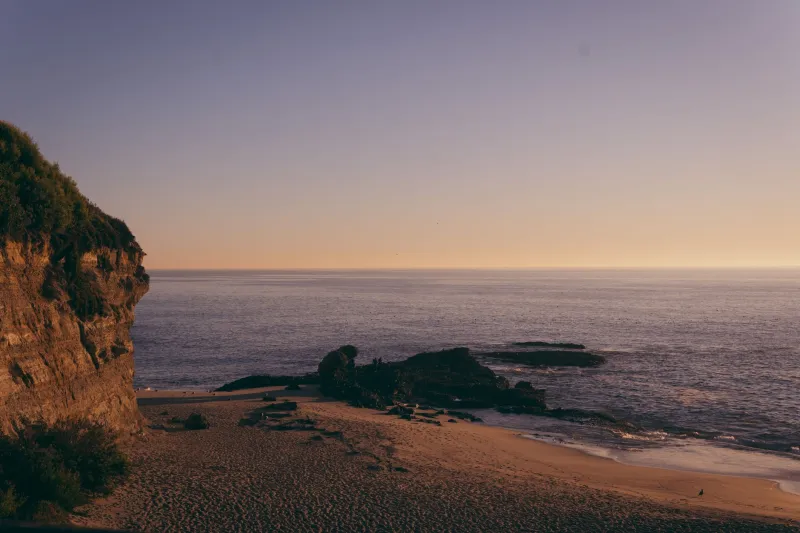
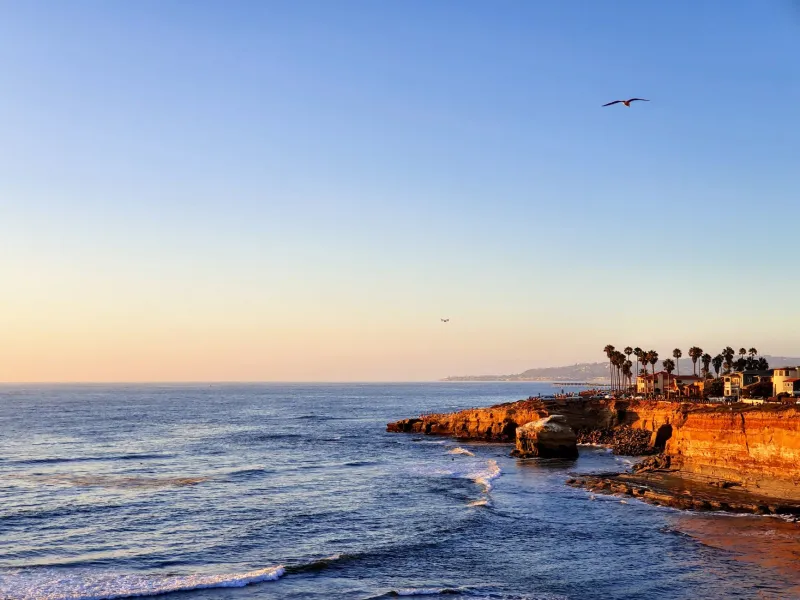
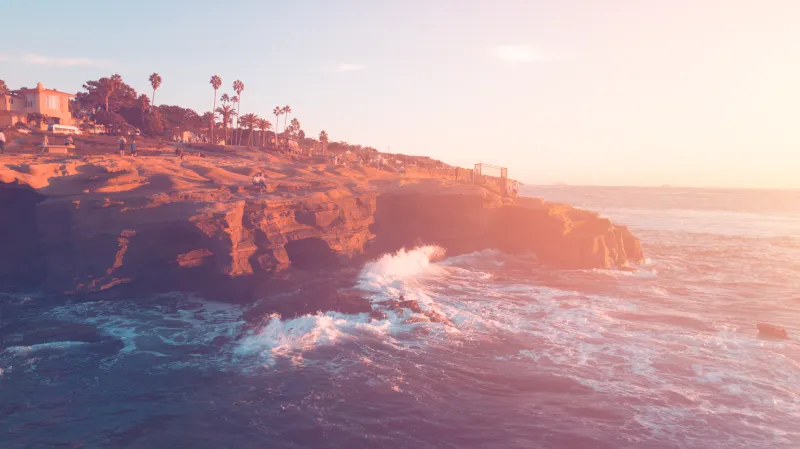
Part of the answer is purely physical. Sunset Cliffs hits multiple senses at once in a way that most beaches simply don't. The sound of waves hammering the base of the cliffs is different from the gentle wash of a flat sandy shore — it's percussive, almost dramatic. The salt air is thick here, carried on a consistent onshore breeze. The ground beneath your feet is textured and uneven, lava rock and crumbling sandstone that demands attention. And then there's the view: the Pacific stretching west without interruption, the horizon a clean, unbroken line that somehow always looks farther away than it should.
Psychologists who study awe — that particular emotional cocktail of wonder and smallness — note that environments combining scale, sound, and sensory novelty are especially effective at triggering it. Sunset Cliffs checks every box. And awe, research suggests, has a lasting effect on memory formation. Experiences that generate genuine awe tend to be encoded more vividly and retrieved more easily than ordinary ones. In plain terms: the cliffs stick.
Nostalgia Does a Lot of Heavy Lifting
For repeat visitors, something else kicks in after the first trip: nostalgia. And nostalgia is a powerful motivator.
Mark, a 40-something software developer from Phoenix who visits San Diego every spring with his family, described his relationship with Sunset Cliffs in terms that were almost embarrassingly sentimental — and he knew it. "The first time I came here I was 22, just out of college, completely broke, sleeping on a friend's couch in OB," he said. "I'd sit on the rocks for hours because it was free and it was the most beautiful thing I'd ever seen. Now I bring my kids. I'm trying to give them the same thing."
That impulse — to return to a place that holds a previous version of yourself — is well documented in travel psychology. Places become anchors for identity and memory. Revisiting them isn't just about the place; it's about touching base with who you were when you first discovered it. Sunset Cliffs, with its timeless quality (the rocks don't change, the ocean doesn't change, the light behaves the same way it always has), is particularly good at holding that kind of emotional weight.
The Light Is Never Quite the Same Twice
Here's the paradox locals love to point out: Sunset Cliffs is both completely consistent and endlessly variable. The geography never changes. But the light? The light is different every single time.
The golden hour here is legitimately legendary — ask any photographer who's shot here more than once. The way the setting sun interacts with the marine layer, the color of the sandstone, the chop on the water — it produces a different show on every visit. Clear winter evenings deliver sharp, almost electric orange skies. Summer marine layer creates soft, diffused pinks and purples that look almost too saturated to be real. Stormy afternoons turn the whole scene dramatic and gray-green, the waves bigger and angrier, the cliffs more imposing.
Regular visitors talk about this variability the way sports fans talk about a team they follow obsessively. "I've never seen the same sunset twice here," said a local photographer named Diane who lives in Point Loma and visits the cliffs several times a week. "That sounds like an exaggeration. It's not."
The Community Effect
Something else happens at Sunset Cliffs that doesn't happen at most tourist destinations: strangers talk to each other.
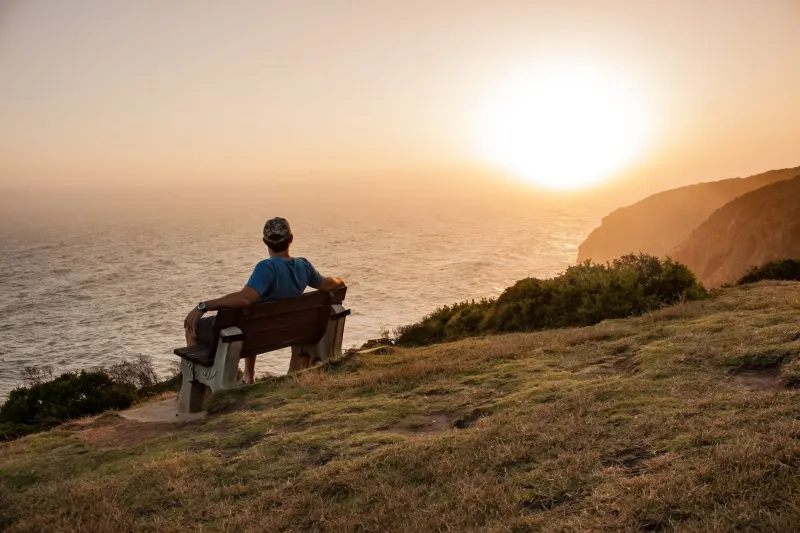
Maybe it's the shared experience of watching something genuinely beautiful. Maybe it's the informal, unhurried atmosphere — no admission booths, no guided tours, no gift shops nudging you toward the exit. People sit on the rocks and decompress. They arrive alone and end up in conversation with whoever's nearby. First-time visitors ask locals for the best spots. Locals point them toward the less obvious ledges, the sea caves accessible at low tide, the small natural arch around the bend.
This social quality creates its own kind of memory. People don't just remember the view; they remember the conversation they had while watching it. And that makes them want to come back.
What Locals Know That Visitors Are Starting to Figure Out
Long-time Ocean Beach residents have a complicated relationship with the cliffs' growing popularity. More visitors means more crowded parking, more litter to pick up, more close calls near unstable cliff edges. But most locals we talked to were genuinely glad people were discovering the place — as long as they treated it right.
"The cliffs have a way of humbling people," said one longtime OB resident who asked to remain anonymous. "You show up stressed about whatever, and then you're standing on a rock looking at the Pacific Ocean and it just... recalibrates you. I've watched it happen to people in real time. That's why they come back. It works."
That recalibration — the sense of perspective that comes from standing at the edge of a continent and watching the sun drop into the water — might be the simplest explanation for why Sunset Cliffs generates so many repeat visitors. It's not just beautiful. It's useful. It does something to you that's hard to find anywhere else.
Planning Your Return Visit
If you're already plotting your next trip, a few things worth knowing: the cliffs are free to visit and open year-round, though parking along Sunset Cliffs Boulevard fills up fast in summer. Weekday mornings and weekday evenings offer a noticeably different (read: quieter) experience than weekend afternoons. Low tide opens up rocky areas and sea caves that are inaccessible otherwise — check a tide chart before you go.
And if it's your first visit? Don't worry about seeing everything. The cliffs will handle the rest. They're very good at making sure you come back.